

Introduction
This is Five Cents: travel guide to Zanzibar. This is a beach-and-sea trip with one compact cultural stop. It’s not an island to race around. We’ll set up six days, use Stone Town to understand the island, then choose between the north’s easy swimming and the east coast’s tides and wind.
Start with the choice that shapes the whole stay
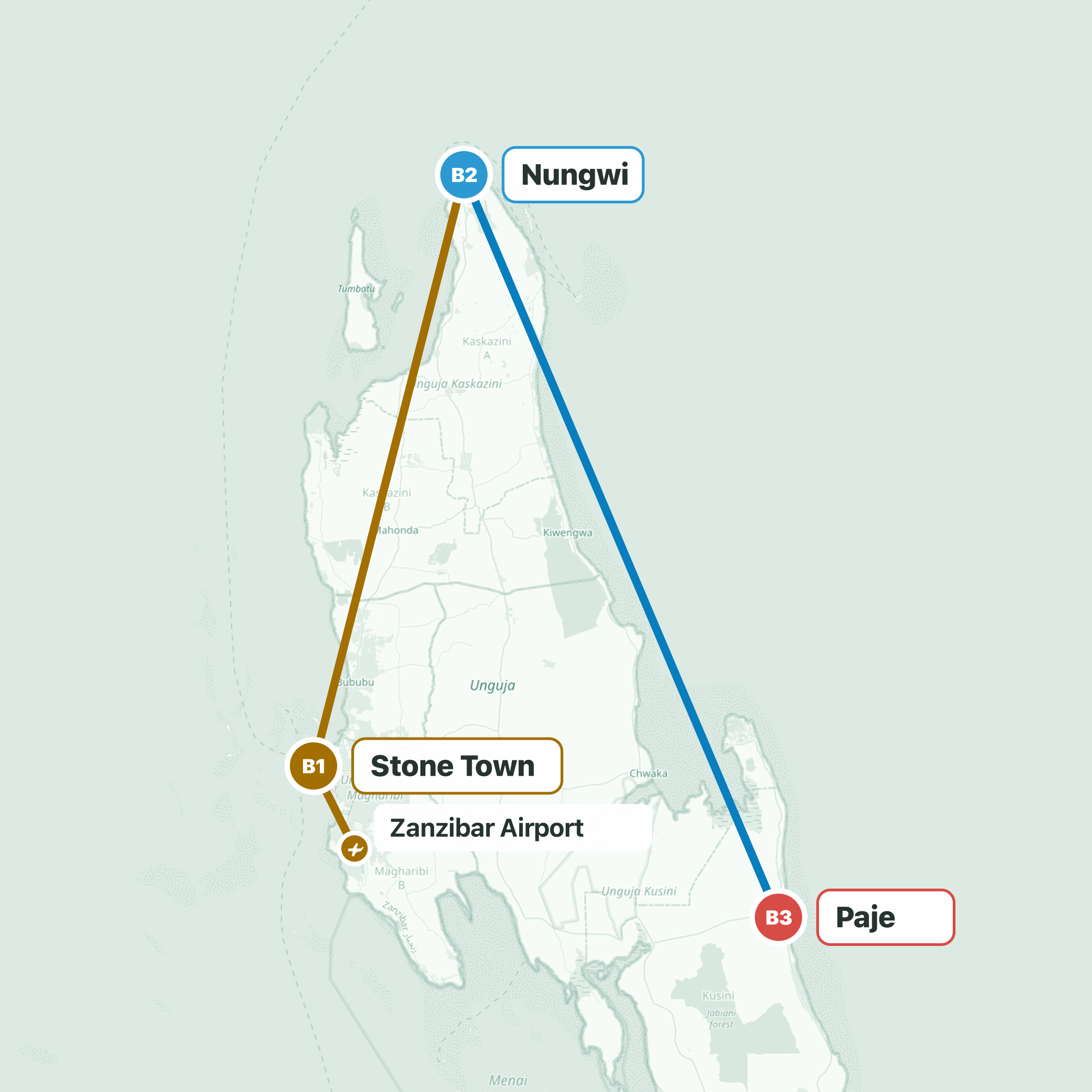
Start with the choice that shapes the whole stay. Zanzibar works especially well after a Tanzania safari. The mainland brings early starts, wildlife and structured game drives. Unguja, the main island, slows the pace down to beach time and the Indian Ocean. For a first visit, give it six days: one afternoon or night in Stone Town, three nights in the north, and three on the east coast. Use taxis or a prearranged driver between bases. The point is to stay in the right coastal zone, not to turn the island into a road trip.
Most arrivals land at Abeid Amani Karume International Airport, close to Zanzibar City. Begin by heading north into Stone Town, the historic core of the city and Zanzibar’s cultural anchor. Give it a late afternoon rather than several days. Walk its narrow commercial lanes, past carved doors, coral-stone buildings and Indian-influenced shopfronts. Then reach the waterfront as the day cools and eat near the harbour.
Stone Town makes sense when you see it as a Swahili trading city, shaped by connections across Africa, Arabia, India and Europe. Its port also carries the history of Zanzibar’s role in the East African slave trade and the later struggle to end it. That history changes the way the streets and waterfront read. This is not a resort backdrop, but a living city formed by trade, power and migration.
From Stone Town, continue north by taxi or driver for the first beach base: Nungwi. This is the strongest all-round choice if you want reliable swimming alongside restaurants, fish-focused coastal dining, bars, music and a social crowd. It has more village activity and more excursion infrastructure than much of the island, so it works well for travellers who want beach time without staying inside a closed resort.
Use Nungwi for one dedicated day on the water
Use Nungwi for one dedicated day on the water. Choose snorkelling for an easy way to see reef landscapes and tropical marine life, or diving if you want more time underwater or are returning to the sport. The appeal is warm water and reef life, not a promise of untouched coral or solitude. Popular marine trips can bring many boats together, and conditions vary.
Kendwa, nearby, is the alternative if your priority is a more concentrated beach-and-resort setting. But Nungwi is the better default for a first stay. Then cross southeast across Unguja to Paje for the second half of the trip. The move matters because the coast changes its rhythm. Paje has broad sand, cafés and a young international scene, but its defining feature is the tide. The water can retreat far from shore, turning the beach into a wide intertidal landscape.
Choose it for space, changing views and a slower coastal finish, rather than for consistently easy swimming. Paje is also the east-coast base to choose when your trip matches the wind season and kitesurfing is part of the plan. Here, the wind is not an add-on. It helps explain why this coast attracts a different kind of beach holiday from Nungwi.
For a quieter version of the same eastern shoreline, use Jambiani instead, but keep one base rather than moving again. With the main route complete, keep extra excursions selective. A Mnemba-area snorkelling trip from the north can suit travellers who want another marine day, though it should remain optional because crowding varies.
Key stops and decisions
Jozani Forest is the inland alternative for those who specifically want forest and wildlife, but it does not need to displace Stone Town, Nungwi or Paje on a short trip. Leave out dolphin-chasing swims. Repeatedly pursuing dolphins and putting visitors in the water around them is a poor use of the island’s marine environment.
And skip the full island circuit and generic spice-tour stop. Neither adds as much as time in two deliberately different coastal bases. Remember three decisions: give Stone Town one concentrated afternoon, choose Nungwi for easier swimming and social energy, and choose Paje for tides, space and seasonal wind.
For your next Five Cents episode, you could explore Stone Town: Trade, Slavery and Swahili Architecture, or Zanzibar: Snorkelling, Diving and Marine Conservation.