

Introduction
This is Five Cents: travel guide to United Kingdom. A first visit makes most sense as a focused journey north, combining a global capital with smaller historic cities and a distinctly Scottish setting. We’ll build a ten-day rail route, explain what deserves time at each base, and show where a separate extension can add another dimension.
Start by deciding the shape of the trip
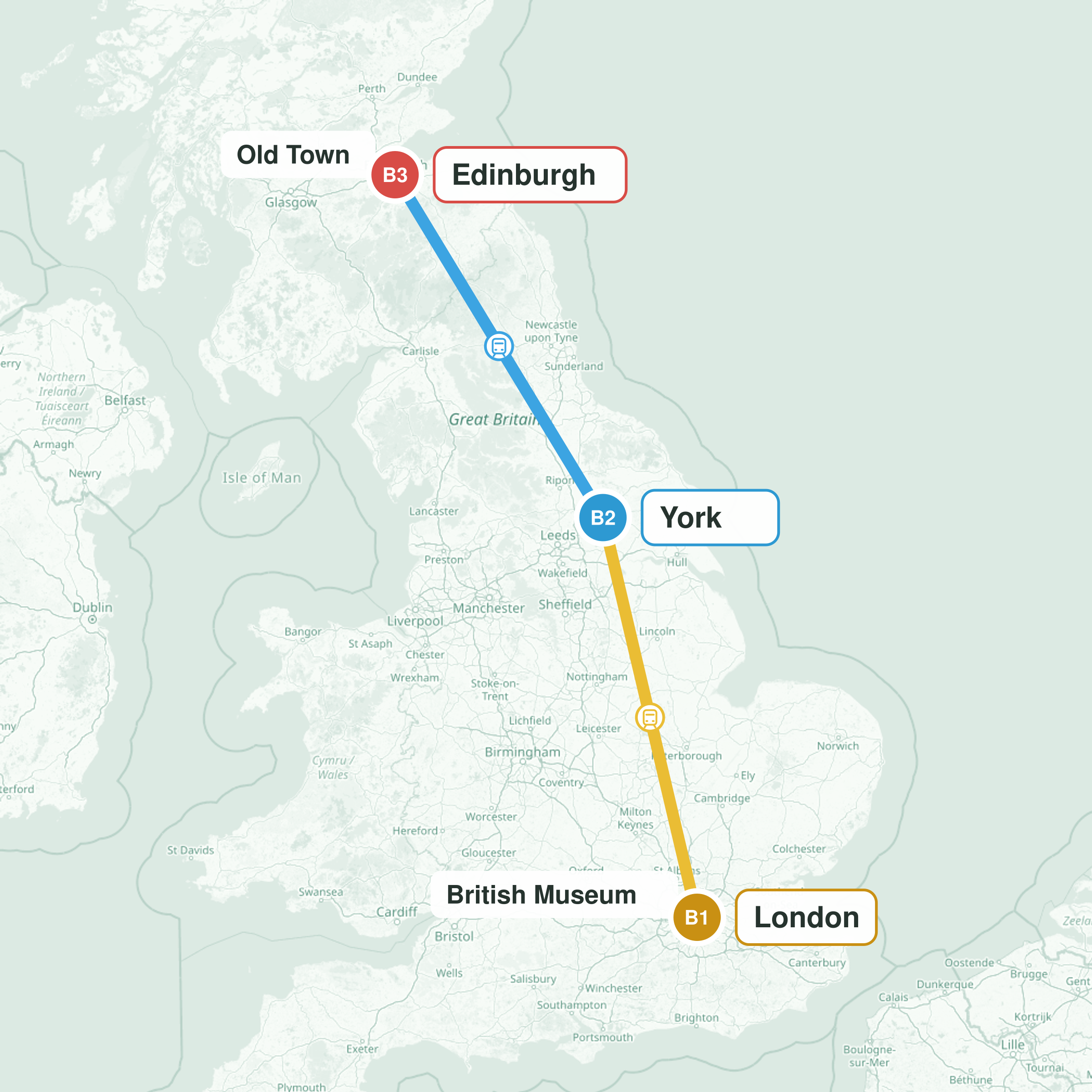
Start by deciding the shape of the trip. The United Kingdom comprises England, Scotland, Wales, and Northern Ireland. Great Britain means England, Scotland, and Wales, excluding Northern Ireland. That distinction matters here. The main journey stays on Great Britain, moving from London through York to Edinburgh, rather than attempting to cover all four nations.
Allow about ten days and nine nights: four nights in London, two in York, and three in Edinburgh. Enter through London in southern England, then continue north by train. Walking and local public transport handle the city stages. This route needs no car. Stretching the trip toward fourteen days gives you a slower pace or room for one deliberate addition. With only a week, concentrate on London and Edinburgh.
London is both the main international gateway and a city where national institutions sit alongside contemporary international life. Give its four days a balance: one substantial museum visit, a limited selection of central landmarks, and time to walk through different neighborhoods. Each part explains something the others cannot.
Make the British Museum, a major museum with a free permanent collection, your museum anchor. Treat it as a substantial visit, rather than a quick stop between other attractions. Choosing one large institution protects time to understand the city outside its galleries. Use the remaining days to alternate central sightseeing with neighborhood walking. London’s food, street life, and atmosphere change by area. Public transport lets you move between those contrasting settings, while walking gives you time to notice them.
The route step by step
The useful contrast is between the city’s long political history and the international everyday life around it. Royal landmarks tell only part of that story. Leave an ordinary evening for a pub. Sit down for a meal or a drink, and make it part of the day rather than another attraction to tick off. It offers a setting for social life, without suggesting that one venue represents the whole country.
From London, take a direct train north to York, a compact historic city in Yorkshire. The fastest services take about one hour and forty-six minutes. Other departures take longer. This is a natural stop along the northbound route, bringing a substantial change of scale without a major detour.
Two nights give you a full day in the historic center. Explore its medieval streets on foot, and make its major Gothic cathedral the central visit. The value is the concentration: streets, architecture, and traces of earlier eras belong to one walkable city, rather than being scattered across several excursions.
Give that walking day space. York’s role in the trip is to let you examine a smaller historic center after London’s scale. A full day makes the stop an experience in its own right, rather than simply a break in the train journey. Then continue north from York to Edinburgh by direct train. Scotland’s historic capital adds both a different national setting and a different physical landscape. Allow your arrival day and the following days for exploring, with three nights here.
Begin with the Old Town
Begin with the Old Town, the historic district whose streets connect the city’s built heritage with its steep setting. Walking is the main experience: follow the streets, allow time for changes in level, and let the terrain shape how much you cover. Give the castle and its surroundings their own place in the visit. Edinburgh’s volcanic terrain is part of how the city is arranged, not merely a backdrop. Its smaller scale makes the contrast with London clear, but steep ground means distance alone tells you less about a walk.
This is also where the multi-nation character becomes tangible. Scotland has its own national history, identity, and political institutions. British and English are not interchangeable terms. The route has crossed from England into Scotland. After the core journey, choose one extension. Cardiff, the Welsh capital, deserves roughly one or two additional days. It connects westward from London by direct rail and introduces Welsh civic and cultural life, including the language visible in bilingual signs. Arrange it as a separate London-linked segment.
Belfast, Northern Ireland’s capital, and the Causeway Coast, its coastal extension, need at least two or three extra days, including travel. Reaching Belfast involves air or ferry connections. Countryside regions likewise deserve a dedicated route and transport plan. Remember three decisions: follow London–York–Edinburgh by rail; protect everyday city life, compact history, and terrain; give further nations or landscapes their own extension.
To continue, you can generate another Five Cents asking: How should I explore Cardiff and south Wales? Or: How should I combine Belfast and the Causeway Coast?