

Introduction
This is Five Cents: travel guide to Siargao. This is a week-long island road trip, not a short break around one surf town. Use a motorbike, change bases, and let the roads connect beaches, villages, and lagoon landscapes.
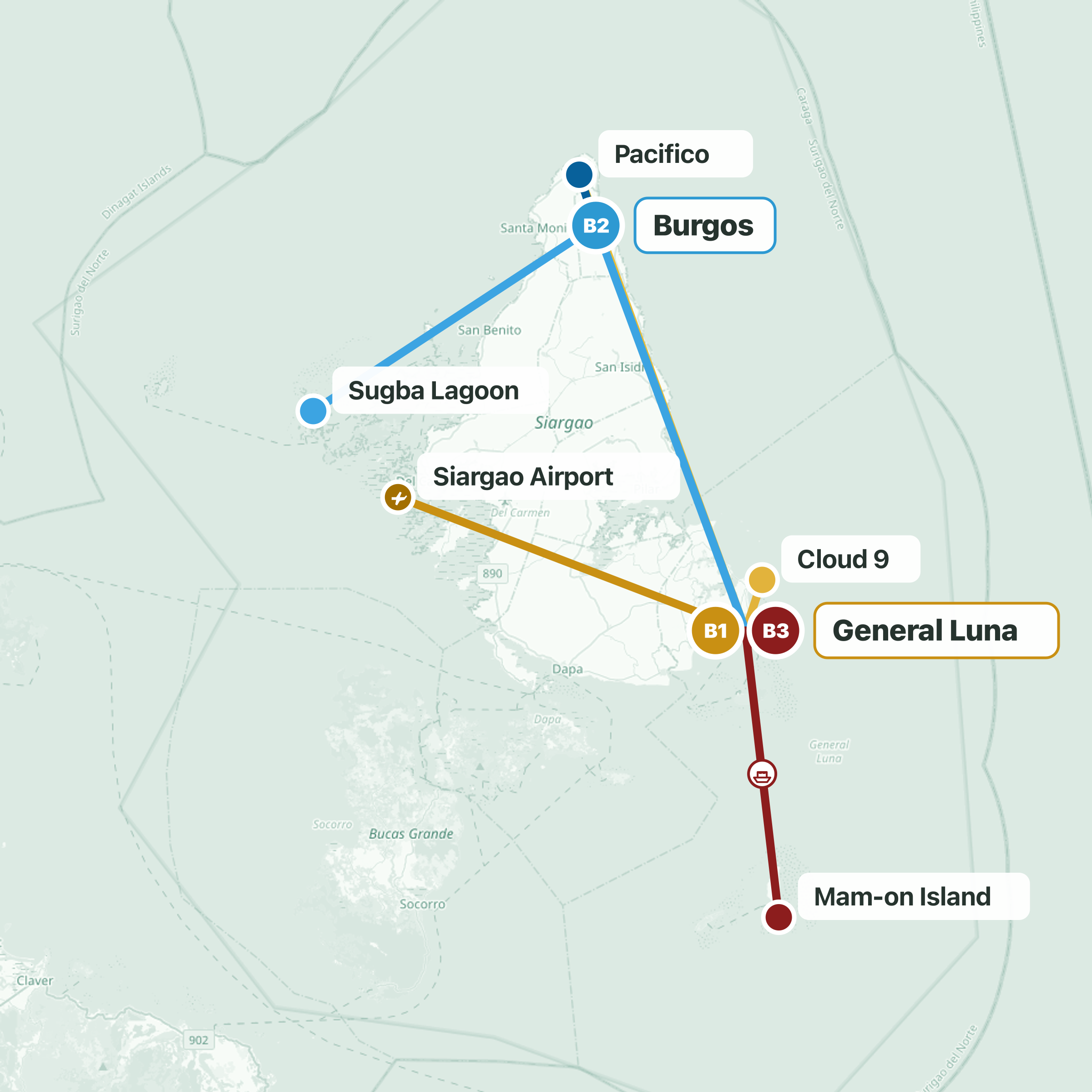
We’ll start in the southeast
We’ll start in the southeast, ride north for a proper stay, cross the west, then place the boat days and surf in their right place. The key is to treat the journey between coasts as part of Siargao. Most visitors arrive through Sayak Airport, while Dapa is the ferry gateway. Start with two or three nights in General Luna, Siargao’s main tourism centre in the southeast. It is the useful opening base for restaurants, cafés, Filipino barbecue, surf schools, accommodation, and a social evening scene that shifts between venues.
Across the bridge, Catangnan offers a quieter place to sleep while staying close to that energy. Use these first days to settle in, eat well, and explore the southern coast, including nearby stops such as Secret Beach, without turning them into a separate itinerary. Then rent a motorbike and head north. This is the central move of the trip. Coconut-lined roads, small settlements, and changing stretches of coast make the ride more than a transfer.
Basketball courts appear in villages along the way. In the Philippines, they are everyday public and community spaces, a useful reminder that Siargao is a lived-in island as well as a visitor destination. Give the north at least two nights. Pacifico is a coastal stop with beach, surf, and a more open atmosphere. Continue north towards Burgos, a small community that works as a calm base for this side of the island.
Alegria Beach belongs in the same northern stretch. It is a place to slow the route rather than add another checklist stop. On the return road, integrate Magpupungko in Pilar, known for its rock formations and tidal pools. Sleeping up here is what makes the north work. It gives the roads, beaches, and villages their own rhythm instead of compressing them into an out-and-back day.
From the northern route
From the northern route, turn west towards Del Carmen for Sugba Lagoon. This is the boat day that earns its place because it changes the landscape completely. You leave the road for lagoons and limestone scenery, with time on the water by kayak or paddleboard. The area is part of a community-managed tourism model, so it also shows a different side of Siargao from the surf coast.
Allow the day for the lagoon, then close the circuit by returning south when it suits your departure, or when you want one final evening of food and social life. For an offshore day, choose Mam-on Island rather than a generic island-hopping circuit. Arrange the boat in advance and make a full day of it.
Walk the small island, spend time on its beach, visit the village, eat there, and see a community environment far removed from the island’s tourism centre. When local arrangements allow, surfing can be part of the day too. Mam-on matters because it combines the beach with village life, rather than treating the sea as a sequence of photo stops.
Surf comes after the route, because it is one part of Siargao rather than the whole story. Even non-surfers should visit the Cloud 9 boardwalk to watch the island’s most famous wave. Cloud 9 is fast, powerful, and for advanced surfers. Nearby Quicksilver is somewhat less demanding, but still for experienced riders.
For a first lesson
For a first lesson, choose Jacking Horse on the same coast. It is more approachable, often used by longboarders, and its longer paddle is part of the session. Cemetery, south of the main tourism area, has several peaks and can suit intermediate surfers or those learning with an instructor. Before entering the water, check tide information, since it affects access and wave quality.
Keep three decisions in mind: use several bases and let the motorbike route shape the week; sleep at least two nights in the north; and choose Sugba Lagoon and Mam-on for boat days with distinct character. For a deeper next episode, create a new Five Cents on Siargao surf spots by level and access, or Northern Siargao, Mam-on and island community life.