

Introduction
This is Five Cents: travel guide to Seoul. This guide will help you organize a first visit around the contrast between a walkable royal center and the everyday life of a large modern capital. We’ll connect the historic streets, a market meal, a contemporary neighborhood, and an evening beside the river, using one base throughout.
Start by giving the city enough time
Start by giving the city enough time: four to five full sightseeing days, with arrival handled separately. That leaves room to experience different neighborhoods, rather than spending the trip moving between famous names. Stay near the historic core or a well-connected central subway station. From Incheon Airport, take the AREX airport railway into the city. The express reaches Seoul Station in about forty-three to fifty-one minutes, depending on your terminal. From there, continue to your accommodation.
For the sightseeing days, use the subway between areas and walk within them. One central base supports the whole route, so changing hotels adds little.
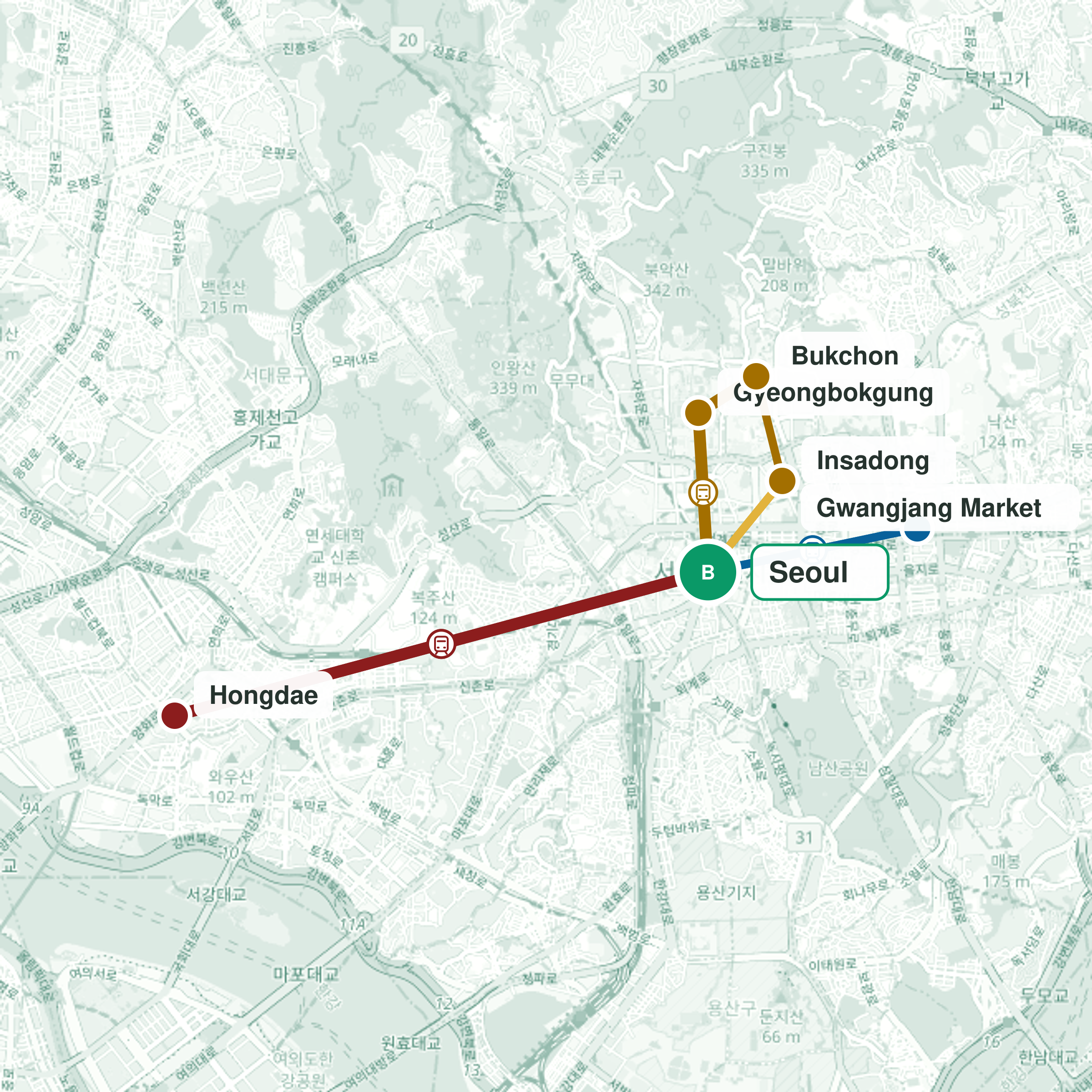
On your first full day, head to the north-central historic core and begin at Gyeongbokgung, Seoul’s major royal palace. Make this the day’s principal visit. Its architecture, grounds, and ceremonial spaces introduce the city as a royal capital, giving you a way to understand the older streets you’ll explore afterward. Allow space for the palace itself, rather than treating it as a quick photograph before the next stop.
Continue on foot toward Bukchon, a residential neighborhood of hanok, traditional Korean houses, between the palaces. This changes the scale of the day, from royal grounds to streets where historic architecture remains part of people’s homes. That distinction matters. You’re entering a living neighborhood, rather than a purpose-built heritage attraction.
Tourist visits in Bukchon’s designated Red Zone are restricted to ten in the morning through five in the afternoon. The restriction applies to that defined area, not every street in Bukchon. That makes this a daytime stage of the walk.
The route step by step
Finish in Insadong, an area known for traditional crafts and tea shops. It completes the historic route with a different experience: looking at crafts and pausing for tea after the palace and residential lanes. These three stages belong together because they show royal, residential, and commercial aspects of the older city within one compact walking day.
For day two, stay in central Seoul, combining walking with the subway as needed. Give this day a looser rhythm, with time for ordinary streets and shopping rather than another major heritage visit. Make Gwangjang Market, a traditional market with a strong food focus, your meal stop.
The point here is to eat within the market’s activity, not turn a succession of food stalls into an entire itinerary. It adds a useful contrast to the previous day. Seoul’s identity also comes from the everyday overlap of eating, commerce, and public life. Leave enough room around the meal to experience the central city at that pace.
On day three, take the subway from your base to Hongdae, the neighborhood around Hongik University, and stay into the evening. This is your main contemporary-neighborhood visit. Its youth culture, street performances, and evening energy offer a clear change from the historic center.
Walk through the area and give the evening time to develop. Here, the experience is the neighborhood’s activity, rather than a single building or a particular café. Keeping the afternoon and evening together lets you spend meaningful time in one area before returning to your central base. On day four, make the Han River your evening destination. Travel from your base toward the riverfront by subway, then continue on foot. Choose a riverside walk and time to pause in a public park, with the river as the setting rather than a monument to tick off.
This gives you another view of the capital
This gives you another view of the capital: open-air public space where an evening can be spent walking or lingering. After the palace’s formal spaces and Hongdae’s commercial energy, the river shows how shared outdoor space fits into city life. Keep that evening open, instead of squeezing it between several distant stops.
A fifth full day can be a slower return to Insadong. Reach the historic core from your base on foot or by subway, then give crafts and tea more time than they received at the end of the first day. The extra day deepens an existing part of the trip, rather than expanding the neighborhood checklist. Keep three decisions in mind: one central base for four to five full days; one main palace followed by the surrounding historic streets; and a few contrasting neighborhoods, with an evening left for the river.
To explore this further, you can generate another Five Cents asking: How does Seoul’s royal history explain its palaces? Or: How can you plan a design-focused visit to Seongsu? That second guide would focus on the neighborhood’s design, cafés, and retail, rather than adding it to this route.