

Introduction
This is Five Cents: travel guide to Rio de Janeiro. Here’s how to spend a full week here without turning it into a race between famous viewpoints. Follow the geography, from beach life in the South Zone to hillside culture and live music. Choose a base, understand why the two big panoramas are different, and leave the island escape until the end.
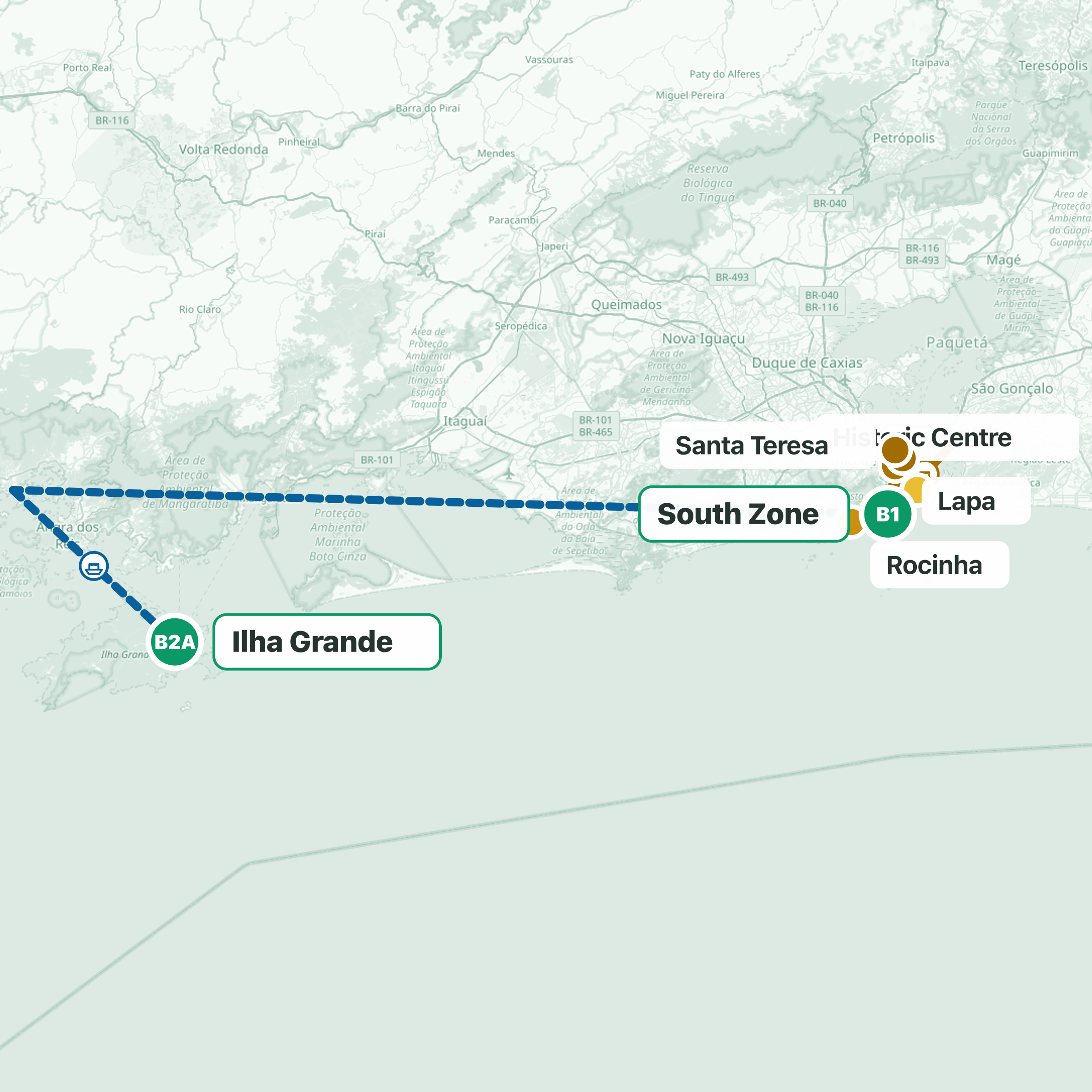
Start by accepting that Rio has no single centre
Start by accepting that Rio has no single centre. Mountains, lagoons, tunnels and bays make short map distances feel longer on the ground. Base yourself in Ipanema, in the South Zone. It balances a beach, walkable streets, cafés and restaurants with useful links across the city. Copacabana, east along the coast, is busier, more tourist-oriented and full of activity at all hours. Leblon, west of Ipanema, is quieter, more residential and more refined, but farther from several cultural and nightlife areas.
Walk between Ipanema and Leblon. Use the metro or a ride-hailing app for bigger changes of zone, which can take around forty minutes in traffic. Treat the coast as daily public life, not a beach checklist. Copacabana shows Rio at its most energetic. Ipanema offers the best balance of beach and neighbourhood. Leblon slows the rhythm down.
Along the promenade, runners, outdoor training groups, vendors, rented chairs and umbrellas turn the shore into a public square. Make time to walk, run, train or join a class by the water. That routine explains more about Rio than a single stop for a photograph. From the South Zone, head east to Urca for Sugarloaf Mountain, the granite formation at the entrance to Guanabara Bay. A ride-hailing app is practical for this cross-city move.
Start at Praia Vermelha, a small beach enclosed by a much greener, quieter setting than the long urban sands. The Pista Cláudio Coutinho follows the hillside and adds a nature walk before the cable car route towards Morro da Urca, when access is available. Sugarloaf is worth it because it makes the city’s structure legible at once. Bay, sea, rock and dense neighbourhoods share the same frame.
Visit Christ the Redeemer separately
Visit Christ the Redeemer separately. It stands on Corcovado, in the green setting of Tijuca National Park, and gives a different lesson. Sugarloaf explains the bay. Corcovado explains the scale of the city, with its lagoons, beaches, forest and mountains spread below. The Atlantic Forest inside a major coastal metropolis is part of what makes Rio so unusual.
Use the current official access for the approach, but give this viewpoint its own moment rather than squeezing both into one rush. Next, move north towards Santa Teresa, allowing up to around forty minutes by ride-hailing app, depending on traffic. This historic hillside neighbourhood replaces the open coast with steep streets, old houses, studios, bars and views across the city.
Its identity is tied to its tram, but its real value is the change of scale. Rio becomes more intimate and cultural. From Santa Teresa, descend towards central Rio and Lapa. The centre adds a historical, commercial and everyday dimension absent from the South Zone. The Arcos da Lapa, a former aqueduct, mark the entrance to a district built for an evening of bars, terraces and live music. Walk the area, then choose a venue with a band rather than treating Lapa as a nightclub district.
Continue towards Pequena África, the historic port-area district that gives this music context. Afro-Brazilian influence runs through samba, food, celebrations and the city’s public culture. Samba is not simply a Carnival performance. It is living music with roots in communities and places. Pedra do Sal is one historic gathering point, known for samba events when its programme aligns with your dates. But it is an option, rather than the only authentic night out. Lapa and other venues keep live music within the week.
Give food proper attention too
Give food proper attention too. Brazilian cooking goes far beyond meat, with fish, vegetables, legumes and regional recipes alongside a strong range of fruit. Try everyday places as well as more elaborate meals, and let the produce guide you. Mangoes can be intensely flavoured, while avocados may be surprisingly large.
Food is another way to connect Afro-Brazilian heritage, neighbourhood life and the variety of the country. For an optional urban experience, Rocinha can help explain how a large hillside neighbourhood developed beyond much formal city planning. Go only with a community-linked person or project that can explain its shops, homes, transport and daily life. Without that context, it becomes sightseeing without understanding.
If you have two or three extra days after Rio, choose Ilha Grande. It is a Costa Verde island with Atlantic Forest, trails and beaches, reached by road to a coastal port and then by boat. Stay in Vila do Abraão, the main village, and use it for a hike or a boat trip to a less accessible beach. It is the calm counterpoint to the city, not a short excursion to squeeze into the week.
Remember three decisions. Stay in Ipanema and use the South Zone as lived city life. Use Sugarloaf for the bay and Corcovado for Rio’s scale. Save Ilha Grande for extra days. For your next Five Cents episode, create Carnaval and Samba Schools of Rio or Live Music in Rio: Lapa, Pedra do Sal and Beyond.