

Introduction
This is Five Cents: travel guide to New Zealand. Plan it as a road journey, because the changing landscapes between your bases matter as much as the headline sights. We’ll build the South Island’s alpine-to-fiord route, then give the North Island its own volcanic and Māori cultural story.
Start by choosing the right scale
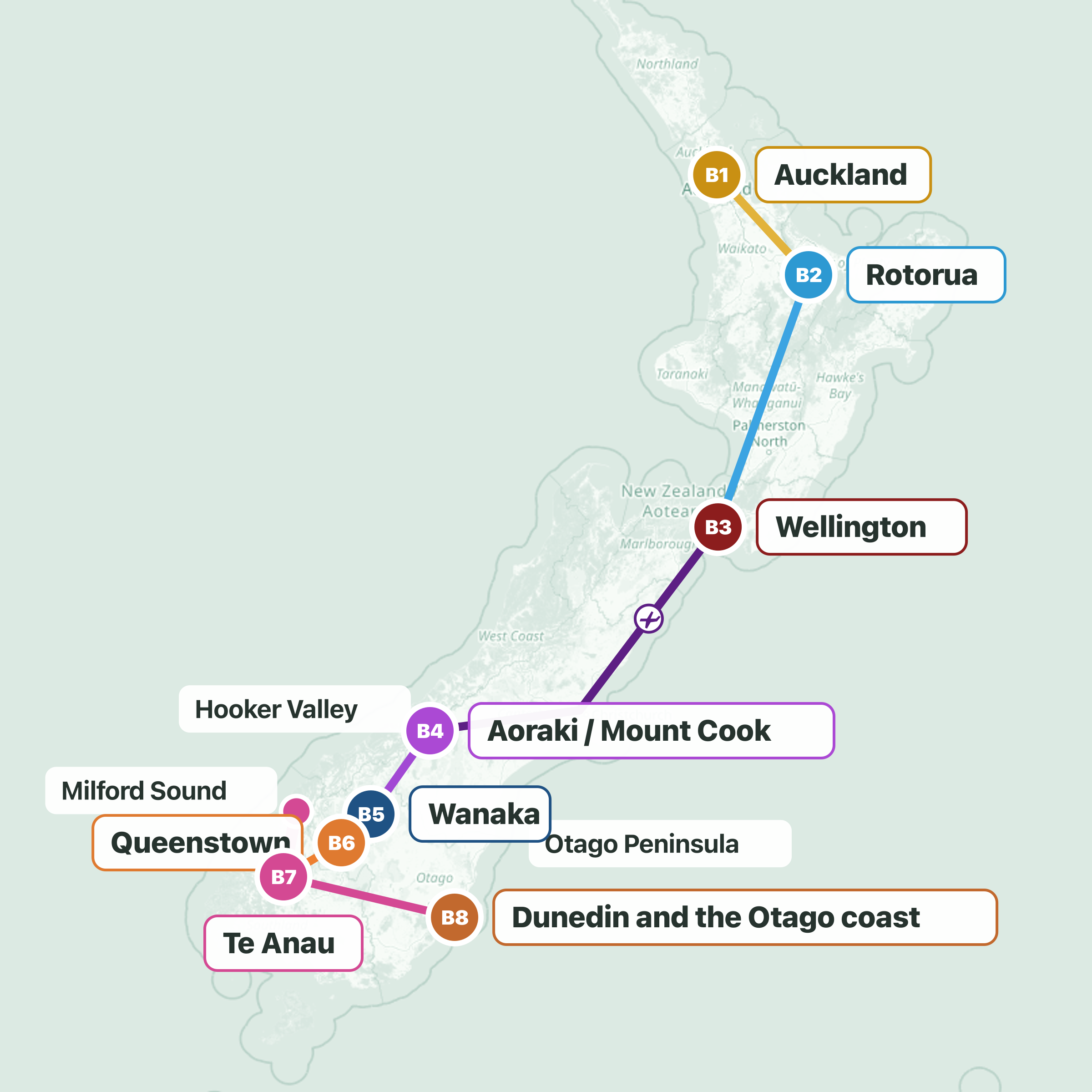
Start by choosing the right scale. A week is enough for one focused island route, not the whole country. Give this fuller South Island journey nine to twelve days. Combine both islands only with two to three weeks, ideally using a domestic flight or the Wellington–Picton ferry.
A car is the clearest choice. It gives you freedom to stop for viewpoints and short walks. A campervan works if sleeping in the landscape is part of the trip. Otherwise, a car with hostels, motels or hotels is simpler. Drive on the left, and allow time. Roads are often winding, steep or narrow.
Christchurch is a practical South Island gateway. Spend one night if needed, then head west and south-west across the Canterbury Plains into the Mackenzie Basin. The shift from farmland to tussock country, turquoise lakes and the Southern Alps is the first lesson in why the road matters here.
Allow two days around Lake Tekapo and Aoraki, or Mount Cook, National Park. Aoraki is New Zealand’s highest mountain, and this is the route’s alpine chapter. The Hooker Valley Track is usually the essential accessible walk. Swing bridges and a glacier-shaped valley lead to views towards Aoraki and the Hooker Glacier.
But the track is currently closed beyond Kakīroa
But the track is currently closed beyond Kakīroa, or Mount Sefton View Lookout, during bridge works. Use the open section or another verified DOC walk rather than planning the former full route. Continue south through Central Otago to Wānaka for one or two nights. It is a lake-and-mountain town with a slower rhythm than Queenstown. That Wānaka Tree is a familiar photograph, but the reason to stop is the wider setting: the lake, the surrounding slopes and time to walk, cycle or simply stay by the water.
From Wānaka, continue south to Queenstown. This is the mountain activity centre, where one high-impact experience is enough. Perhaps a bungy jump, jet boat ride, skydive, seasonal skiing or a mountain outing. Choose the one that suits you rather than stacking similar adrenaline activities. Queenstown gives the trip energy, but it should not become the base for all of Fiordland.
Instead, drive south-west to Te Anau and stay two nights. Te Anau is the practical gateway to Fiordland, the region of deeply carved fiords and landscapes shaped by ice. From here, give Milford Sound, also known as Piopiotahi, a full day. The drive to the harbour is part of the experience, moving through forest and mountain passes before the boat takes you between steep walls and waterfalls. Keep some flexibility in this stage, as weather can affect operations.
With eleven to fourteen days, continue east from Te Anau to Dunedin and the Otago Peninsula for a coastal finale. The mountains give way to exposed roads, open beaches and possible sightings of fur seals or sea lions. Dunedin is the useful base. The peninsula adds a different kind of New Zealand without turning the route into a long detour.
Key stops and decisions
The North Island deserves its own journey rather than a rushed add-on. Start in Auckland if it fits your flights, then move south to Rotorua. Here, geysers, bubbling mud and volcanic ground sit alongside Māori arts and living cultural life. Māori names are not decoration. They often carry stories of landscape, ancestry and journeys. Rotorua is a useful place to understand that land, history and contemporary Māori identity are connected.
Continue to Tongariro for the country’s volcanic landscape. The Tongariro Alpine Crossing can be a major hike when season, weather and your ability line up. But it is an optional, demanding day rather than a universal stop. Finish in Wellington, the national capital, for an urban contrast and a natural connection to the South Island.
The Lord of the Rings trilogy offers a quick visual reference for the scale that made these landscapes famous worldwide. But the deeper lens is Aotearoa’s relationship with whenua, or land, and the Māori names and histories that travel with it. Remember three decisions. Choose one island for a week. Drive the South Island as one connected route from alpine lakes to fiords. And give the North Island its own volcanic and Māori cultural identity.
For your next Five Cents episode, try South Island road trip: Aoraki to Milford Sound, or Rotorua and Tongariro: New Zealand’s volcanic North Island.