
Introduction
This is Five Cents: travel guide to New York. This is a first five-day route for understanding the city as connected urban worlds, rather than a rush through landmarks. You will begin at the harbor, travel north through Manhattan, then cross the East River to Brooklyn, with Harlem adding a final cultural layer.
How to plan the route
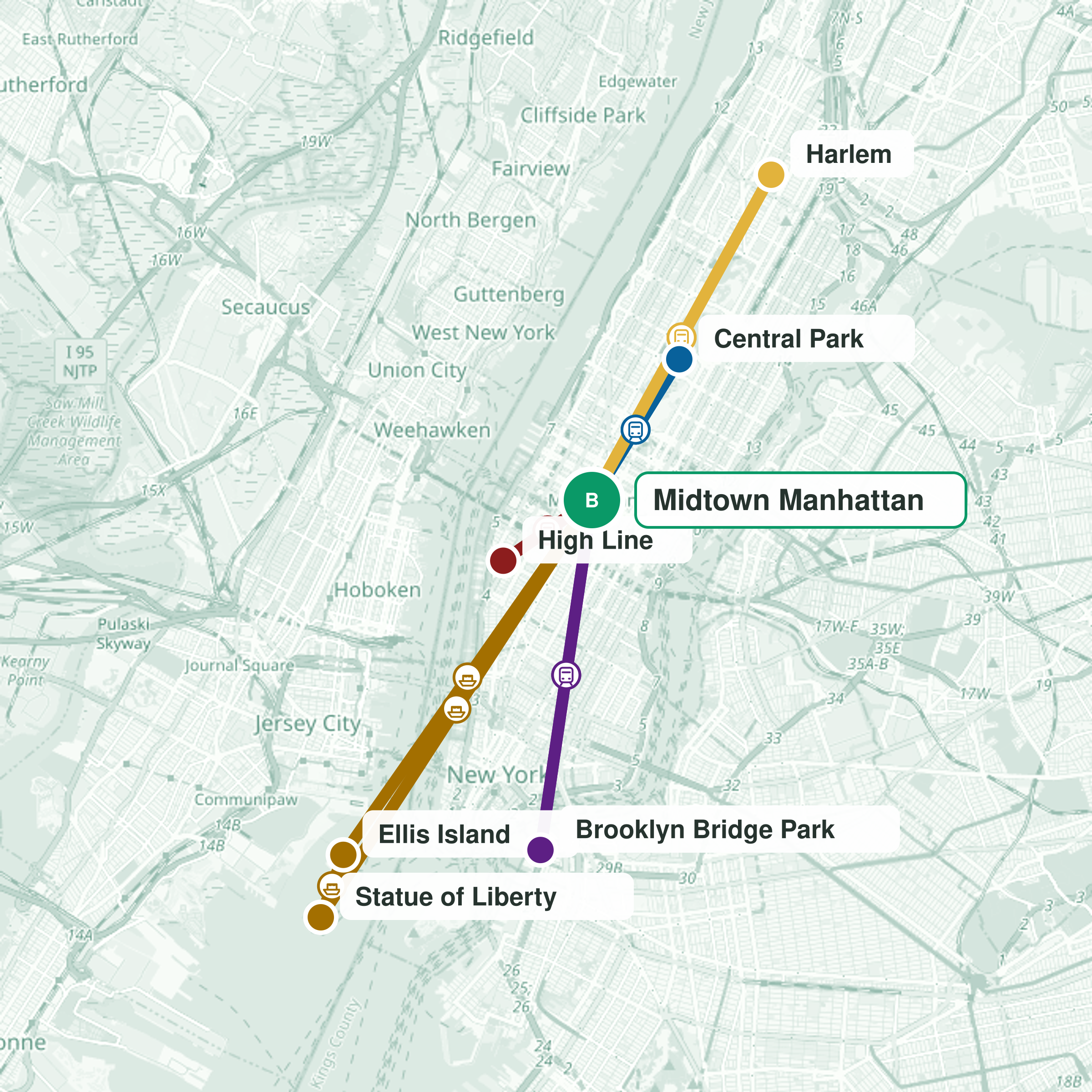
The best way in is to start where New York became a gateway. Stay in central Manhattan for all five nights. It keeps the main route simple. Walk within neighborhoods, use the subway for longer moves, and take a ferry when the water is part of the experience. Four full days can work, but five lets the city breathe.
Start south, at The Battery, on Manhattan’s southern tip. From central Manhattan, take the subway downtown, then board the authorized ferry for the Statue of Liberty and Ellis Island. Give this most of a morning, especially if you want both islands. The point is not simply the statue. This harbor was an entrance to the United States for millions of people. Emma Lazarus’s poem, The New Colossus, associated with the statue, helps explain how it became a symbol of refuge and immigration.
Ellis Island turns that symbol into individual histories of arrival, inspection and uncertainty. Carry that idea back into Lower Manhattan, through the Financial District and toward Chinatown or the Lower East Side. New York’s immigrant story did not end at the harbor. It shaped the languages, food and institutions of its neighborhoods.
On day two, travel north by subway to Midtown. Rockefeller Center gives you the classic concentration of towers and avenues. Choose one skyline view here, then leave the repeated observation decks behind. Times Square works as a brief orientation stop on the way to an evening performance, not as the center of the day.
Continue on foot into Central Park
Continue on foot into Central Park, the large public landscape that changes Manhattan’s scale. On its eastern edge, spend the afternoon at the Metropolitan Museum of Art. It is the right first museum because its collections range widely across periods and places. Give it real time, rather than adding a second major museum. In the evening, see Broadway or another live performance. Theater belongs in this trip because New York’s popular culture is experienced live, not only viewed from the street.
Day three moves back southwest from Midtown, by subway or a longer walk, into Greenwich Village and Chelsea. Greenwich Village offers lower-rise streets and a more residential rhythm after Midtown’s commercial intensity. Continue to the High Line, a former elevated rail line turned into a public walk through Chelsea. It connects galleries, food and contemporary development without forcing you into a scattered neighborhood crawl.
For day four, cross east over the East River by subway or ferry to Brooklyn Heights and DUMBO. Brooklyn Heights is a historic residential area. DUMBO, beneath the Manhattan and Brooklyn Bridges, retains a former industrial texture. Link them through Brooklyn Bridge Park, a waterfront park with room to pause and look back at Manhattan’s skyline. Brooklyn matters because it changes the perspective. The city becomes less a collection of towers and more a network of neighborhoods around the water.
Return by subway or ferry, or walk across the Brooklyn Bridge toward Lower Manhattan if you want the bridge itself to be part of the day. Use day five for Harlem, north of central Manhattan by subway. Harlem adds Black cultural history and a different pace from the postcard core. Walk its streets and let this be a neighborhood day rather than another attraction hunt.
It completes the larger point of the route
It completes the larger point of the route: New York’s cultural map extends far beyond Midtown. For a deeper contemporary immigration and food-focused route, Queens is the optional extension. It deserves its own day, especially around its immigrant commercial streets, rather than being squeezed into this first itinerary.
Keep three decisions in mind. Use one Manhattan base and let walking plus the subway organize the trip. Treat the harbor and Ellis Island as an immigration gateway, not a statue photo. And choose depth over quantity, with one museum, one skyline view and one compact Brooklyn day.
To continue, you can generate Queens, Harlem and immigrant New York. To explore the city’s cultural side, you can generate New York for museums, Broadway and live music.