

Introduction
This is Five Cents: travel guide to Naples. This city break explores Naples through its lived-in historical layers, rather than a checklist of monuments. We’ll choose a central base, walk from the ancient streets to the Gulf, and bring those experiences together through archaeology and a view from above. The order matters: explore the city at street level before stepping back to see the whole picture.
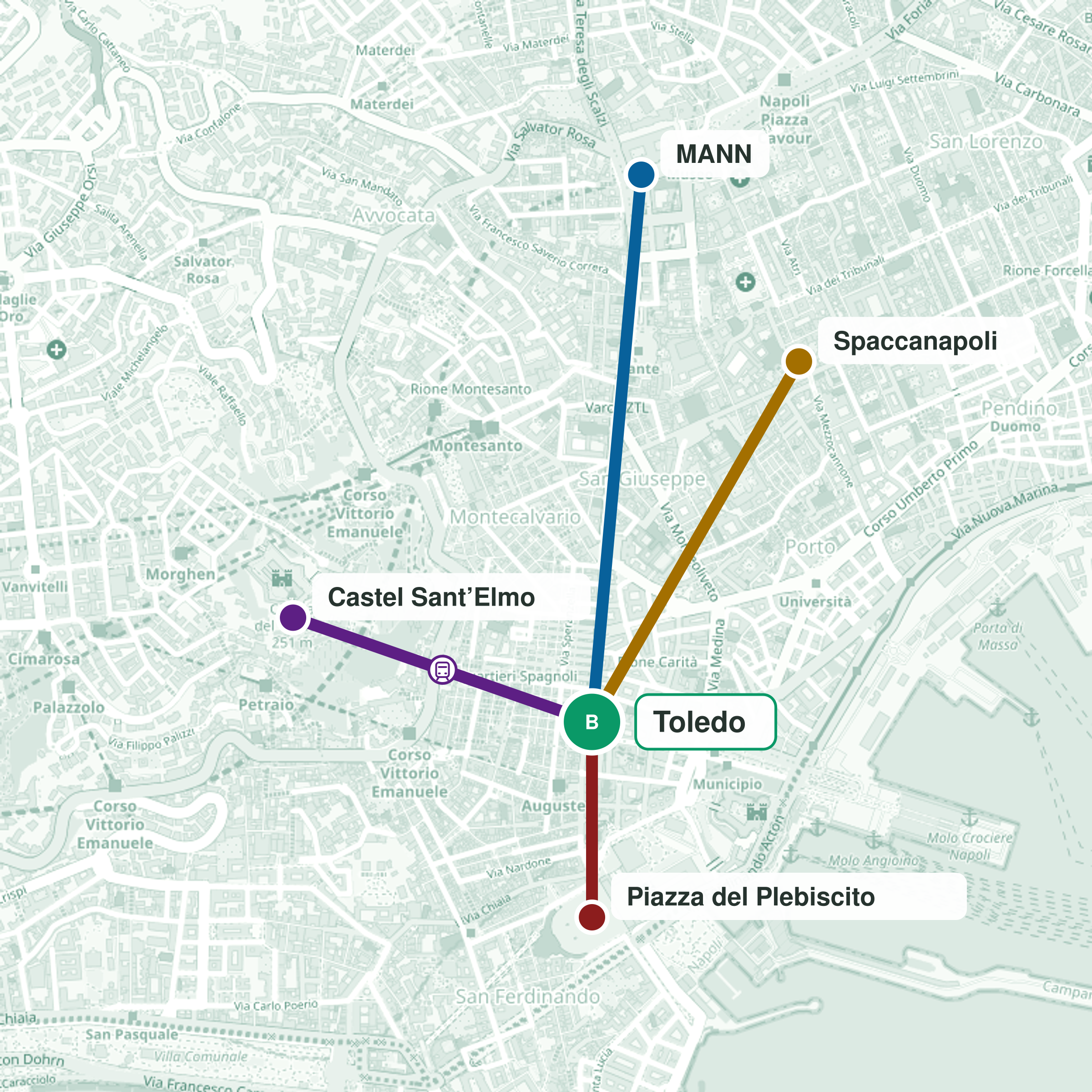
Stay around Toledo or Montecalvario
Stay around Toledo or Montecalvario, between the historic centre, Quartieri Spagnoli, Piazza del Plebiscito and the waterfront. This puts the main stages of the route around one central base. From Naples International Airport, the Alibus reaches Napoli Centrale in about fifteen minutes. From there, continue into the centre on urban transport.
Allow four days for Naples, adding a fifth for Pompeii. Walk the central districts, and use Metro Line 1 and the funiculars when distance or hills make a difference. Your first full day begins east of Toledo, in the historic centre. Spaccanapoli is the long, ancient axis through the old city. Greek and Roman street layouts still shape a neighbourhood of churches, workshops, shops and everyday traffic. The historical interest is in the streets themselves, as well as the buildings along them.
Walk through Piazza del Gesù Nuovo, Santa Chiara and Piazza San Domenico Maggiore, then continue towards San Gregorio Armeno. Rather than collecting church interiors, follow how these places connect within a neighbourhood that remains part of daily life. Make Cappella Sansevero a planned stop along this walk. Its Veiled Christ gives you a concentrated encounter with art, without adding another large museum to the day.
Afterwards, have pizza nearby. Neapolitan pizza matters as a social and craft tradition: gestures, techniques and professional knowledge are learned and passed down through generations. Here, it belongs to the rhythm of the centre. Think of this meal as part of the neighbourhood experience, rather than a search for the highest-ranked restaurant.
The route step by step
On day two, head northwest from the historic centre to the MANN, Naples’ National Archaeological Museum. Walk there or take the metro to Museo. Give it two or three hours, focusing on the Farnese collection and the Vesuvian mosaics, frescoes and everyday objects. These are the pieces that give Pompeii and Herculaneum a human context. Before you encounter their ruins, you’ll have seen the decoration, tools and objects that belonged to their rooms and public life. That connection makes the MANN the key museum for this route.
For a harsher historical perspective before travelling, read Curzio Malaparte’s The Skin. It portrays wartime Naples through inequality, occupation and the tension between beauty and survival. It isn’t a guide to the city today, but it helps explain why Naples resists a polished postcard portrayal. On day three, walk down from Toledo through the Quartieri Spagnoli. These dense streets date from the Spanish era. Beneath the balconies, shrines, shops and passing pedestrians, you can still follow their regular grid.
Follow Via Toledo to Piazza del Plebiscito. Here, the Royal Palace and the basilica of San Francesco di Paola open the city into a broad civic space. Continue on foot past Galleria Umberto I, Teatro di San Carlo and Castel Nuovo towards Santa Lucia and the waterfront. Notice the change in scale: narrow residential streets give way to monumental Naples, then to the Gulf. The walk reveals another essential part of the city’s character: Naples is also a port, framed by water and Vesuvius.
Save Vomero for day four. Take Metro Line 1 or a funicular up to this hillside district, then walk towards Castel Sant’Elmo and the San Martino area. The reason to come here is perspective. The bay, volcano, ancient centre and wider city come into view together. Having explored the lower city first, you can recognise the places below and understand how they fit together.
After completing Naples itself
After completing Naples itself, add Pompeii as a full-day excursion. Take a regional train southeast from Naples. Its streets, houses, baths and public spaces form the Roman urban landscape that the MANN has prepared you to understand. Herculaneum is the compact alternative for anyone who wants a smaller archaeological site. Choose one excavation rather than fitting in both.
Remember three things: explore the historic centre as a working city; pair the MANN with one Vesuvian excavation; and walk from the streets to the Gulf before looking down from Vomero.
To continue, you can generate another Five Cents: How Do Pompeii and Herculaneum Compare? Or explore another side of the city with What Can You Discover in Sanità and Capodimonte?