

Introduction
This is Five Cents: travel guide to Morocco. We’ll shape a first visit around regional contrasts, using an inhabited historic city as the starting point and the Atlantic coast as the second stay. You’ll learn how to divide a week between two bases, what deserves your time in each, and when a desert journey calls for a different itinerary.
Start by choosing the scale of the trip
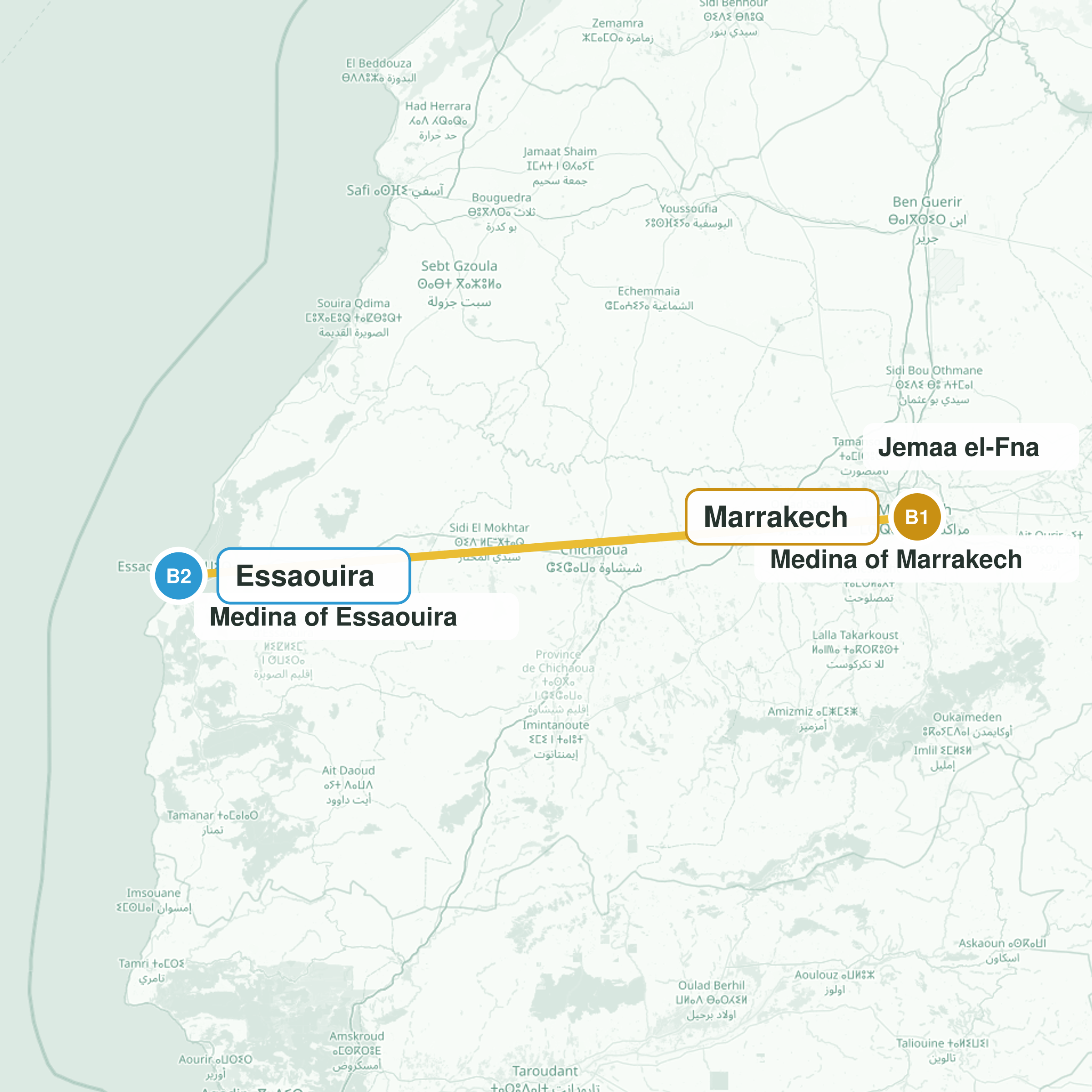
Start by choosing the scale of the trip. For seven or eight days, I recommend Marrakech followed by Essaouira. Marrakech gives you an accessible introduction to the medina, the historic urban quarter where homes, workshops, and trade still belong together. Essaouira, a historic Atlantic port west of Marrakech, brings a smaller city and a coastal setting. The value is in spending time in two distinct regions, rather than collecting stops across the country.
For an eight-day version, spend four nights in Marrakech and three in Essaouira. Arrive through Marrakech Menara Airport and take a road transfer into the city. Leave the arrival day for settling in and an initial walk. Explore the historic centres on foot. Between the two bases, use a coach or arranged road transport, and give that move its own space in the schedule. This is a straightforward two-base trip, with the change of accommodation marking a real change of experience.
In Marrakech, begin with the medina’s lanes and craft activity. A souk is a market area, but treating the whole medina as a shopping destination misses much of what makes it worth exploring. Its historic buildings sit within an inhabited city. Walk through the lanes and pay attention to how workshops, commerce, and homes share the same urban fabric. That helps explain the place more clearly than a long sequence of monument visits.
Give this exploration time across your opening days. Start with the lanes and workshops, then use another day for historic buildings and souks. The aim is to understand how these parts fit together. Keeping the first part of the journey in one city gives you room to notice ordinary activity alongside the heritage that draws visitors.
Jemaa el-Fna, the public square beside the medina, deserves a separate focus. Visit during the day, then return in the evening to experience its changing activity. Its importance comes from continuing commercial and performance traditions, including music and other popular arts. Think of it as a public space with several uses, rather than simply an evening spectacle.
That distinction matters throughout Marrakech
That distinction matters throughout Marrakech. The buildings tell part of the story. The people working and using these spaces tell another. Spending time in the square at different hours is a practical way to see that relationship. It gives you an activity with a clear purpose: observing how the same place changes while remaining part of the city’s daily life.
After those opening days, travel west from Marrakech toward the Atlantic and settle into Essaouira. Stay here for the coastal portion of the week, rather than making it a brief turnaround. The contrast begins with the city’s smaller scale and its setting beside the sea.
Use your first full day to explore Essaouira’s medina, its historic quarter within the port city. Here, the reason to walk is to understand a different urban setting, with the Atlantic close at hand. On the next day, give more time to coastal walks. Together, these experiences make the second stay distinct from Marrakech. Historic streets remain part of the trip, but the coast becomes central to your days. Leave room for a final medina walk before onward travel.
The Sahara belongs to a different trip shape. When the desert is your priority, allow ten to twelve days for Marrakech, a southern overland journey, and Fes, replacing the coastal week.
Start with roughly three days in Marrakech. Then give three or four days to the journey through the High Atlas, the mountain range on the southern route, toward Merzouga, the desert area associated with large dunes. The changing mountain and inland landscapes are part of the experience, so the road journey itself needs time. Spring and autumn are the recommended seasons for this Sahara-focused route.
Continue overland toward Fes
Continue overland toward Fes, another historic city. Allow around two days for its extensive medina and traditional occupations. That adds a different perspective on inhabited urban heritage. The desert-to-Fes leg is substantial, and the whole itinerary needs arrival, departure, and travel slack. This southern journey relies on roads. Trains do not reach the Sahara.
Keep three decisions in mind: experience Marrakech as an inhabited city, choose Essaouira for a week’s Atlantic contrast, and give the Sahara and Fes their own ten-to-twelve-day route.
To continue, you can generate another Five Cents asking: What cultural traditions shape Jemaa el-Fna? Or explore the longer itinerary with: How should I plan a Marrakech–Sahara–Fes road journey?