

Introduction
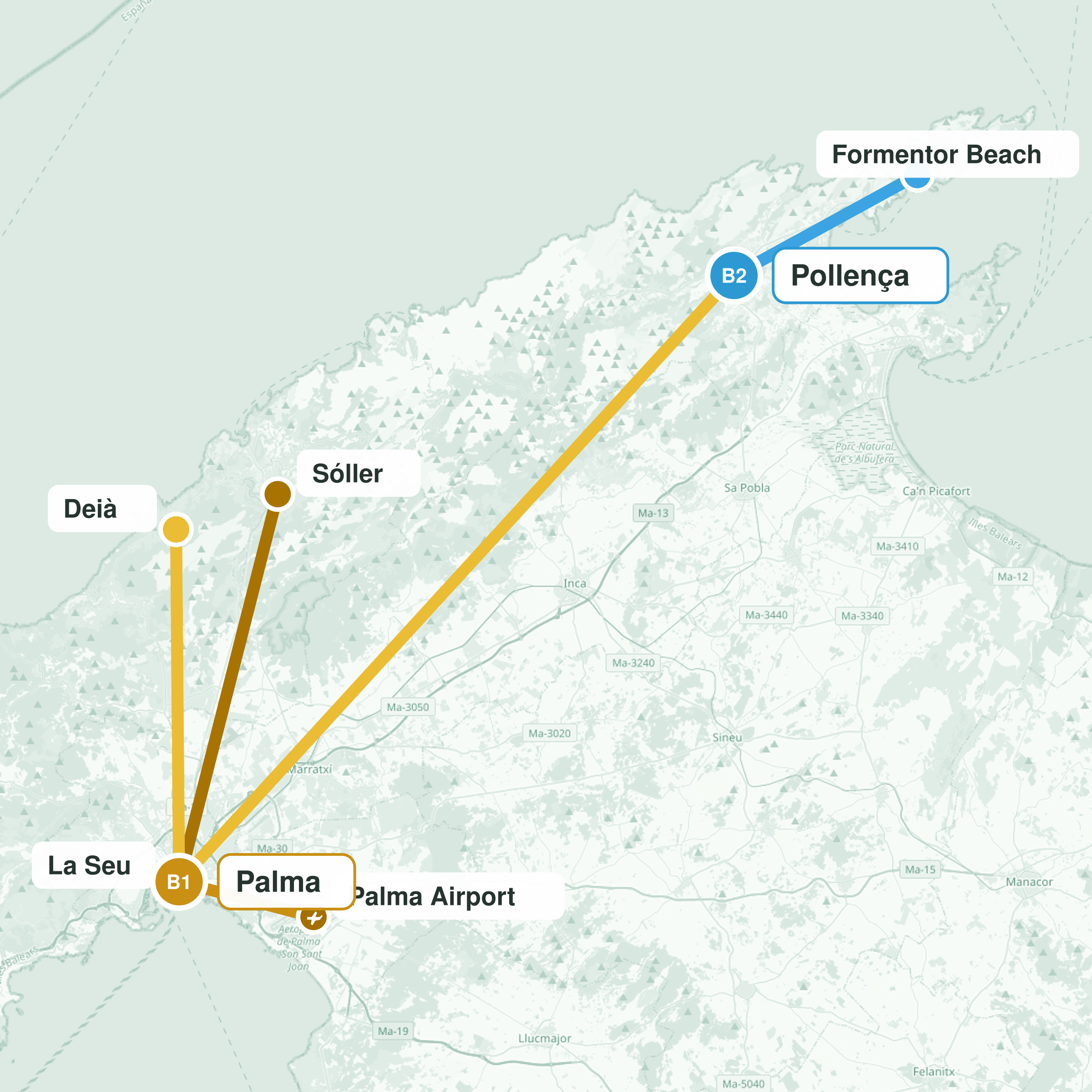
This is Five Cents: travel guide to Mallorca. This first-week itinerary takes you from the historic capital into a mountain landscape shaped by farming, then north to the bays. The aim is to understand those contrasts, rather than circle the island collecting stops. Over seven days and around six nights, use two bases: four nights in Palma and two in Pollença. Spend your first two days in the city, make two mountain excursions, then move north on day five. Each stage has a clear purpose, with time to explore rather than keep changing accommodation. Spring and autumn offer the best balance for sightseeing and mountain outings; summer is a better fit when the beach is your priority. From Palma Airport, the A1 bus connects with central Palma, where you can get around on foot. A rental car gives you flexibility for the mountain day trips and the move north. Public transport offers a slower-paced version with fewer stops, so choose that pace before deciding where to stay. The route keeps Palma as your base for the first four nights, including both excursions into the Serra de Tramuntana.
Day one belongs to Palma’s old town
Day one belongs to Palma’s old town. Walk through the historic centre and get to know the capital as a destination in its own right, not simply the gateway to the beaches. Its Roman, Muslim and Christian heritage gives context to the city you are exploring. Keeping this walk separate from the following day’s main visit also means your time in Palma does not revolve around a single monument. On day two, visit La Seu, the Gothic cathedral beside the sea. Its medieval architecture and later contributions by Antoni Gaudí and Miquel Barceló let you see how a historic building incorporates art from different periods. That continuity is a reason to go inside, alongside appreciating its waterfront setting.
On day three, drive northwest from Palma into the Serra de Tramuntana, the mountain range that shapes this part of Mallorca. Focus on Sóller, a town in a valley where the relationship between terrain and agriculture becomes easier to understand. Terraces create room for crops on the slopes, dry-stone walls support the ground, and water systems show how limited resources were collected and channelled. These are not just mountains to look at: their appearance reflects generations of human work. Explore the valley and notice those features rather than move through a succession of quick viewpoints. Return to Palma for the night.
Day four takes you northwest from Palma again, this time to Deià, a village within the mountain landscape. Continue the same exploration at the scale of a village: look at how the settlement, terraces and dry-stone structures relate to the terrain around them. Allow time to walk around and take in the surroundings. Sóller introduces the agricultural valley; Deià carries that understanding into a mountain village. Together, the two outings explain why the Tramuntana is a cultural landscape, not simply a scenic backdrop. Afterwards, return to Palma for the final night at your first base.
The route step by step
On day five, drive north from Palma and move to Pollença. This change ends the return trips to the capital and brings the final part of the week closer to the bay and Formentor. Keep the day for the move, settling in and beginning to explore the surrounding area. On day six, head northeast from Pollença to Formentor. This peninsula combines cliffs with a pine-fringed beach, a clear contrast with the city and agricultural valley. Make the coast and beach your main experience, focusing on where the mountains meet the sea. To settle the transport arrangements, check the current access conditions for Formentor for your travel dates.
Keep day seven for a walk and beach time on the Bay of Pollença. Its open stretch of coast lets you finish with less travelling. After the peninsula outing, this is time beside the sea rather than another journey to a different part of the island. The final stage gives the northern coast room in the itinerary without turning the week into a tour of every beach.
Remember three ideas: follow the route from Palma through the Tramuntana and then north; recognise the mountains as a landscape shaped for farming and channelling water; and use two bases with one main coastal experience. To explore further, you can generate two more Five Cents guides: How can I plan a hiking route along the GR 221? And What does Robert Graves tell us about Deià and its community of artists?