

Introduction
This is Five Cents: travel guide to Maldives. This is a country of coral atolls where the defining journey happens at sea. Choose islands for the diving around them, rather than for the villa image.
We’ll decide between a local island and a resort
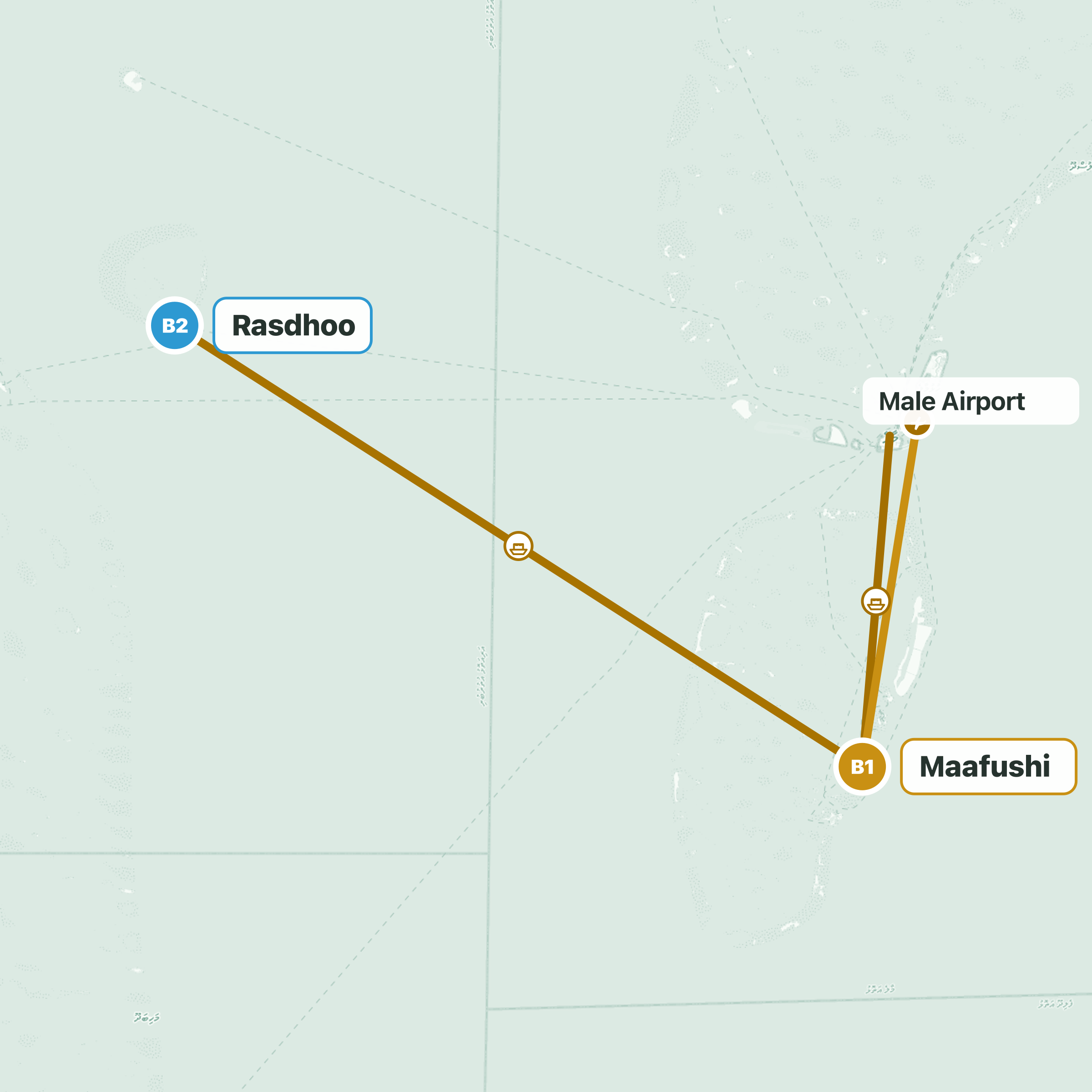
We’ll decide between a local island and a resort, build a seven-night route through Maafushi and Rasdhoo, and keep snorkelling in its proper place as a strong complement to diving. Start by looking below the surface. An atoll is a ring of coral islands around a lagoon. In the Maldives, the island where you sleep is your base. Boats carry you to reefs, channels between atolls, and thilas, which are underwater pinnacles.
Currents bring food through these spaces, concentrating marine life. One dive may follow a reef wall. The next may bring schooling fish, reef sharks, or mantas at a cleaning station. Conditions, terrain, and wildlife vary by atoll and by day. That is why the sea here offers more than a succession of beaches.
For a week, choose a local-island route: three or four nights in Maafushi, then three nights in Rasdhoo. A local island means independent accommodation, small restaurants, dive centres, and a lived-in community, rather than a self-contained hotel island. It gives you flexibility to choose boat outings and see daily island life.
A private resort is the better alternative for travellers seeking privacy, integrated services, and a contained break. But choose one for its dive access and reef, not for the room category. Arrive through Velana International Airport, beside Malé, where jetties and boats make clear that water is the country’s transport network.
Your accommodation can coordinate the boat transfer south into South Malé Atoll, for Maafushi, the first base. Maafushi is a well-known local island with a broad choice of accommodation, restaurants, dive centres, and shared excursions. That makes it useful at the start. You can settle in, arrange several days at sea, and use it as a flexible launch point for the surrounding dive areas.
The route step by step
It is also more developed and busier than many small Maldivian islands. Its value is practical access, not seclusion. A diving day starts at the island’s centre, then continues by boat to a reef, channel, or thila. There can be more than one dive in a day. The contrast between sites is part of the experience: coral relief on one outing, open-water movement and large schools of fish on another.
This is the rhythm to prioritise over beach-hopping. Snorkelling belongs between diving days or on a dedicated boat outing. It offers a lighter way to spend time over the reef and stay close to marine life, without making claims about a particular species or beach. On a local island, swimming areas for visitors are often designated as bikini beaches. Public beaches remain part of a Muslim community’s everyday space.
After several days, move north by boat, according to current operations, to Rasdhoo. Rasdhoo is a local island in Rasdhoo Atoll, within the North Ari area. The single change of base is deliberate. It gives the week another underwater setting without turning it into a chain of transfers. Rasdhoo has a more concentrated, diving-focused character.
The routine remains simple: leave from the dive centre, travel to nearby sites, return to the island, then spend the afternoon on the beach, walking its short streets, or eating at a small restaurant. That simplicity is the point. Maafushi shows the connected, lively side of local-island tourism. Rasdhoo lets the sea take over again.
This is also the honest test of whether the Maldives fit your trip. The water and beaches are remarkable, but land-based variety is limited on many small islands. If diving, snorkelling, and a slow resort stay hold little appeal, the days can become repetitive. If the sea is the reason for coming, two bases are enough to make a week feel varied.
Malé should stay outside the main route
Malé should stay outside the main route. If a transfer leaves you with a few hours there, walk the harbour. Fishing boats unloading tuna, the market, and the quick movement of fish into the city explain how food and goods circulate through an island nation. It is useful context, not a reason to spend a night away from your island bases.
For a specialist extension, consider Fuvahmulah instead of adding a third island to this route. It is an island-atoll in the far south, reached by domestic flight from the Malé area, and known among divers for large pelagic species, especially tiger sharks. Give it several days of its own if that is the centrepiece you want. It is a different, more dedicated diving trip.
Keep three decisions: choose your island for what happens underwater, use Maafushi and Rasdhoo as two complementary bases, and let diving define the trip while snorkelling supports it. You can create a new Five Cents episode on Choosing a Maldives Atoll for Mantas, Sharks and Reefs, or on Fuvahmulah Diving: Tiger Sharks and a Southern Maldives Route.