

Introduction
This is Five Cents: travel guide to Madeira. Plan six or seven nights with one base in Funchal, taking day trips through the dry east, central mountains, wet north and western coast. The priorities are one summit, one levada or forest walk, and Porto Moniz’s volcanic pools. Start with the decision that makes the whole route work.
Madeira Cristiano Ronaldo International Airport is in the east
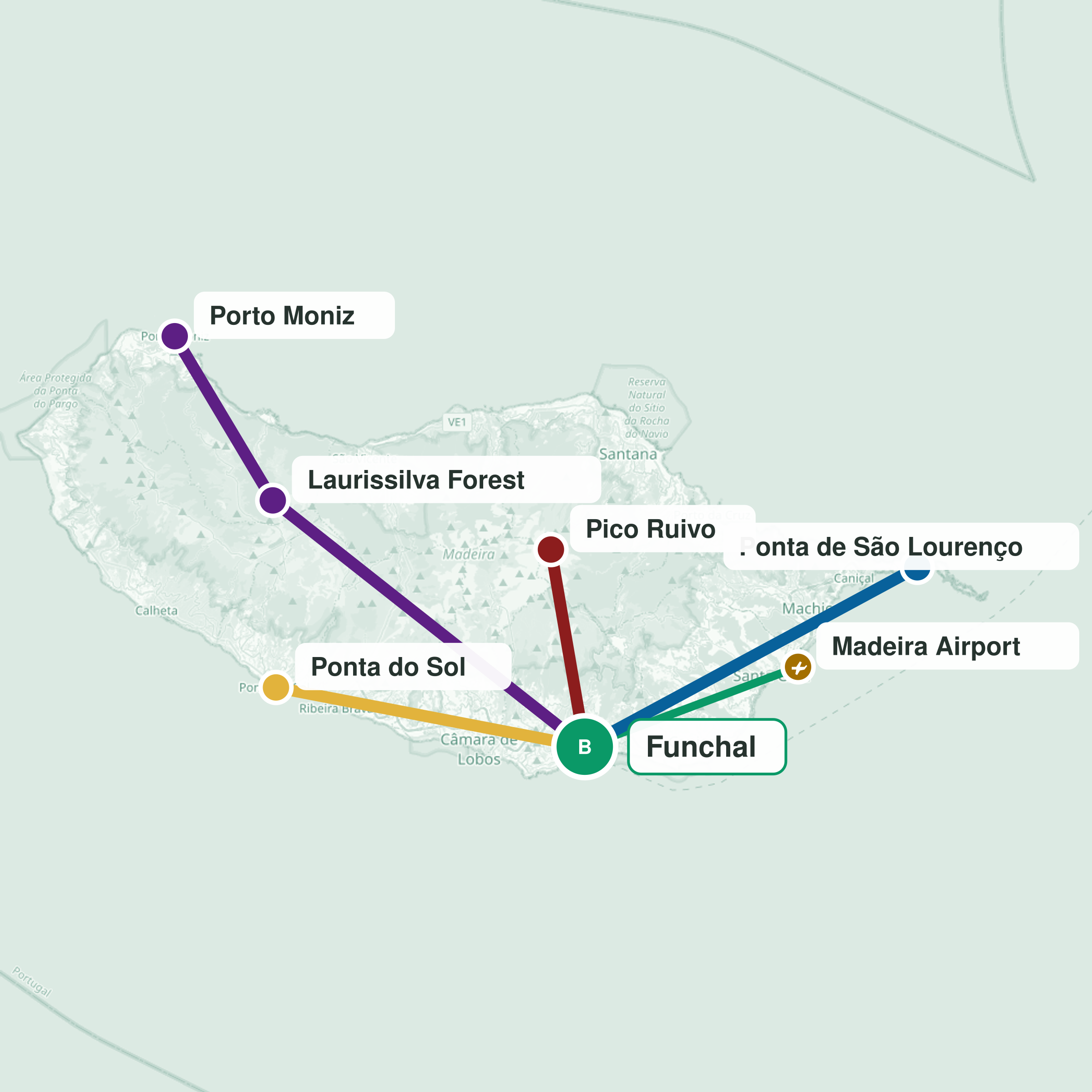
Madeira Cristiano Ronaldo International Airport is in the east, about twenty minutes by road from Funchal. Stay in the capital throughout and use a rental car for your island days. Funchal brings together transport, food and cultural life; a car makes trailheads, mountain roads and coastal stops practical. Without one, Funchal’s buses, transfers or organised excursions let you follow the same general sequence.
Give Funchal a full day before heading into the countryside. The capital stretches between the Atlantic and cultivated hillsides. Walk through the historic centre and visit Mercado dos Lavradores, the market, to understand the produce and fish behind local cooking. Make the city your introduction to espetada, grilled beef skewers; bolo do caco, a local flatbread; black scabbardfish, limpets, poncha and Madeira wine. Sugar cane and wine shaped part of the island’s early economy, so food here also tells the story of its Atlantic trade.
From Funchal, drive east for half a day or a full day at Ponta de São Lourenço, Madeira’s exposed eastern peninsula. Its dry, wind-shaped volcanic terrain and open-ocean views provide a striking contrast to the subtropical city. Explore the peninsula on foot rather than linking similar viewpoints: this is the island’s more exposed, rugged side.
The next day takes you northeast from Funchal into the central massif. Pico Ruivo is Madeira’s highest summit. The route from Achada do Teixeira gives general visitors a clear mountain objective without relying on the more demanding ridge traverse from Pico do Areeiro. The walk is 2.8 kilometres each way, with the return trip taking around an hour and a half. Here, Madeira becomes more than an island of scenery: it is a mountain destination, with ridges and steep terrain replacing the coast.
The route step by step
The following day, drive north and then west through the Laurissilva Forest, Madeira’s UNESCO-recognised laurel forest. Choose one verified levada route here. Levadas are irrigation channels that carried water from the wetter north towards the drier, cultivated south. Walking beside one explains why Madeira’s landscape is both natural and built. Water management and terraces made farming possible on steep volcanic slopes. Check the chosen route’s official status before committing the day, because access can change.
Continue along the north coast to Porto Moniz for the clearest encounter between volcano and ocean. Its natural pools are basins of black rock filled with Atlantic water. They make a fitting finish to this long loop, turning the geology seen in the mountains and forest into somewhere to swim or pause beside the sea.
If you pass through Santana, stop briefly. Its triangular, thatched houses offer useful insight into how rural life and historical isolation shaped the north, but do not need a separate day. Finish the main route west of Funchal in Ponta do Sol, a small coastal town where a valley’s cultivated slopes meet the Atlantic. It is the right western stop because it shows the relationship between farming, mountains and sea without turning the day into a town-by-town circuit.
Think of Madeira’s coast in terms of volcanic shores, pools and bathing areas rather than a conventional sandy-beach holiday. With a seventh night, leave half a day free. Whale watching from Funchal is the best optional addition for a marine perspective, complementing the land route rather than repeating it. The other good option is simply more time in Funchal, enjoying its food, wine and streets.
Key stops and decisions
Remember the route: stay in Funchal, use a car to make the island circuit practical, and leave time for one summit, one levada and Porto Moniz. Madeira’s forests and farmland are connected by water infrastructure, just as its mountains and coasts are shaped by volcanoes.
To continue, you can generate another Five Cents, The Best Levadas and Mountain Walks in Madeira. To explore further, you can generate Madeira Wine, Food and Funchal’s Atlantic Trading History.