

Introduction
This is Five Cents: travel guide to Lisbon. This guide helps you plan three full days around the city’s clearest contrast: an orderly, rebuilt downtown beside the river, with older, steeper neighborhoods above it.
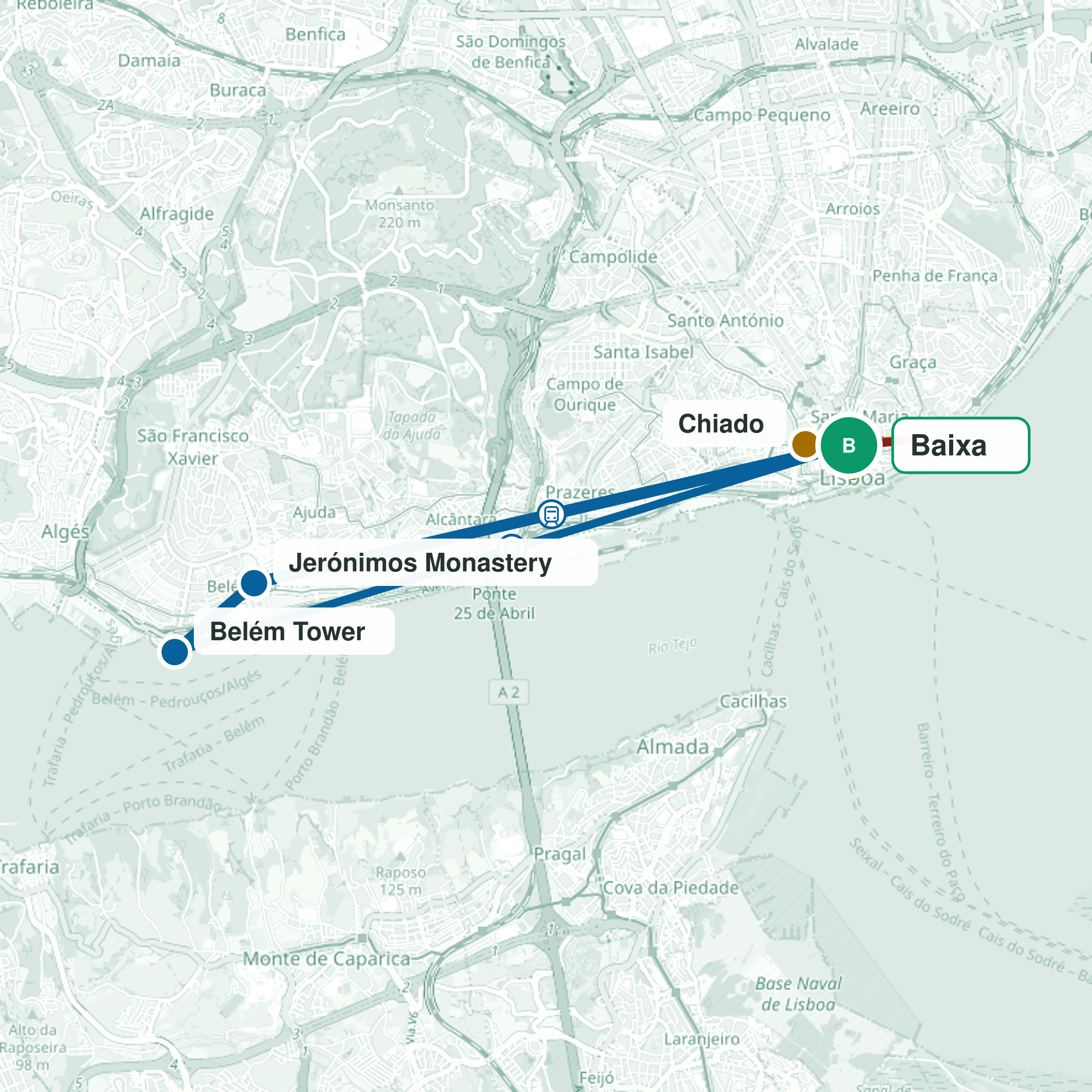
We’ll connect those central districts on foot
We’ll connect those central districts on foot, give the western maritime waterfront its own day, and leave time for a fado performance before considering an excursion beyond the city. Start by choosing a base that makes those movements straightforward. Stay in Baixa, the flatter downtown district. One central base serves the whole visit, including an optional fourth day away, so there’s little reason to change accommodation between neighborhoods.
From Lisbon Airport, the metro reaches Saldanha, a city metro connection point, in about twenty minutes. Continue from there toward your central base. That figure covers the journey to Saldanha, rather than the full transfer to Baixa. Walking is the main way to explore connected central areas. Use the metro and Carris, the city’s public transport network, for longer gaps, and tram fifteen E for the outing west to Belém.
The important planning factor is the climb, rather than the distance. Hills and cobbled lanes can make the central walk demanding for visitors with limited mobility. And the historic tram should not be assumed to provide an accessible substitute. Begin day one at Praça do Comércio, the square beside the Tagus, Lisbon’s river. From this waterfront starting point, walk north through Baixa.
Its broad, ordered streets give you an easy first orientation, but they also explain a major chapter of the city’s history. Much of the lower city was rebuilt after the earthquake of seventeen fifty-five, following a planned reconstruction scheme. The grid you’re walking through is a visible result of that rebuilding.
Continue uphill into Chiado
Continue uphill into Chiado, the adjoining central hillside district. It forms the next part of the walk, taking you from the flatter downtown toward the city’s slopes. Allow roughly half the day for Baixa and Chiado, with space to pause rather than treating the streets as corridors between attractions.
Then head toward Alfama, the older hillside quarter, for the second half of the day. Here, narrow lanes and stairways replace the straightforward grid. Exploring those streets is the experience. You follow the changing layout and find views back toward the river and lower city. One elevated view is enough to understand that relationship.
Grouping the hills into this first-day walk keeps the route coherent and avoids making several separate climbs from downtown. Afterwards, return to your Baixa base. Day two takes you west along the Tagus to Belém, the riverfront district associated with Portugal’s maritime expansion. Take tram fifteen E from the center and give this area a separate day. That allows the architecture and waterfront to make sense together, rather than squeezing them between central sightseeing stops.
Make Jerónimos Monastery your main visit. Construction began in fifteen-oh-two, and the monastery helps explain the wealth and power expressed through Manueline architecture during the era of overseas expansion. Read it as a monument to that period, rather than simply an impressive building detached from the river beside it.
Key stops and decisions
From the monastery, continue on foot along the waterfront toward Belém Tower. Built around fifteen-fourteen, this riverside tower combined defense with royal and maritime symbolism. Seeing it from outside completes the connection between the monuments and their setting. Keep the day centered on the monastery and the riverfront, with the tower’s exterior as part of the walk. Return east to the same central base afterwards.
For day three, head back uphill into Alfama at a slower pace. The first visit showed you how the old quarter fits into the city. This return gives you time to spend there. Leave room for a café pause and an unhurried walk, then make one evening fado performance the day’s main cultural experience. Fado is a sung urban tradition rooted in Lisbon. It is performed professionally in fado houses and by amateurs in community associations, so it belongs to the city’s communities as well as its performance venues.
Give the music your attention as a performance in its own right, rather than treating it as background to dinner. It adds something distinct from the streets and monuments you’ve explored. With those three days complete, Sintra can become a fourth-day excursion. Travel out from Lisbon by train, devote a full day to its palaces and different landscape, and return to Baixa. Adding a day preserves the Lisbon route rather than taking time from its core.
Keep three decisions in mind: stay centrally in Baixa for three full days; group the central hills together and give Belém its own day; and leave time for fado before adding Sintra. To explore further, you can generate another Five Cents asking: How did the seventeen fifty-five earthquake reshape Lisbon? Or: How did fado grow from Lisbon’s communities?