

Introduction
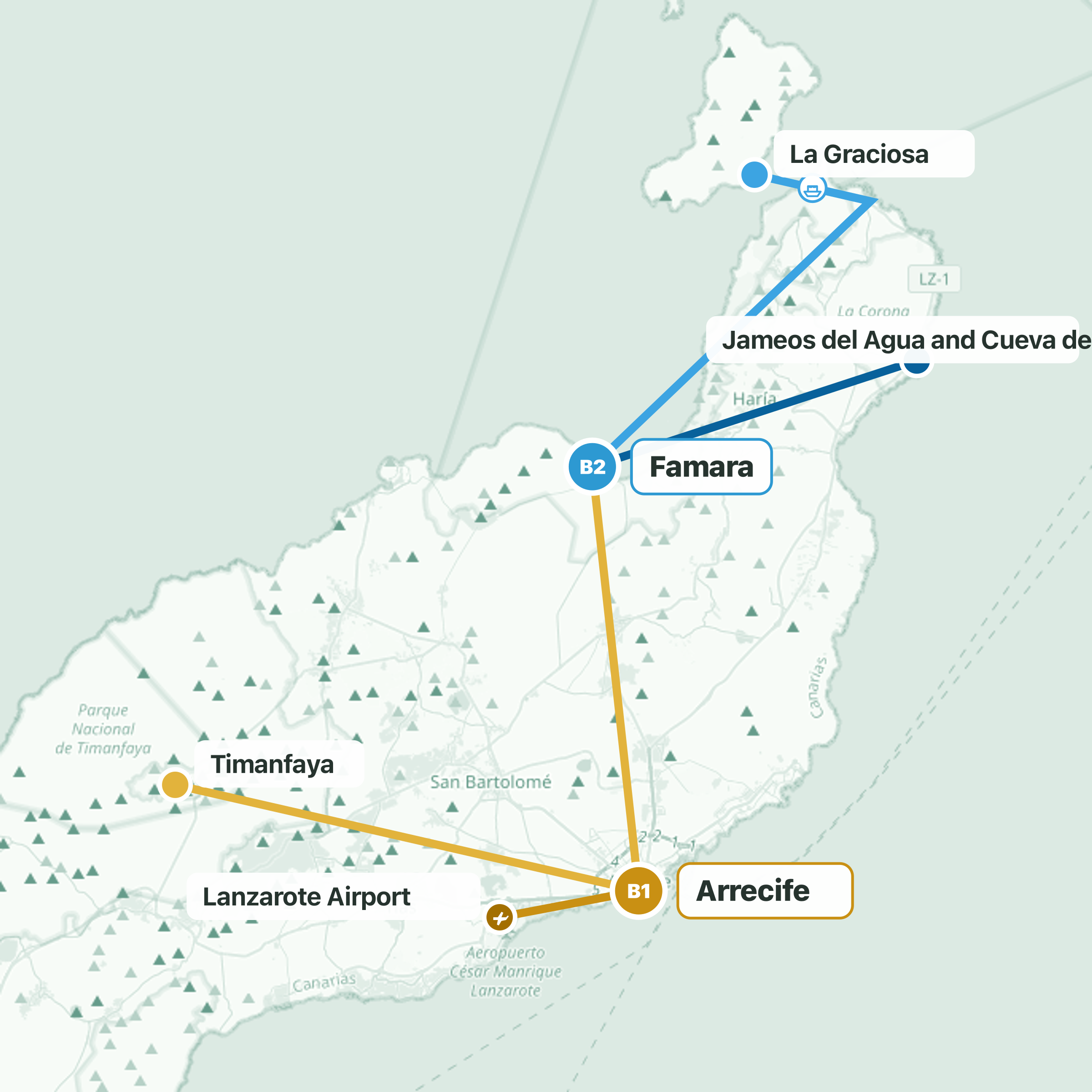
This is Five Cents: travel guide to Lanzarote. This guide helps you plan a first visit without turning the island into a race between beaches and resort areas. Over five or six full days, base yourself in Arrecife or somewhere central, then use a car to link the volcanic west, the north, and La Graciosa.
The key is simple
The key is simple: lava explains the land, and the lack of water explains how people learned to farm and build on it. Start in Arrecife, then follow that logic through Timanfaya, La Geria, César Manrique’s northern landmarks, Famara, and finally La Graciosa. Arrecife, the capital, is about six kilometres from César Manrique Airport. Its harbour, promenade, restaurants, and everyday urban rhythm make it a practical base, distinct from the resort areas. Spend some time by the port and have a meal before using the car to connect the island’s routes.
Your first major day heads west. Timanfaya is around 35 to 40 minutes by car from Arrecife. The national park brings together craters, cones, lava flows, and mineral colours in a landscape where vegetation barely conceals the shape of the eruptions. You reach Islote de Hilario, then travel through the protected interior on the official bus along the Route of the Volcanoes. The point is the journey through lava fields and volcanic reliefs: Timanfaya shows the scale of Lanzarote better than any isolated coastal stop.
Continue inland to La Geria. This is the other half of the island’s story. Vines grow in hollows dug into volcanic ash, sheltered by small stone walls. It is a visible response to scarce water and strong winds, turning apparently barren ground into an agricultural landscape. Stop at a winery to try volcanic malvasia. The wine makes sense because you have already seen the farming system that produces it. For lunch on this route, a teleclub, a village social club or restaurant, is a good way to include Canarian produce without chasing a list of venues.
The second main route is in the north. Set aside a full day for lava, architecture, and cliffs. Begin at Jameos del Agua. A jameo is an opening formed when part of a volcanic tube’s roof collapses. César Manrique turned this space into an arts and cultural centre, where rock, an interior lagoon, and architecture still reveal their geological origin.
The route step by step
Manrique, an artist born in Arrecife, was central to connecting nature, design, and tourism without hiding the landscape. Continue along the cliff road to Mirador del Río, high on the Risco de Famara. The building is integrated into the rock and looks across to La Graciosa and the Chinijo Archipelago. It is more than a viewpoint: it explains the relationship between northern Lanzarote, the strait, and the island you will visit next.
If you want a more direct geological experience, replace Jameos del Agua with Cueva de los Verdes. It is a visitable section of the La Corona volcanic tube, with galleries formed by lava. On the northwest coast, give Famara half a day or make it a long stop on the northern route. It is a village beneath the cliff, with a wide beach and a surf-focused atmosphere. It offers an open, more local coastline in contrast with the southern coves.
Famara also helps explain why Lanzarote has drawn film crews. It appears in Pedro Almodóvar’s Broken Embraces, although its real value here is the village and coast rather than the screen setting. The priority finale is La Graciosa. From Órzola, in northern Lanzarote, the ferry takes about 25 to 30 minutes to Caleta de Sebo, its main settlement. Unpaved streets and the small scale immediately change the pace. Get around on foot, by bicycle, or by authorised four-wheel-drive taxi.
For a first trip, choose the northern route to Playa de las Conchas. Facing Montaña Clara and Alegranza, it combines pale sand, volcanic materials in different colours, open sea, and a strong sense of isolation. It completes on the ground what you saw from Mirador del Río. La Graciosa does not need a full circuit. It works best as a calm extension of the northern landscape.
Once the main route is complete
Once the main route is complete, add Papagayo for a sixth day or a long afternoon. Its pale-sand coves, dry terrain, and views towards Fuerteventura and Lobos offer the representative beach experience without displacing the central themes of lava, farming, and architecture. Remember three things: Timanfaya explains the scale of the lava. La Geria shows how cultivation adapted to very little water. And La Graciosa completes from the sea the landscape read in the north.
For your next episode, you can create a Five Cents guide to La Graciosa: North and South Routes, or César Manrique: Architecture and Landscape in Lanzarote.