

Introduction
This is Five Cents: travel guide to Kuala Lumpur. Plan three full days travelling west to east, from the city’s riverside trading origins through the symbols of independent Malaysia to the Petronas skyline. We’ll choose a practical base, connect the main districts on foot and by train, and leave Batu Caves as an extension rather than a rushed obligation.
How to plan the route
Start with the rivers to understand how these districts fit together. Kuala Lumpur grew where the Klang and Gombak meet. Chinese commercial life, colonial administration, Malay and Islamic national identity, tropical gardens and skyscrapers sit close together. A route through these layers makes more sense than jumping between shopping centres and viewpoints.
Stay three or four nights around Pasar Seni, beside Chinatown. From Kuala Lumpur International Airport, take the KLIA Ekspres to KL Sentral. Then combine walking around the historic centre with the MRT, LRT or monorail for longer journeys. Pasar Seni offers the best balance: the old centre is nearby, and the rest of the city remains well connected.
On day one, walk from Pasar Seni through the old commercial centre. Central Market is a restored art deco building now devoted to Malaysian crafts, including batik and songket textiles. Make a brief stop, then continue to Petaling Street, Kuala Lumpur’s historic Chinese shopping district. Its appeal lies in the lanes, food and everyday activity, rather than bargain hunting alone.
Eat here, or stop for a kopitiam-style breakfast. Food is one of the clearest ways to explore the city’s Malay, Chinese and Indian-Malaysian mix. From Chinatown, head west and north towards Masjid Jamek, one of the city’s oldest mosques. It stands beside the river confluence that explains Kuala Lumpur’s name. Continue on foot to Merdeka Square, the colonial city’s civic heart. Here, the Union Jack was lowered in 1957 and the flag of independent Malaya raised.
The route step by step
Across the square, the Sultan Abdul Samad Building, with its clock tower and domes, makes the colonial layer visible. Including meals and stops, this walk fills most of an unhurried day and gives historical context to the skyline you’ll see later. On day two, head southeast from Pasar Seni or Chinatown, crossing the central railway corridor. Go by train or use a ride-hailing service; the journey takes roughly fifteen to twenty-five minutes.
The Islamic Arts Museum Malaysia is the cultural priority. Its galleries cover around 1,400 years of Islamic art, with manuscripts, textiles, ceramics, architecture and objects from the Malay world. Allow an hour and a half to two hours. It offers much more depth than visiting several smaller museums, showing that Malaysia’s Islamic identity is regional and international, as well as architectural.
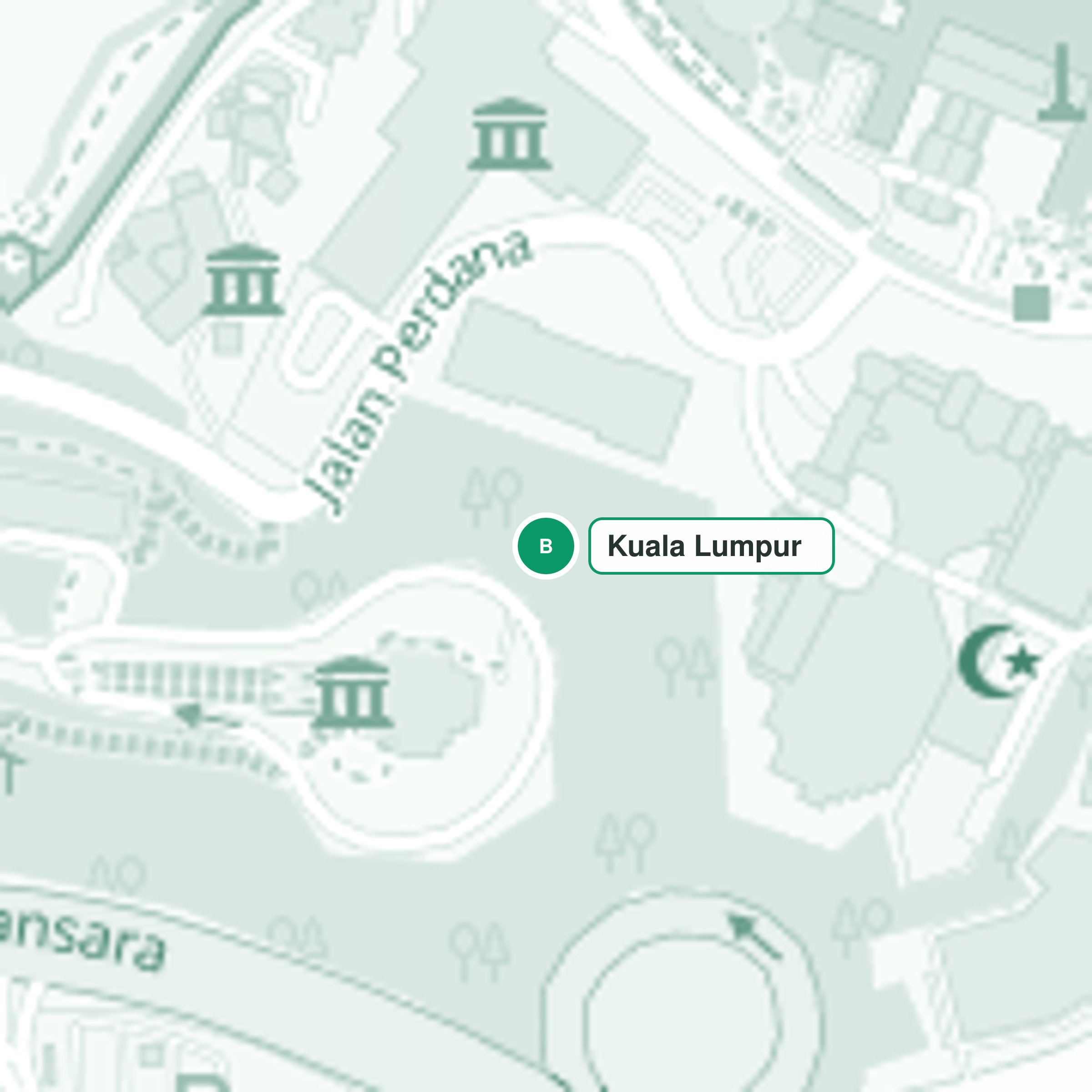
Nearby, the National Mosque provides a visual counterpart: a modern landmark of the post-independence era, with an umbrella-like roof. Pair it with the museum as an architectural stop, then walk to Perdana Botanical Garden. The garden is a useful pause within this district, revealing how much tropical green space sits beside the civic and cultural centre.
On the final day, take the train east to KLCC, the contemporary commercial district. At 451.9 metres, the Petronas Twin Towers are the clearest expression of Kuala Lumpur’s modern ambition. Seeing them after the old town and museum district makes them the endpoint of a story, rather than simply a photo stop.
Key stops and decisions
Admission is timed, so build the tower visit into your afternoon. Afterwards, take a short walk through KLCC Park, where the towers become part of a public urban landscape. Continue southwest to Bukit Bintang for dinner. This is the city’s liveliest evening district, where Malay, Chinese and Indian-Malaysian influences meet contemporary restaurants, shops and street life. It feels different from Chinatown: less historical, more immediate and metropolitan.
Let meals across these three days reflect that variety, rather than chasing a long list of famous dishes. Once you’ve completed the central route, Batu Caves is the one extension worth recommending. Travel north by train and allow half a day, or a long morning, for this Hindu pilgrimage complex among limestone hills. Its 272 steps and cave temples add a religious and physical landscape absent from central Kuala Lumpur.
Add it only on a fourth day, or if you’re willing to reduce your museum time. It shouldn’t squeeze the historic walk, Islamic Arts Museum and KLCC into a single day. Remember three decisions: stay near Pasar Seni, follow the city from the Klang–Gombak confluence to the Petronas skyline, and give the Islamic Arts Museum enough time. Three full days are enough; Batu Caves is the extension, not the core itinerary.
To continue, you can generate Kuala Lumpur Food Routes: Malay, Chinese and Indian-Malaysian Meals. To explore further, you can generate Batu Caves and Kuala Lumpur’s Religious Heritage.