

Introduction
This is Five Cents: travel guide to Ibiza. Let’s plan a first week combining the historic city with Mediterranean landscapes, taking trips to different parts of the island from one base. The route begins in the capital, continues south and west, then explores the contrast between the eastern coast and the countryside. Start by choosing where to stay.
The recommendation is Eivissa
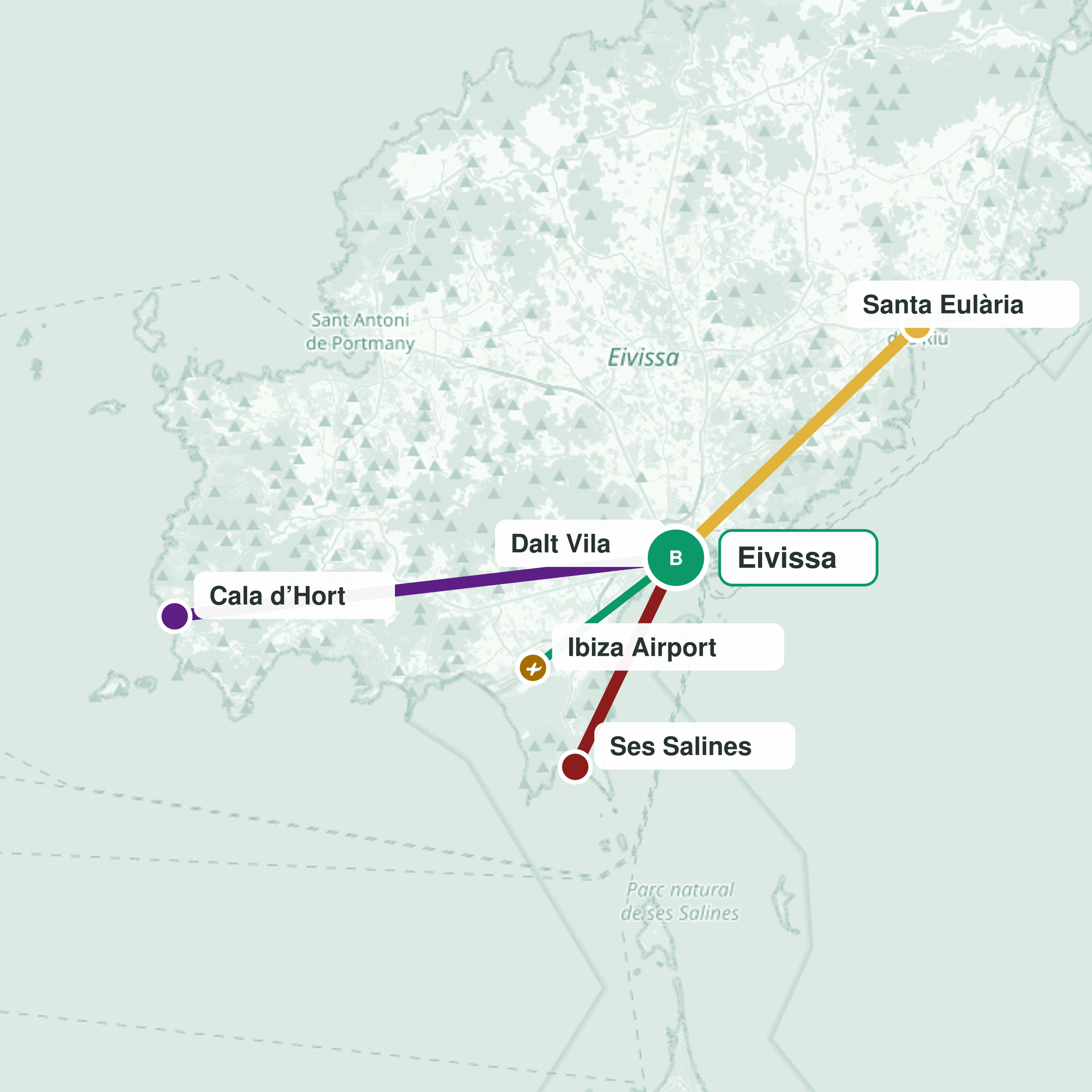
The recommendation is Eivissa, the island’s capital. It brings together heritage, a harbour and transport connections, allowing you to stay in the same accommodation for around six nights. From the airport, drive northeast towards the city. Set aside the first two days to explore it. Then spend a day in the south, another in the west, and two exploring the eastern area and its rural surroundings. Leave the final day for finishing your stay in the capital.
For these excursions, a car gives you the freedom to connect the coast and countryside, returning to the same accommodation. Explore the historic centre on foot. Buses are an alternative for reaching the city from the airport and travelling between the main towns, though they offer less flexibility for outlying places. Services also vary by season. This arrangement gives each day a clear focus and time to explore.
Begin with Dalt Vila, the walled historic quarter above Eivissa’s harbour. Walk uphill through its streets, explore the fortifications and reach the points overlooking the bay. Allow time for both the climb and the walk. Much of the interest lies in understanding how the city is arranged on this elevated ground.
Its Renaissance fortifications explain the strategic importance of this Mediterranean location. Walking through them makes the relationship between elevation, walls and harbour much clearer than an exterior photograph can. Afterwards, head down to the harbour area to complete your first exploration of the capital at sea level.
This is where the heritage designation Ibiza
This is where the heritage designation Ibiza, Biodiversity and Culture makes sense. It connects the fortified city and archaeology with marine nature, including the Posidonia seagrass meadows. That connection helps explain the journey ahead: the island’s heritage includes both its buildings and the landscapes surrounding its coast.
On day three, drive south from Eivissa to Ses Salines, a natural park combining salt pans, wetlands and protected coastline. Give it a full day, returning to the capital for the night. This is the route’s main coastal experience because it offers more than a stop beside the water. Here, you can observe a landscape shaped by salt production and coastal ecosystems.
Focus the day on that combination, exploring the salt-pan landscape and spending time beside the sea. The history of salt production helps explain what you see: salt is part of the island’s relationship with its land. Rather than a succession of beaches, this day has a clear theme and reveals the coast’s different roles.
On day four, set out from Eivissa again, this time driving southwest. Cala d’Hort is the coastal spot chosen for the western part of the route, thanks to its views towards es Vedrà, the islet offshore. The focus now changes. After the salt pans and wetlands, spend a relaxed day enjoying a coastal panorama. Keep this stop at the centre of the day, then return to your base.
The next two days take you northeast
The next two days take you northeast. Drive from Eivissa to Santa Eulària, a coastal town whose seafront promenade and surroundings offer another way to explore the island. Begin with a walk beside the sea, then head up to Puig de Missa, the fortified church on higher ground. The contrast gives the visit its substance: from the coast to architecture that retains its defensive function.
Also leave time for this area’s rural landscape. Whitewashed churches and traditional rural architecture reveal a pattern of scattered settlement, distinct from the tourist waterfront. These two days combine a clearly defined town visit with the countryside, without turning the journey into a list of villages. Finish the week in Eivissa with a final walk around the harbour.
Remember three decisions: Eivissa is a balanced base; Dalt Vila and Ses Salines reveal the connection between heritage and nature; and exploring a few areas thoroughly offers more than collecting cove visits.
To continue, you can generate another Five Cents with either of these questions: How can you plan a day in Formentera from Eivissa?, to explore that island as a separate outing; or What does Puig des Molins reveal about Punic Ibiza?, to look more closely at the necropolis and the city’s ancient history.