

Introduction
This is Five Cents: travel guide to Gran Canaria. This guide helps you shape a realistic first week across a city beach, volcanic coast, inland villages, high country and southern dunes. The key is not trying to see everything. Link a few places that serve different purposes: Las Palmas, the north, the mountains and the south. Start with the decision that makes the route work: where to stay and how to get around.
How to plan the route
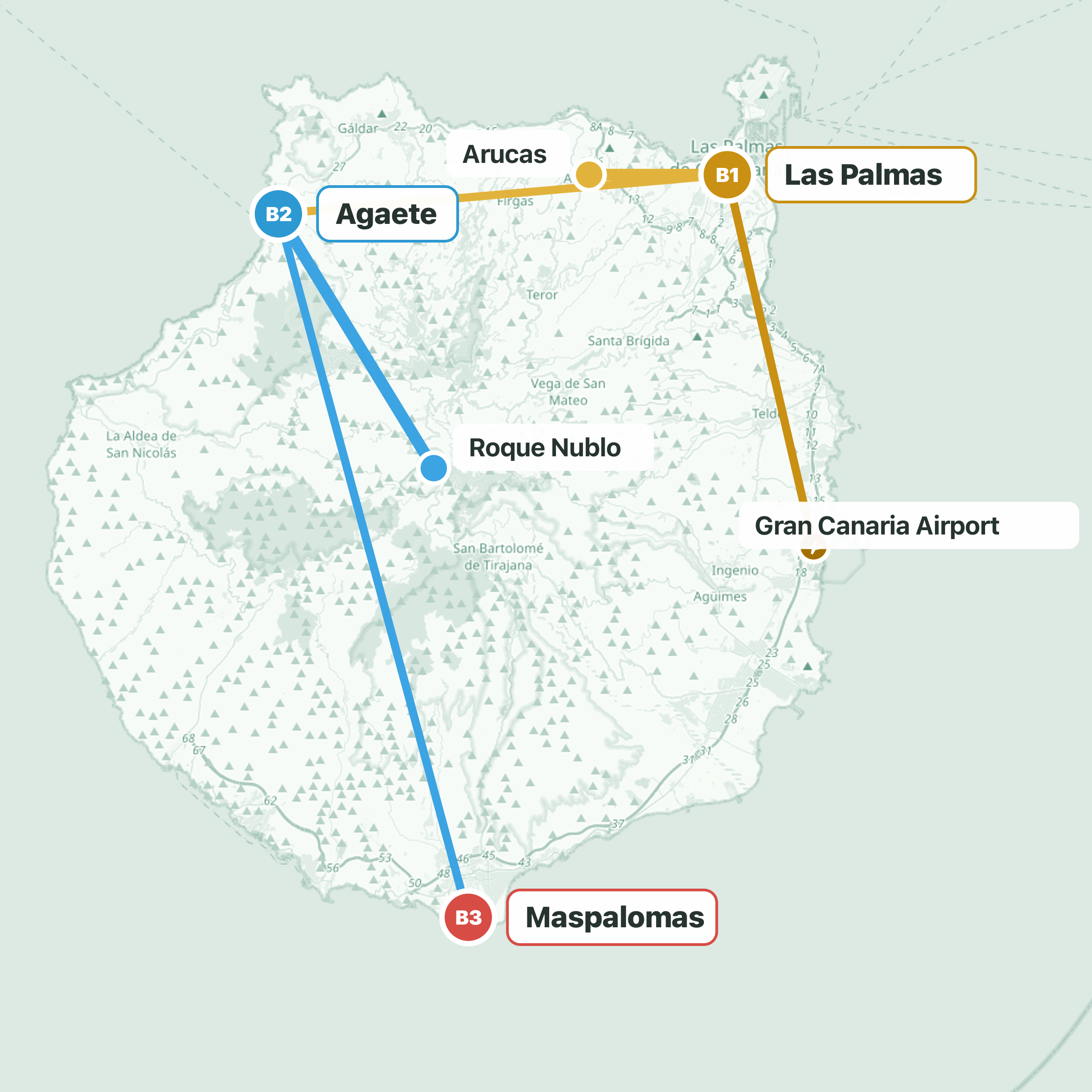
Use Las Palmas de Gran Canaria as your first base for a week, giving it two or three days spread across the trip. The capital combines real urban life with a major beach in the centre, along with food and historic neighbourhoods. Outside the city, a hire car is the most practical way to connect the north, interior and south. The mountain roads are winding, but they are part of the experience.
Las Canteras shows why Las Palmas deserves proper time. This urban beach runs for more than three kilometres and is partly protected by a natural rock reef. Swim, walk the promenade, eat by the sea or stay for sunset without separating a beach day from a city day. At La Cícer, the more wave-exposed end, surf culture becomes part of the same beach.
For a different side of the capital, walk from Vegueta to Triana. Vegueta is the city’s founding quarter, with squares, narrow streets and architecture tied to Las Palmas’s Atlantic history. Triana continues that walk into a historic shopping district centred on its pedestrian street. Together, they show a capital that is far more than its coastline, with cafés, food and everyday life completing the stay.
The next day heads north, where the island becomes more agricultural and the Atlantic more rugged. First stop: Arucas, a historic town of local stone, squares and the Church of San Juan Bautista rising over the centre. It is worth separating Arucas, the town, from Arehucas, the rum distillery. A visit to Arehucas helps explain the link between sugar cane, farming and industry that shaped this part of the island.
Continue northwest to Agaete
Then continue northwest to Agaete. The contrast is the point: after architecture and rum, you reach an agricultural valley that opens onto Puerto de las Nieves, its fishing harbour. The port brings fish, small beaches and a quieter volcanic coastline. Las Salinas de Agaete, natural sea pools beside the ocean, offer a swim that feels different from Las Canteras or the southern dunes. Tropical crops, orange trees and coffee plantations in the valley are another reminder that Gran Canaria is also an agricultural island.
Start the inland day again from Las Palmas. It takes around 35 minutes via the Arucas route, or around 45 minutes by the Teror road, to reach Teror, a historic mid-altitude town with cobbled streets, traditional balconies and the Basilica of Our Lady of the Pine. It is more than a photogenic stop: its religious and social importance helps explain the role of inland towns on the island.
From there, climb towards Tejeda, in the central mountain landscape. Tejeda is a white village set among ravines and volcanic rock formations, a logical stop before the high country. From Las Palmas, the drive is about an hour, and the scenery gradually shifts from farmland to pine forests and volcanic relief.
The centrepiece is Roque Nublo, a vast volcanic monolith at altitude and one of Gran Canaria’s great natural symbols. The walk matters because it takes you into the highland landscape: pine forests, ravines and volcanic formations seen from the island’s interior. Allow time for the walk and for a meal, rather than treating it as a quick photograph. Roque Nublo currently requires advance booking, so organise access and transport before setting this day.
Key stops and decisions
Then descend south. The landscape becomes drier and the coast more heavily developed for tourism. Maspalomas works because of that contrast. Its dunes, lighthouse and beach create a large-scale ocean landscape, even with hotels, promenades and residential developments around it. It is not isolated nature, but it is one of the island’s most distinctive views. Playa del Inglés is part of the same coastal stretch and can work as a convenient base for accommodation and services. A second base in the south makes sense if you want several beach days or prefer not to return to Las Palmas after the mountains.
Puerto de Mogán or the Guayadeque Ravine can be extensions, but they should replace a stage rather than be added to this week. The main route is already complete.
Remember three decisions: Las Palmas makes city and sea one experience; the north and high country reveal an agricultural, volcanic and mountainous island; and Maspalomas ends the trip with ocean dunes inside a developed southern coast. For a next episode, you can create a new Five Cents guide to Las Palmas: neighbourhoods, food and Las Canteras, or to hiking and highland villages in Gran Canaria.