

Introduction
This is Five Cents: travel guide to Formentera. Let’s plan four full days without turning the island into a race between beaches. One base, four landscapes and short journeys. We’ll arrive through La Savina, explore the protected north, the western cove and lighthouse, the open southern coast and the plateau of La Mola.
How to plan the route
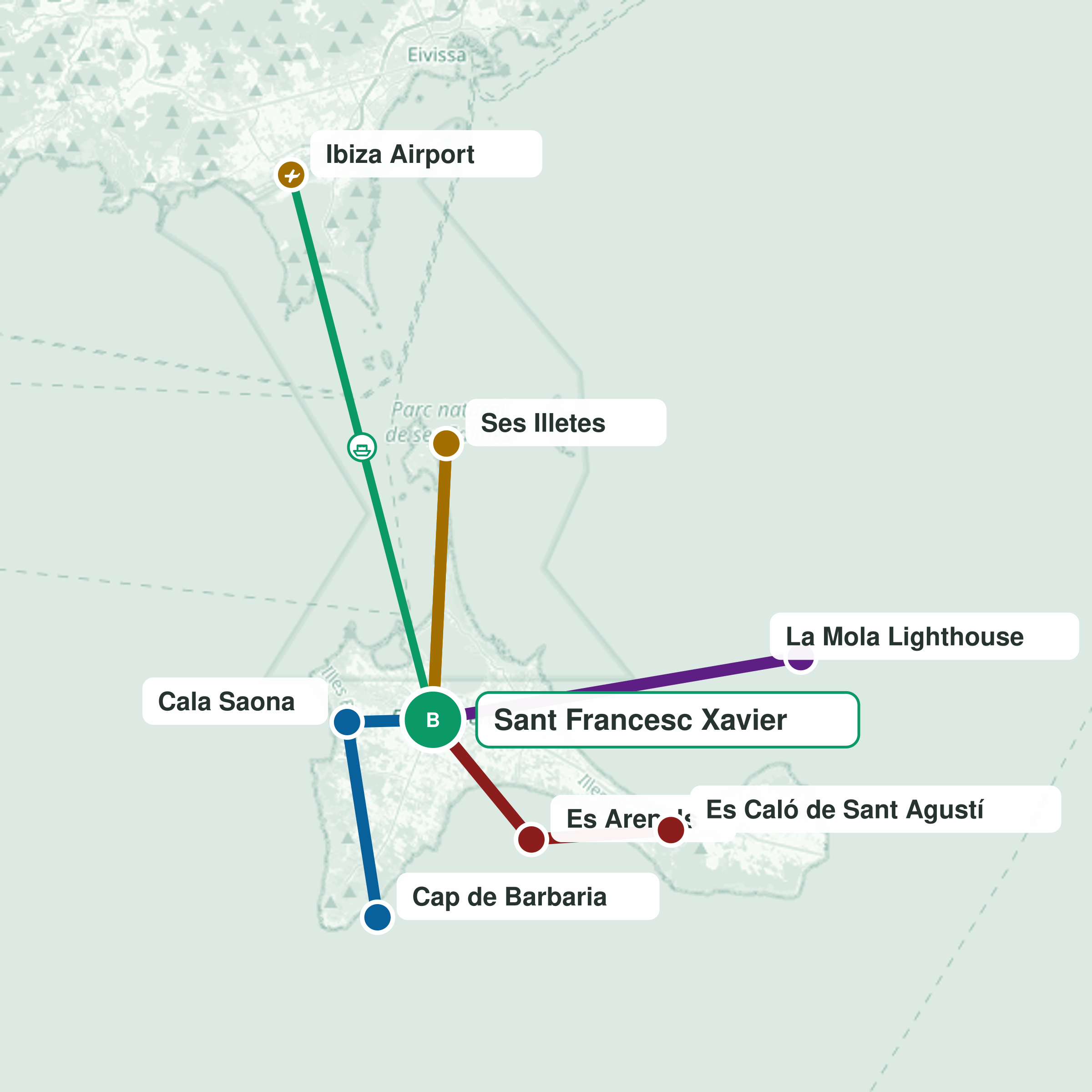
The best starting point is deciding where to stay and how to get around. Formentera has no airport. You arrive by ferry from Ibiza’s port to La Savina, in the north, in approximately half an hour. For a first visit, spend four nights in Sant Francesc Xavier, the historic and administrative centre in the middle of the island. Every outing from here is a short journey, and you avoid changing accommodation.
A scooter is the most convenient way to connect coves, villages and lighthouses. Cycling works particularly well in the north, the centre and along rural paths, although La Mola takes more effort. On day one, head north from La Savina towards Ses Illetes, on the es Trucadors peninsula. This is Formentera’s defining landscape, but it deserves more than a photograph: pale sand, shallow water, dunes and small islands within Ses Salines Natural Park.
Spend the morning or early afternoon here. Walk and swim rather than trying to fit in more beaches of the same kind. Then head south to the centre and Sant Francesc Xavier. Its streets and church offer a brief introduction to the island’s inland landscape. Formentera’s rural architecture—dry-stone walls, cisterns, water-storage tanks and windmills—reveals an island shaped by scarce water, farming and the sea. It’s useful context for understanding that the landscape extends beyond the shore.
On day two, head west. Cala Saona is a sandy cove between low cliffs and reddish rock, quite different from the broad sweep of Ses Illetes. Take your time here: swim, walk around the surrounding area and settle into one cove. From there, continue southwest towards Cap de Barbaria. The lighthouse stands in an arid, open landscape overlooking cliffs and the horizon. The appeal lies more in the journey and this far end of the island than in the building itself.
Between May 15 and October 15
Between May 15 and October 15, the final stretch is closed to cars and scooters. Continue from the car park on foot or by bicycle. On day three, head south from Sant Francesc towards Migjorn, the long southern coastline. Choose just one section. Es Arenals is the practical choice for enjoying a broad, open beach, offering a different experience from the enclosed western cove and the dunes of the north.
The idea is to spend several hours there, rather than hopping from one stretch of sand to another. Then continue east to Es Caló de Sant Agustí, a small fishing settlement. Its wooden boat slipways reveal another relationship with the coast: boats kept beside the water, and a shoreline that has also been a place of work.
That combination of fishing, paths and simple buildings helps you understand Formentera as an inhabited landscape, rather than just somewhere to swim. Day four takes you east and uphill onto the La Mola plateau. El Pilar de la Mola is one of the island’s historic villages and marks a clear change of scenery: rural paths, cultivated fields and a greater sense of elevation.
Continue to La Mola Lighthouse, above the eastern cliffs. It’s the best place to finish the route, bringing together height, heritage and the horizon. The lighthouse began operating in 1861. Its position helps explain this tip of the island’s literary associations with boundaries and observation: Jules Verne set part of Hector Servadac in La Mola, although he never visited Formentera.
With four days, don’t add Espalmador to this route
With four days, don’t add Espalmador to this route. It’s a sea excursion with different logistics and doesn’t improve the main itinerary. A fifth day only adds real value if you want more rest, time to cycle the green routes or time for water activities. Remember three decisions: stay in Sant Francesc Xavier, give each day a different landscape, and give the rural pace as much attention as swimming.
To continue, you can generate “How can you explore Espalmador and go sailing from Formentera?” To explore further on land, you can generate “Which cycling routes can you explore on Formentera?”