

Introduction
This is Five Cents: travel guide to Cape Town. Plan five full days from one central base. Use the mountain, the peninsula and the city’s history to organise the trip, rather than chasing beaches or viewpoints.
We’ll set the base and transport
We’ll set the base and transport, then move from the City Bowl to the coast and back into Cape Town’s most important stories. Start with the geography, because it decides everything else. Stay in the City Bowl, Gardens, Green Point or Sea Point. These central areas sit between the historic core, Table Mountain and the Atlantic coast.
Use e-hailing or MyCiTi for city corridors. Then hire a car or take an organised tour for the Peninsula day. There is no need to change hotels. Five full days, ideally six nights, give each major experience room to work. Begin in the City Bowl. Walk through the centre and into Bo-Kaap, the historic district north-west of it. Its streets introduce Cape Muslim heritage and the layered communities that shaped the city.
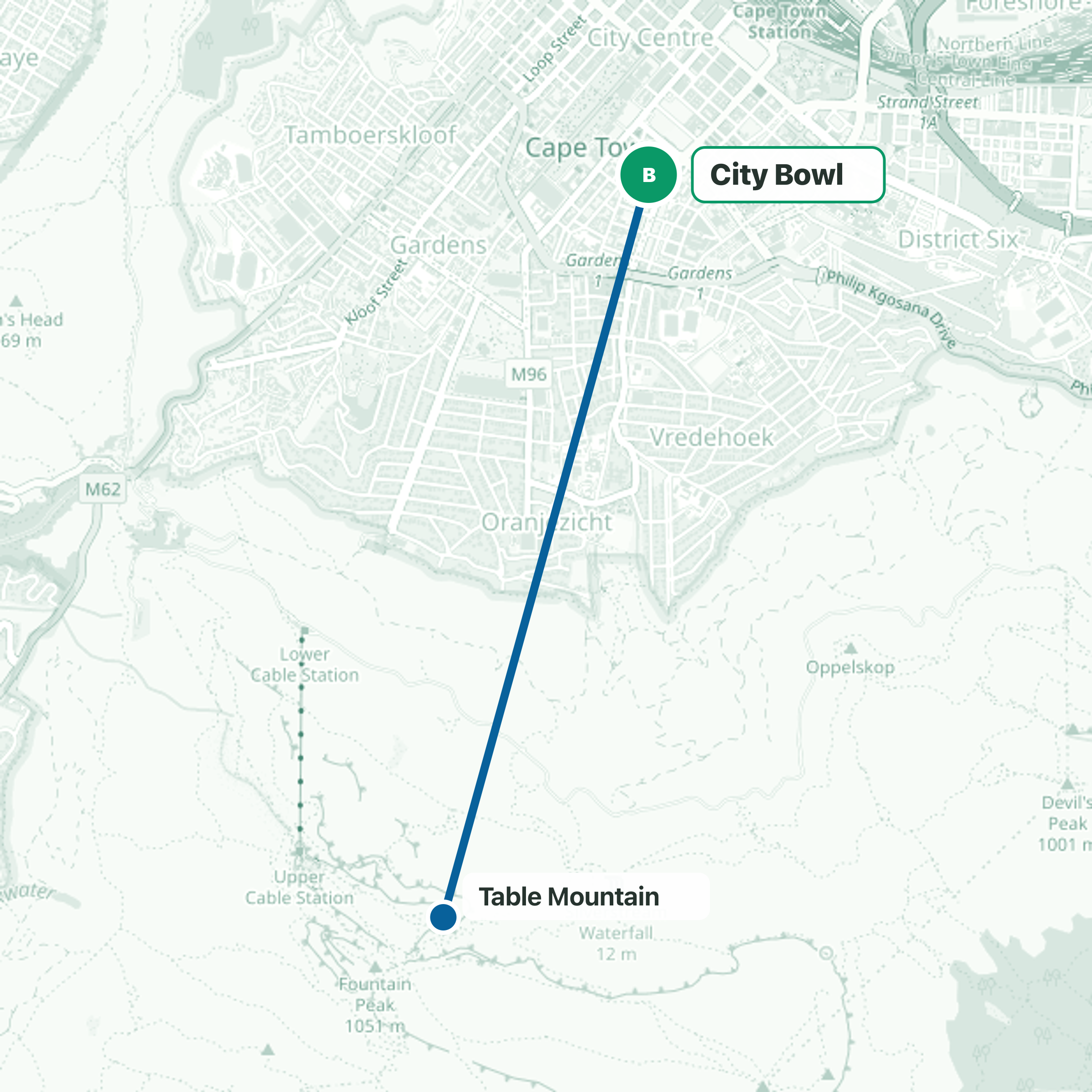
Then turn towards Table Mountain, which rises directly above the bowl. Take the cableway when conditions allow, and give the mountain three to four hours. From the summit, the city stops being a collection of districts. You can see the Atlantic coast, Robben Island, the southern suburbs and the peninsula stretching away.
Keep this plan flexible, because mountain weather can close the cableway or change quickly. The next day, head north to the V&A Waterfront. Treat this polished harbour district as a practical departure point, not as Cape Town’s cultural centre. Its real role here is the ferry to Robben Island. Reserve a substantial half-day or longer for the island. It was a former prison, hospital and military base, whose twentieth-century prison history is inseparable from apartheid and the democratic transition.
The route step by step
It gives the scenery around Cape Town a political context that a harbour walk cannot provide. From the centre, travel south-east to Kirstenbosch, the national botanical garden on Table Mountain’s eastern slopes. This is not a conventional garden stop. Its indigenous plant landscapes and walking routes let you experience the mountain from below, with its lower slopes forming the backdrop. Give it most of a day, rather than adding a second garden or automatically leaving the city for wine country.
Then protect a full day for the Cape Peninsula. Leave your central base and travel south along the False Bay side. Boulders, near Simon’s Town, adds a penguin habitat to the route. It is a distinct stop within a wider coastal journey, rather than the day’s sole destination. Continue south into the national-park landscape at Cape Point, where protected fynbos and exposed ocean scenery replace the city.
Return north along the Atlantic side, through the Hout Bay and Chapman’s Peak area. The value of this direction is the contrast: False Bay’s towns and sheltered coast on the way out, then a more dramatic mountain-and-ocean return. It is Cape Town’s defining landscape day. It should stand alone, rather than being compressed with Table Mountain, Robben Island or several beaches.
Use your final day for District Six Museum, within the central city. The museum explains forced removals, community memory and cultural reconstruction after apartheid. It is the strongest default historical visit for a five-day trip, because it fits easily into the route and changes how you read the city around it.
If you have already given the time to Robben Island
If you have already given the time to Robben Island, District Six deepens that story. If time is tighter, it is the more efficient choice. For a longer stay, Constantia is the optional extension: a quieter wine-and-landscape day from the southern side of the city. Add it only after the mountain, Peninsula and historical core are secure.
Keep three decisions in mind: use one central base, save a full day for the Peninsula, and make room for District Six or Robben Island so Cape Town becomes more than a scenic postcard. You can create a new Five Cents episode on Cape Town’s Peninsula drive in detail, or Cape Town through apartheid history and District Six.