

Introduction
This is Five Cents: travel guide to Bali. This is a route for seeing Bali as more than a beach checklist. It is an island of rice country, Hindu culture, cliffs and surf, with easy travel infrastructure and plenty of international tourism.
How to plan the route
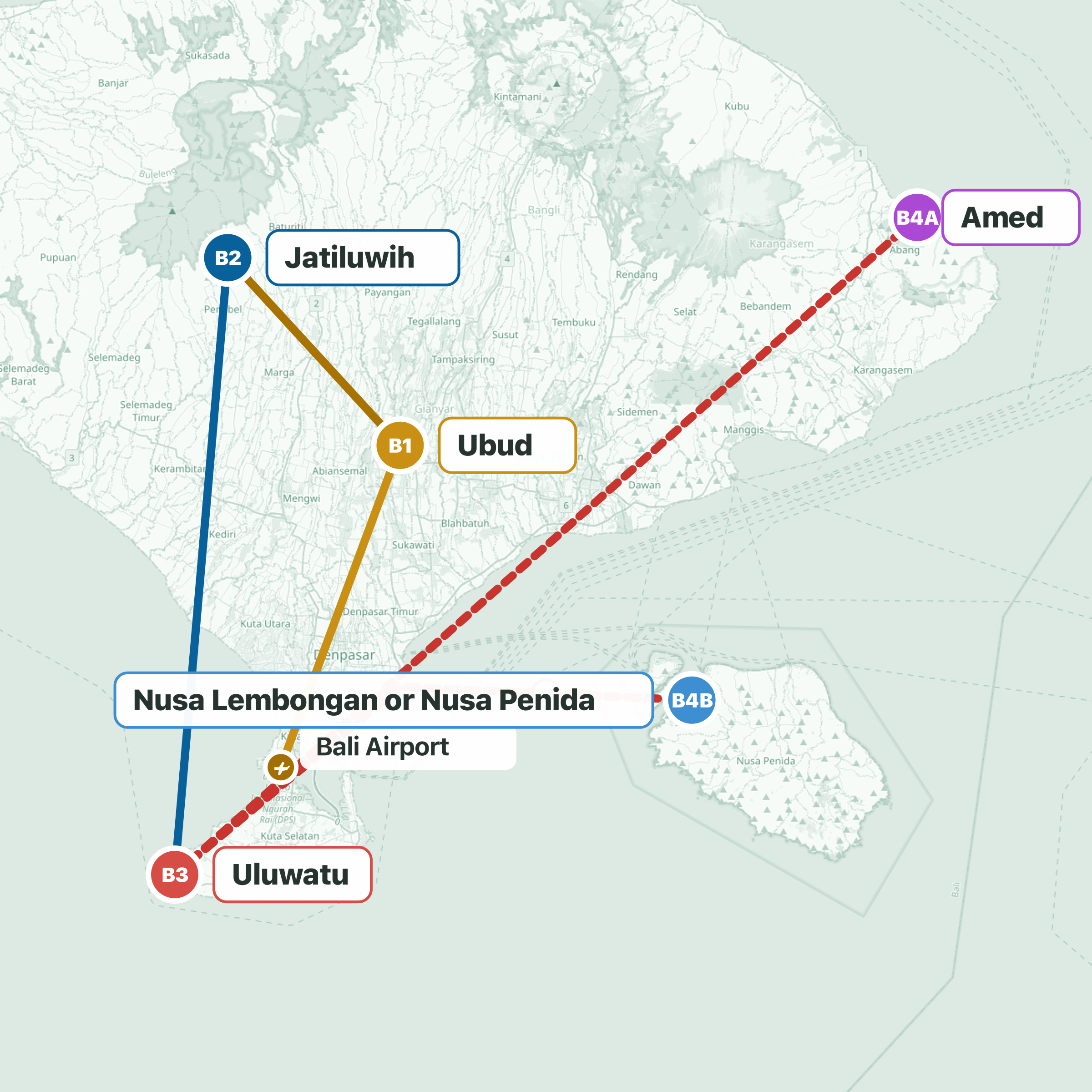
Start inland. Pause in the terraces. Move south to the coast, then choose one final extension. That structure matters because Bali is developed and busy. It is not an empty island or a complete picture of Indonesia. With nine or ten nights, it becomes a varied journey. Seven is the practical minimum.
Rent a scooter. It is the best way to leave tourist centres, use rural roads and connect the island’s changing landscapes. A private driver is the comfortable alternative for longer transfers. From Ngurah Rai International Airport, head north into central Bali for three nights in Ubud. The town itself is touristy, but it is the right base for the interior: villages, rice fields, temples, waterfalls and roads that quickly leave the busy centre behind.
Spend a full day riding through the rural surroundings rather than chasing staged swings and photo stops. Bali is mostly Hindu, unlike much of predominantly Muslim Indonesia. That identity appears in daily offerings, architecture and the organisation of villages. A useful companion here is the documentary Bali: Beats of Paradise. Its gamelan music and dance help explain that Balinese culture is not just visual temple scenery. It is woven into ceremonies and community life.
Then travel west from Ubud to Jatiluwih for one night, and no more. These broad rice terraces show why the inland landscape matters. They are shaped by subak, a shared irrigation system of channels, water temples and farming cooperation. Rice fields here are not a backdrop. They are part of a living relationship between water, religion, agriculture and community. One unhurried night gives that idea more weight than a quick stop.
The route step by step
From Jatiluwih, move south to Uluwatu, on the Pecatu Peninsula at Bali’s southern tip. Stay two or three nights. This is the coastal counterpoint to Ubud: limestone cliffs, beaches, sunset views, surf breaks and an international atmosphere still tied to the ocean. Explore the peninsula by scooter. It makes its scattered coves, inland roads and clifftop viewpoints feel like one landscape.
Keep beach time separate from surf watching. Dreamland is the straightforward choice for a sandy afternoon and sunset. For a quieter, more remote beach, include Nyang Nyang on the same loop around Pecatu. Padang Padang can combine time on the beach with a beginner surf lesson in the appropriate area.
For surf culture, go instead to Uluwatu, also reached through Suluban. Its cave access and terraces above the cliffs frame one of Bali’s iconic surf views. This is an advanced break, so treat it as a place to watch powerful waves and skilled surfers, rather than a swimming beach or beginner lesson. This southern coast also explains Bali’s changing tourism map.
Kuta was an early mass-tourism centre. Canggu later became associated with surf, digital nomads, gyms and social life, but is now heavily built up and congested. It can suit a traveller specifically seeking that international scene, but it adds little to this route. Uluwatu is growing too, yet its cliffs and coast still give it a stronger sense of place.
For the final stage
For the final stage, choose one direction rather than trying to add everything. Continue northeast to Amed if you want to keep travelling overland across Bali. Its quieter north and east coast brings fishing villages, a slower rhythm, snorkelling and diving, with nearby Tulamben and the U.S.S. Liberty wreck as a brief underwater option.
Choose the Nusas instead when you want a genuine island change. Travel to Sanur for the boat, but do not make it an overnight base. Nusa Lembongan is the more manageable, relaxed island stay. Nusa Penida is for more dramatic cliffs and marine experiences, with more demanding travel around the island.
The fast boat from Sanur takes roughly thirty to forty-five minutes. On a shorter trip, skip both extensions before cutting time from Ubud or Uluwatu. April to October is generally the best season for travelling around Bali, with July and August usually drier and busier. If you have a longer Indonesia trip, combine Bali with another island rather than treating it as the whole country.
Remember the route: Ubud and Uluwatu are the two essential bases. Jatiluwih turns rice terraces into a cultural landscape. And Amed or the Nusas is a deliberate final choice, not an extra checklist. You can create a new Five Cents episode on Surf in Uluwatu and South Bali, or Amed versus Nusa Lembongan and Nusa Penida.