

Introduction
This is Five Cents: travel guide to Amalfi Coast. This guide will help you plan four to five full days around the contrast that defines this coast: compact waterfront towns below steep, cultivated slopes. With one central base, you can explore the shoreline, climb to gardens above it, and add a mountain walk without repeatedly changing hotels.
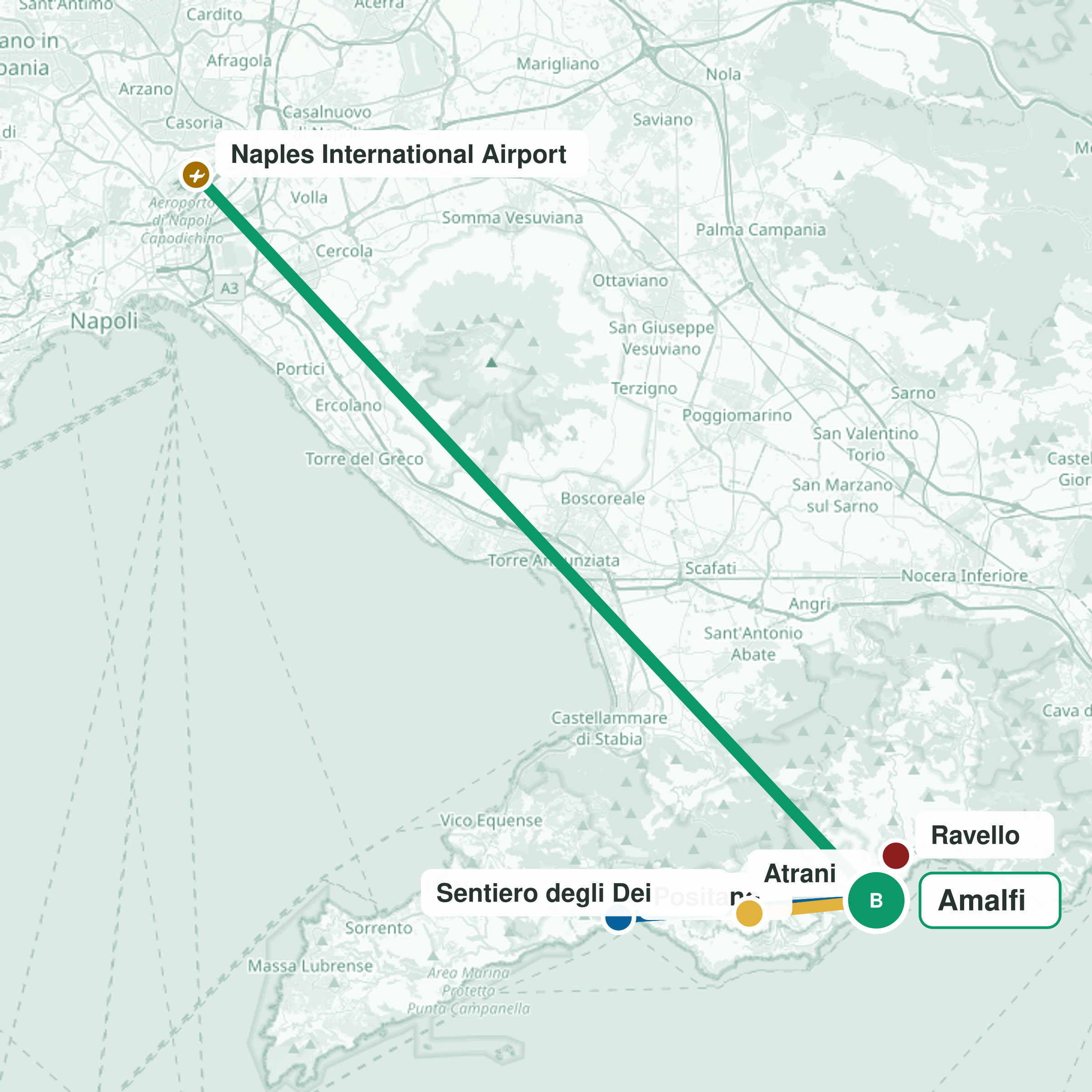
The first decision is where to stay
The first decision is where to stay. Choose Amalfi, the historic coastal town that gives the region its name. Its position makes it a practical base for both coastal excursions and the uphill journey to Ravello. Allow four full days here, keeping arrival time separate, and add a fifth for walking. That gives each experience room, rather than squeezing several towns into every day.
Arrive via Naples and continue southeast toward the coast, using the onward public transport connection that fits your arrival. Along the shoreline, use ferries when their schedules fit, and buses for the remaining connections. Ferry services vary by date, so the sea journey described here depends on the service operating. The narrow, winding road and heavy traffic make a rental car a poor default for this itinerary. A ferry also lets you see how the settlements fit against the mountains.
Begin your first full day in Amalfi’s compact historic center, with the cathedral as the main visit. The town was a medieval maritime power, and its architecture reflects connections between eastern and western traditions. That history gives the waterfront a different meaning. This was a place shaped by trade and sea routes, rather than simply a setting for seaside holidays.
The surrounding slopes explain another part of the coast. Citrus groves, vineyards, and orchards occupy cultivated terraces, while old stairs and paths connected settlements before modern roads. Those features belong to a working landscape shaped around difficult terrain. As you explore the center, look at the relationship between closely packed buildings, routes uphill, and the limited space beside the sea. Together, they explain why this coast has such a distinctive form.
Keep your fourth day for nearby Atrani
Keep your fourth day for nearby Atrani, a small settlement immediately east of Amalfi. Reach it on foot with a short walk, then return to the same base. Its smaller, more residential feel offers a useful contrast to the busier signature towns. Give this visit time for an unhurried walk through the settlement. Its value is the change in scale, rather than another major attraction.
Leaving it for the fourth day also builds a gentler day into the trip. On day two, travel west from Amalfi to Positano, returning to Amalfi afterward. Positano is the coast’s most recognizable vertical town, with buildings stacked up the hillside above its waterfront. Make the movement between those levels the experience. Spend time beside the water, then explore the hillside streets to understand how the town occupies the slope.
This is a more physical town visit than a quick waterfront stop suggests. The changes in elevation are part of what you have come to experience, so leave room for the walk rather than treating Positano as a photograph between transfers. Its atmosphere can feel heavily touristed. The reason to come is its distinctive townscape, not an expectation of seclusion. Seen from the sea and then explored on foot, the same town reveals two different aspects.
Day three takes you uphill inland from Amalfi by bus to Ravello, an elevated town known for historic villas, gardens, and views over the coast. Once there, continue on foot and make Villa Cimbrone, a historic villa with gardens, your principal visit. Its Terrace of Infinity provides the clearest reason for this excursion. You look over the coastline from above, rather than out from its waterfront.
Key stops and decisions
Give the gardens and terrace your attention instead of moving between several villas. Ravello adds a genuinely different perspective to the trip. After experiencing the tightly packed seaside towns, this elevated setting makes the relationship between mountains, settlements, and sea easier to understand. Return downhill to Amalfi afterward.
For an optional fifth day, add the Sentiero degli Dei, or Path of the Gods. This mountain-edge walking route links the Agerola uplands with Nocelle, a settlement above Positano. From Amalfi, use bus access toward Agerola, walk toward Nocelle, and use public transport to return to your base. Allow a substantial half-day for walking, plus access time.
Choose this addition for an active landscape experience, with the mountain edge itself becoming the focus rather than another town visit. Keep three decisions in mind: stay in Amalfi for four to five full coastal days, combine waterfront towns with Ravello’s elevated perspective, and use ferries when schedules fit, with buses completing the route.
To explore further, you can generate another Five Cents asking: How did maritime trade shape Amalfi’s architecture? Or: What makes Vietri sul Mare’s ceramics distinctive?