

Introduction
This is Five Cents: travel guide to Algarve. For a first visit, follow the coast from east to west, moving from lagoon islands and historic towns to limestone coves and the open Atlantic. Over six or seven days, two bases and a car let you explore three distinct coastal landscapes without turning the week into a checklist of beaches.
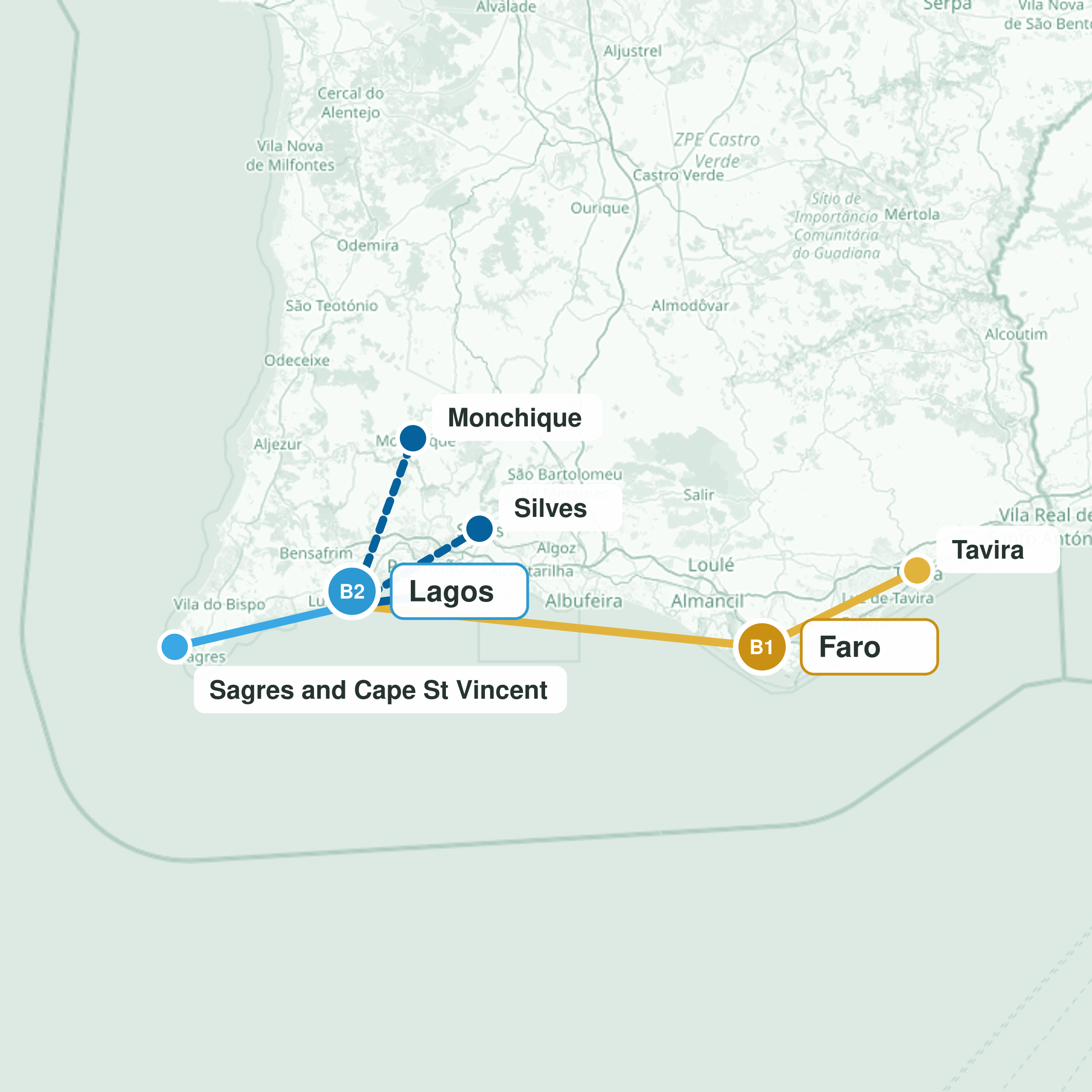
Think of the Algarve as a connected route
Think of the Algarve as a connected route. Hire a car to link the central cliffs, Lagos and Sagres, with the option of an inland detour. Stay in Faro or Tavira for the eastern half, then move to Lagos for the west. The train works well along the eastern corridor through Faro, Olhão and Tavira, but is less suited to the full cliff-and-Atlantic journey.
Begin in Faro, the usual gateway and a compact introduction to the eastern Algarve. Spend your arrival afternoon in its old town. The main reason to start here, though, is Ria Formosa: a protected lagoon landscape where tidal channels, wetlands, dunes and barrier islands shape the coastline.
Take a lagoon trip from Faro or Olhão. This is more than another beach outing: it shows how water, fishing and shellfish gathering shape life along this stretch of coast. The channels and islands are the experience, rather than just the way to reach the sand. Boat connections vary by island and season, so confirm the service when planning your visit.
Continue east to Tavira, either by car or along the railway corridor. With white houses, churches and riverside streets, this historic town provides a cultural counterpart to the lagoon. After exploring the water and islands, you have a town whose streets give the eastern coast a human centre.
The food reflects those same maritime and Mediterranean surroundings
The food reflects those same maritime and Mediterranean surroundings: fish and shellfish, alongside figs, almonds and carob. Allow two nights at your eastern base, whether you choose Faro or Tavira. That gives the lagoon and the town room in the itinerary, rather than squeezing both into hurried stops.
From Tavira, drive west across the central Algarve for one focused outing around Lagoa and Carvoeiro. Here the landscape changes to golden limestone, coastal paths and sheltered coves: the scenery many visitors associate with the region. Choose a walk or a series of viewpoints, following the changing coastline instead of moving between similar beaches. The point of this stage is to see the cliffs and coves together. Keeping it focused also gives the central coast a clear place between your eastern lagoon visit and your western stay.
Continue west to Lagos, your second base for three nights. Lagos combines historic streets with a shoreline of cliffs, arches and sea caves. That combination makes it the most complete western base: you can explore the coast and still return to a town where you’ll want to spend the afternoon.
At Ponta da Piedade, concentrate on the rock formations, observing them from the headland and along the coast. This is the western route’s main encounter with the sculpted shoreline. Afterwards, return to Lagos for its town life, rather than treating the whole visit as a beach stop. From Lagos, drive west to Sagres and Cabo de São Vicente. This final coastal stage changes the scale of the journey. Sheltered coves give way to an exposed shoreline shaped by wind and high cliffs, within the protected landscape of the Costa Vicentina, or Vicentine Coast.
Sagres and the cape provide the Atlantic finale
Sagres and the cape provide the Atlantic finale: the sense of reaching the southwestern edge of mainland Europe. Compared with the central resort corridor, this coastline is noticeably wilder. It completes the progression from lagoon, to limestone coves, to open ocean.
Once you’ve completed the main route, add Silves if you want a half-day inland outing from the central or western Algarve. Its red sandstone castle, cathedral and medieval streets make the region’s Islamic and medieval past visible. It offers a more valuable cultural addition than another beach stop, and helps explain the history behind the Algarve’s name. Save Monchique for a slower return visit, when its hills and cork oak landscapes can have a full day.
Keep three decisions in mind: use Faro or Tavira and Lagos as your two bases; prioritise Ria Formosa, Ponta da Piedade and Sagres over a long beach list; and let the car connect three different coastlines into one journey. To explore further, you can generate another Five Cents: What defines Ria Formosa’s islands, fishing and lagoon life? Or, What can you discover inland in the Algarve: Silves, Monchique and cork oak landscapes?