

Introduction
Five Cents Oil disruption looks at why the latest attacks around the Strait of Hormuz have turned a severe supply shock into a renewed global threat. We’ll track the shipping slowdown, the roles of Iran, the United States, and Gulf exporters, and why diesel and jet fuel may matter as much as crude.
Start with the bottleneck itself
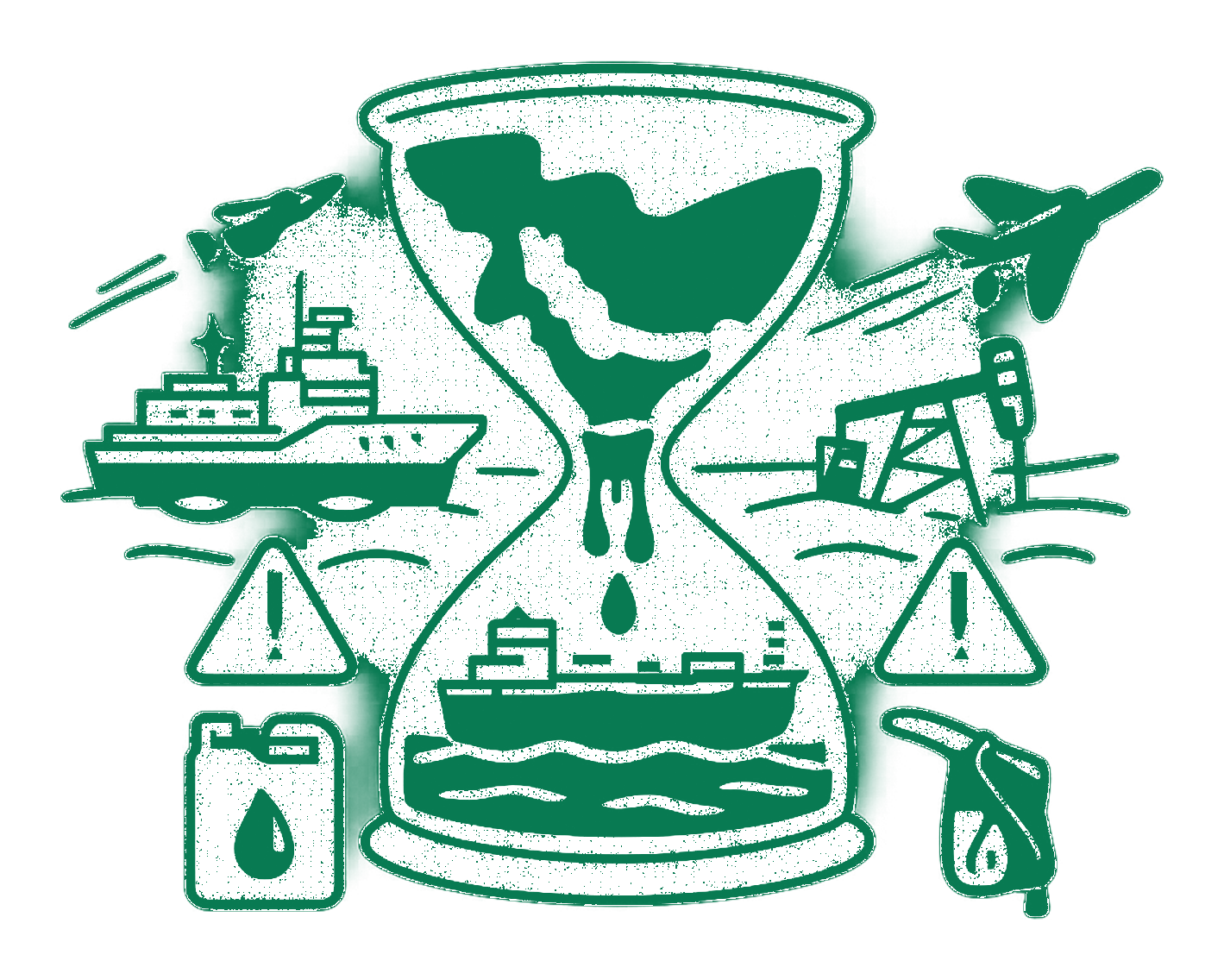
Start with the bottleneck itself. Hormuz is a narrow sea passage between the Persian Gulf and the wider Indian Ocean. Before this crisis, around twenty million barrels of crude and oil products moved through it each day. That was roughly one-fifth of global oil consumption. That makes it more than a route on a map. It is the export outlet for a vast share of Gulf energy production.
The crucial point is that oil can still be underground, or even pumped, without reaching buyers. Alternative pipelines can move some supply, but nowhere near the volume normally carried by tankers through Hormuz. When ships stop moving, producers lose export capacity. Refiners lose feedstock. And the disruption spreads through fuel markets.
That is what has worsened this week. After tanker and military incidents, commercial traffic through the strait fell sharply over the weekend. Tracking data showed five commodity vessels crossing on Saturday, and none recorded on Sunday. That compares with thirty-one over the previous weekend. Tracking is imperfect. Ships can switch off or falsify signals. But the broader picture is clear. Normal commercial transit has become extremely limited.
Iran has announced plans for an exclusion zone near the strait, raising the risk for vessels it considers unauthorized. Tehran and Washington have made conflicting claims about several military incidents, including an alleged strike on an unmanned United States vessel. Those claims remain disputed. What is not in doubt is that the United States has struck Iranian oil tankers after accusing Iranian forces of targeting its warships. The confrontation is now directly affecting oil-carrying assets.
For shipping companies, the practical question is not whether the waterway has been legally closed. It is whether crews can travel safely, insurers will provide war-risk cover, and a cargo can arrive without being delayed, damaged, or seized. If the answer is uncertain, tankers wait outside the strait. That alone can keep supply constrained.
The context
Oil markets have reacted to the prospect of a longer interruption. Brent crude rose above ninety-seven dollars a barrel on September seventh, after climbing seven point eight percent in the previous week. But the headline oil price is only part of the story. Consumers and businesses feel the disruption through gasoline, diesel, jet fuel, heating fuels, and petrochemical products.
Those refined products are especially exposed because the market was already tight. Global refinery throughput has been running well below its level a year earlier. Fuel exports from Russia, the Middle East, and Asia have also weakened. Diesel matters for trucks, freight, farming, and industry. Jet fuel matters for airlines and ticket prices.
A regional refinery outage, such as the recent disruption at South Africa’s Natref complex, becomes more serious when replacement fuel is harder to source internationally. The pressure also reaches households unevenly. Higher fuel and freight costs affect transport, food distribution, and manufactured goods. Lower-income households tend to feel those increases more sharply because energy and travel take up a larger share of their budgets.
Import-dependent countries with limited strategic stocks have less room to absorb a prolonged disruption. OPEC Plus has not announced an emergency production increase. Its participating countries kept their required production levels for October. Even if extra barrels were available, though, they would not fully solve the immediate problem. Additional production is of limited use if the main export passage remains unsafe.
Emergency oil stocks can soften the first blow. Governments may turn to them if product shortages deepen. They buy time. They do not restore the missing shipping system. The same applies to demand reduction. Less fuel use can ease pressure, but usually only gradually, and sometimes because economic activity is slowing.
The signs to watch are practical
The signs to watch are practical. First, sustained tanker movements through Hormuz, not a handful of isolated voyages. Second, whether Iran formalizes or enforces its proposed exclusion zone. Third, any verified security arrangement or renewed diplomacy between Iran and the United States. And finally, diesel and jet-fuel inventories, which may reveal stress before crude prices tell the full story.
The disruption is about a route, not simply a lack of oil. Military risk and insurance decisions can choke supply even when production capacity exists. And lasting relief depends on safer transit and some form of de-escalation, not just more barrels on paper.
To continue, you can generate Five Cents Strait of Hormuz: How the Chokepoint Works, or Five Cents Fuel Prices After an Oil Shock.
And with that, you're up to speed in a few minutes.