

Introduction
In Five Cents AI Alliances Without Sides, we explore whether countries can work with competing AI powers without committing to either one. Kazakhstan offers a revealing case: partnerships linked to both Washington and Beijing, domestic computing projects, and potential pressure over who supplies what. The place to start is the difference between joining an initiative and depending on its technology.
An international AI partnership can provide diplomatic access
An international AI partnership can provide diplomatic access, investment opportunities, or a voice in setting rules. It does not automatically determine which chips a country buys, where its data goes, or whether its companies can use another supplier. Those choices depend on separate agreements, commercial contracts, and government restrictions.
That distinction matters because AI capability requires several things to work together. Advanced chips need electricity, cooling, networks, and skilled operators. Cloud services need reliable access and workable terms. A government can participate in several international forums while still depending heavily on one supplier for a critical component.
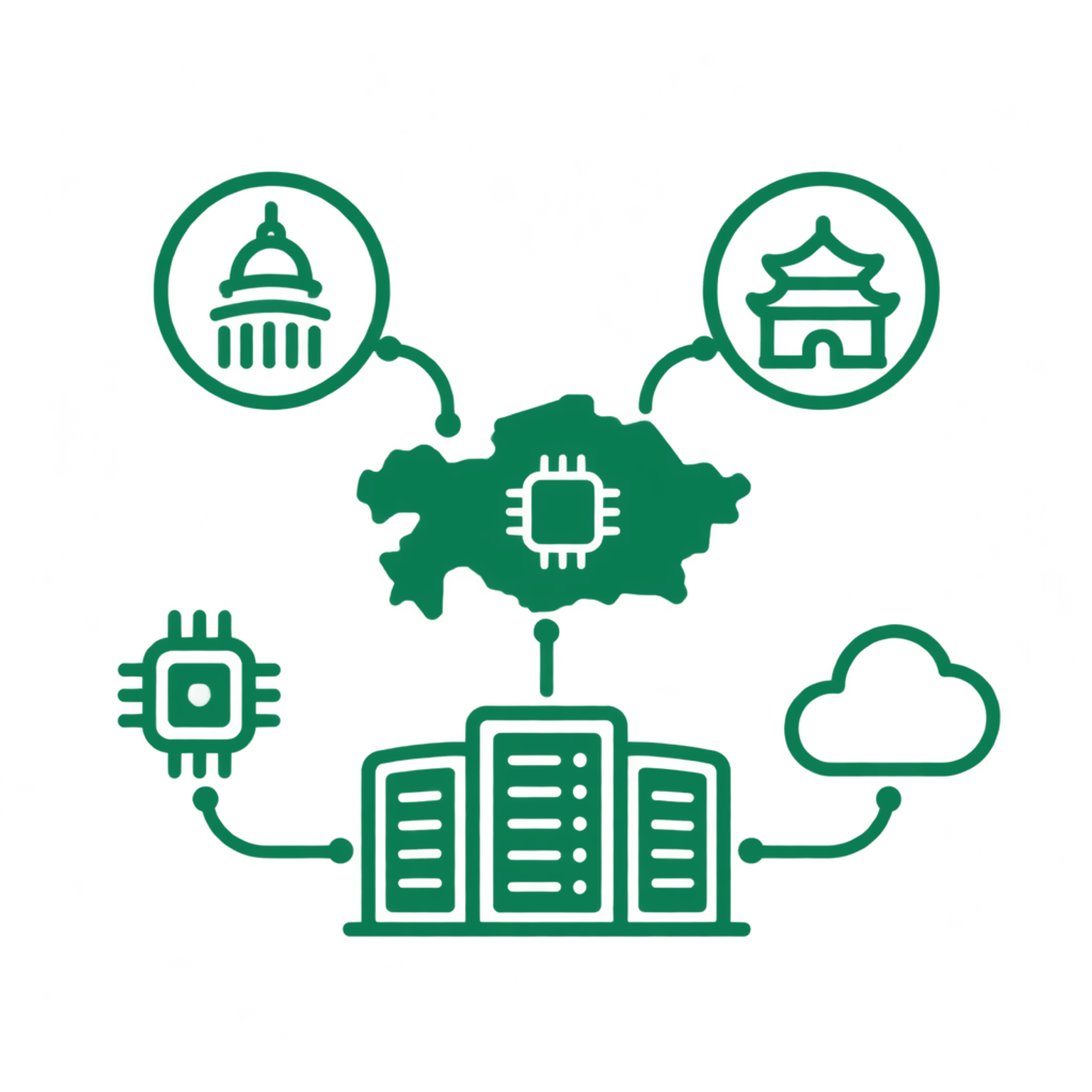
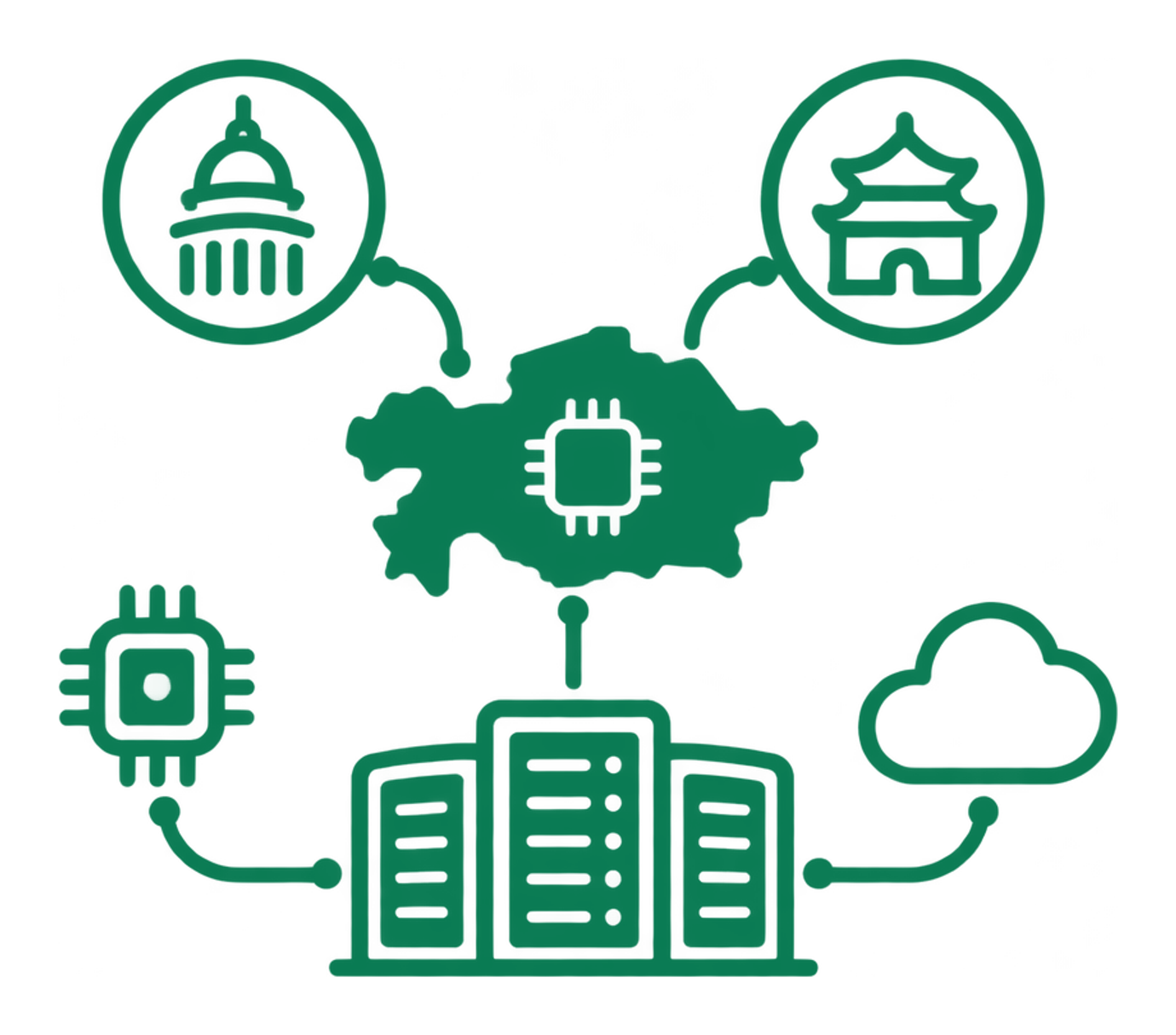
Kazakhstan illustrates this overlap. In June twenty twenty-six, it signed its accession to Pax Silica, a US-led initiative focused on trusted supply chains and economic security. Its scope includes critical minerals, energy, semiconductors, and AI infrastructure. In July, Kazakhstan became one of twenty-nine founding signatories of the China-backed World Artificial Intelligence Cooperation Organization, or WAICO, whose stated purpose includes international AI cooperation and governance.
Those are different kinds of initiative, not interchangeable versions of the same alliance. Joining both demonstrates that diplomatic participation can overlap. It does not establish that their commitments will always be compatible, or that either membership guarantees access to advanced technology.
Why pursue both? For a country building its computing capacity, different partners may offer different advantages. One relationship might support hardware access or supply-chain investment. Another might offer cloud services, commercial connections, or influence over international rules. Keeping several relationships open can widen the available options without settling every procurement decision in advance.
Kazakhstan is also developing infrastructure at home
Kazakhstan is also developing infrastructure at home. Its government says the national Alem.Cloud supercomputer uses NVIDIA H two hundred chips and is intended to process important data domestically. Kazakhtelecom has separately described its Al-Farabium computing cluster in Almaty.
These projects show why domestic control and technological independence are not the same thing. Processing data inside the country can increase local oversight. But the hardware, software, maintenance, and future upgrades may still depend on foreign providers. Owning the facility does not remove those relationships.
Investment announcements need equally careful reading. Kazakhstan has announced a proposed two-billion-dollar sovereign AI hub involving Freedom Holding and NVIDIA infrastructure. Separately, Freedom Cloud Holding and Alibaba Cloud have announced a partnership to provide cloud and AI services in Kazakhstan and Central Asia.
Together, these announcements suggest an effort to obtain infrastructure and services from different partners. They do not prove that all the proposed funding has been spent, or that every service is operational. A proposed data-center project in the Pavlodar region belongs in that same category: planned capacity, not capacity already available. For businesses deciding where to operate, that difference affects timing and reliability.
Security concerns can make this diversification harder. Governments want to know who can access sensitive data, who controls software updates, and whether essential equipment will remain available. Suppliers and their home governments may also impose conditions on customers, particularly when advanced chips or sensitive workloads are involved.
There are competing arguments here
There are competing arguments here. Supporters of tighter partnerships say trusted supply chains can reduce exposure to disruption and security risks. Countries seeking several partners may argue that exclusive arrangements create another vulnerability: dependence on a narrower group of providers. Neither argument settles the practical question. The answer depends on the actual terms, safeguards, and alternatives.
The possibility of pressure is not merely theoretical. Reporting in August twenty twenty-six described an internal US draft that proposed excluding countries from a US-led AI coalition if they also joined China’s competing framework. That was reported draft policy, not evidence that a binding exclusion rule had taken effect. Kazakhstan’s response remained publicly unresolved in the reporting described here.
This is where the two-bloc framing becomes useful but incomplete. Strategic competition can restrict choices. Yet overlapping memberships show that countries are still trying to preserve flexibility. Calling that approach hedging is an interpretation, not proof of a single official strategy or a guarantee that it will succeed.
The distinction to keep is simple: membership is not dependence, announced investment is not delivered capacity, and diversification does not eliminate political pressure. To explore the practical choices further, you can generate two new Five Cents: Sovereign AI Beyond Local Data Centers, and How Chip Export Controls Shape Investment. And with that, you're up to speed in a few minutes.