

Introduction
In Five Cents Diesel Supply After Sanctions, we examine why easing restrictions can push oil prices down before buyers receive any extra fuel. We’ll separate trading expectations from physical deliveries, explain the refinery bottleneck, and identify what would actually prove that supply has improved.
Start with what a price change can tell us
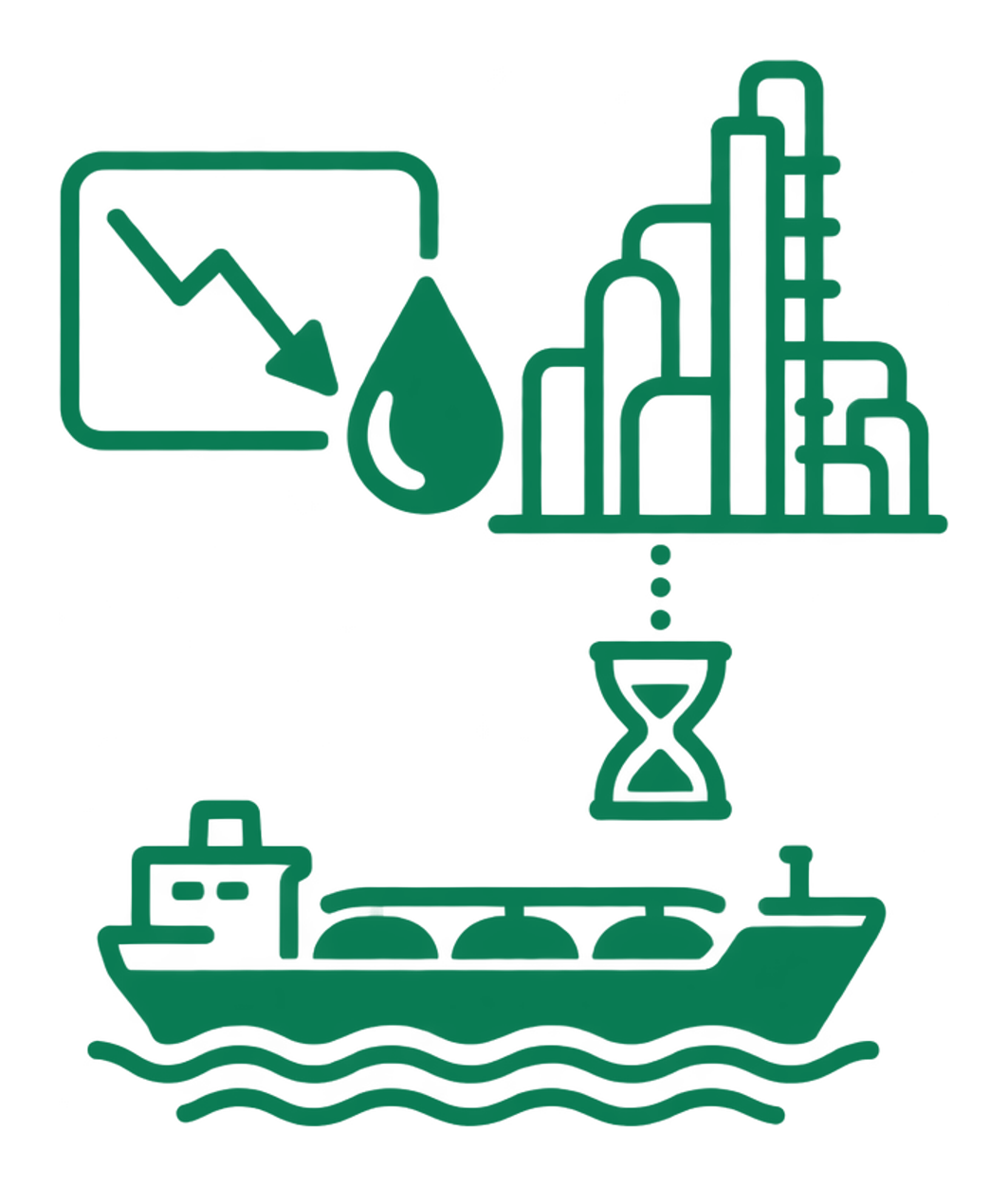
Start with what a price change can tell us—and what it cannot. Oil markets trade expectations about future availability. If traders believe sanctions relief will make Russian exports easier, they may reduce the extra amount they were willing to pay to guard against disruption. Prices can fall immediately, even though no additional diesel has left a refinery.
That reaction is not necessarily mistaken. Markets are forward-looking. But it answers a different question from the one facing a fuel buyer. Traders are asking whether future scarcity looks less likely. Buyers need to know whether usable diesel will arrive, where, and when. The distinction also matters because crude oil and diesel are different products. A falling crude benchmark does not establish that diesel shortages have eased.
Diesel has its own production constraints, shipping routes, inventories, and prices. Those can remain under pressure even when crude becomes cheaper. Now consider the policy changes described in the October developments. An October ninth authorization covered specified transactions involving Russian-origin diesel, including sale, delivery, offloading, and importation.
A broader presidential waiver followed on October sixteenth, covering Russia-related sanctions and tariff provisions before they took effect. These were separate measures. One addressed particular diesel transactions; the other changed broader restrictions. Both could make future trade appear easier, but neither was a production report or a record of fuel arriving at a terminal.
Oil prices fell on October nineteenth as traders assessed the potential for additional Russian supplies. That establishes a market response around the announcement. It does not isolate how much of the decline came from that decision. Demand expectations and other supply disruptions also influence prices.
The strongest physical constraint sits further back in the process
The strongest physical constraint sits further back in the process: operational refinery capacity. The market assessment in the dossier identifies that as the main limit on Russian diesel exports. Permission to sell cannot restart an idle refinery or restore damaged equipment. Even if payment and shipping become easier, output may not increase materially.
And higher output would still not automatically mean more exports. Domestic demand must be met, export rules still matter, and operations must be sustained. A brief restart is less useful to buyers than dependable production over several weeks.
Emergency stock releases offer a different route to supply. Governments coordinating through the international energy agency said roughly three hundred and thirty million barrels had already been released under their March action, with about one hundred million still outstanding. Plans included releasing more than twenty million barrels of diesel as soon as possible.
That diesel was part of the remaining commitment, not a separate package added on top. Unlike sanctions relief, stock releases can draw on fuel that already exists. Yet an announced release still has to become a sale, movement, and delivery before it improves a buyer’s position. So what evidence would settle the question?
Begin at the refinery. Look for sustained increases in refinery activity and diesel output, alongside credible evidence that outages have ended. That shows whether additional fuel is being made, rather than merely being permitted. Next, check confirmed terminal loadings and cargo volumes. A political statement that exports have resumed is a claim worth checking, not an independent measurement of additional supply. Even confirmed exports may represent fuel redirected from another destination rather than a net increase globally.
Follow the cargo through arrival and discharge
Then follow the cargo through arrival and discharge. A vessel’s movement alone does not prove that a particular buyer received diesel. Customs records, terminal receipts, and import data help establish what actually landed. Inventory changes then show whether those deliveries relieved pressure or simply met ongoing consumption.
Finally, compare those flows with regional diesel prices and refining margins. Stronger inventories and easing product prices would support a case for improving availability. Crude prices alone would not. Transport, insurance, payment arrangements, and competing demand can also prevent a global improvement from reaching a particular market.
The evidence reviewed here does not independently establish a material increase in diesel delivered to buyers because of the sanctions pause. That is an evidence limit, not proof that no deliveries occurred. The useful distinction is straightforward: policy can change expectations immediately; refinery capacity limits production; confirmed deliveries and inventories establish physical relief.
To explore the next steps, you can generate two more Five Cents episodes: How Diesel Refining Margins Work and Tracking Fuel Cargoes to Buyers. And with that, you're up to speed in a few minutes.