


Introduction
Five Cents Diesel uncertainty examines whether Russia’s promised fuel, a claimed energy ceasefire, and emergency stock releases can bring meaningful relief to a tight market. We’ll separate announced supplies from actual deliveries, explain the competing accounts of a pause in attacks, and look at what fuel users should watch next. The starting point is the gap between permission to export and fuel reaching buyers.
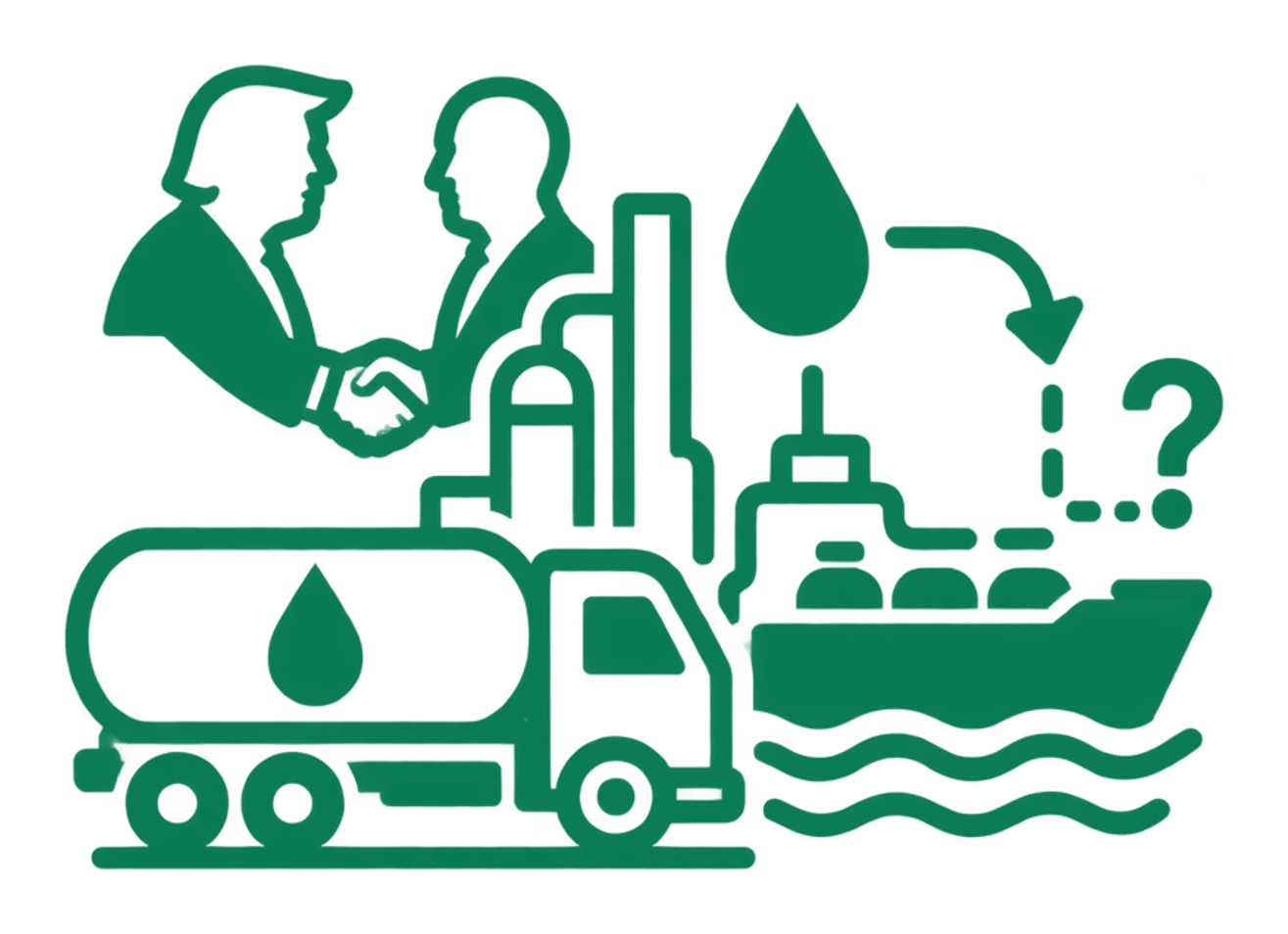
Opening exports can make more diesel available for international trade
Opening exports can make more diesel available for international trade. But fuel still has to be produced, sold, transported, and legally accepted by its buyers. A political announcement can change expectations before those steps happen. For farmers, transport operators, and businesses paying freight bills, the practical question is whether additional diesel arrives in enough quantity to ease prices.
Russia’s position captures that uncertainty. It is promising more diesel abroad while its refining capacity and domestic supplies are under pressure. It had also extended restrictions on diesel exports by producers through October thirty-first. A reported opening of exports therefore matters, but does not establish how much fuel Russia can consistently spare.
After speaking with Vladimir Putin on October ninth, President Donald Trump said Russia would supply more than three hundred thousand tonnes immediately, followed by five hundred thousand tonnes in November and one million thereafter. Russian Deputy Prime Minister Alexander Novak subsequently described prospective supplies of three hundred thousand tonnes in October, five hundred thousand in November, and one million in December.
Novak also raised the possibility of future capacity reaching three million tonnes a month. That is a prospective capability, not a verified shipment programme. The important distinction is between a government announcing volumes and buyers receiving them. The available evidence establishes the announcements and a reported easing of export restrictions, not a complete delivery schedule.
There is a separate legal question. The United States prohibited imports of Russian petroleum products following Russia’s invasion of Ukraine. The arrangement therefore needs clarity about which buyers can take the fuel and what sanctions permissions apply. A complete implementation mechanism has not been established in the material available for this episode. It would be premature to assume a particular waiver or import licence is in force.
The context
Trump presents the supplies as a way to stabilise energy markets. Ukraine and six American senators, from both major parties, have criticised the move. Their objections concern its political and strategic implications. Those objections are distinct from the delivery question. Even an arrangement with clear legal permission would still depend on Russia having sufficient diesel to sell.
That brings us to the claimed ceasefire, because fuel production and attacks on energy infrastructure are connected. On October eleventh, Trump said Russia and Ukraine had agreed to an energy ceasefire, without providing detailed terms. The following day, Ukrainian President Volodymyr Zelenskyy said Kyiv had learned about the proposal through media reports and had not received Russian confirmation. He supported a pause, but said Russian attacks on Ukrainian energy facilities continued.
Ukraine also accused Russia of striking a thermal power plant in Kharkiv. That account does not support describing the announced ceasefire as an established, functioning agreement. As of October twelfth, it remained a claim by Trump that Kyiv had not confirmed. The conditions matter. Trump has pressed Ukraine to halt attacks on Russian refineries. Zelenskyy says Ukraine would consider stopping if Russia stops attacking Ukrainian energy infrastructure.
Those positions suggest a possible reciprocal arrangement, but they are not proof that both governments have accepted the same terms. Confirmation, a defined start date, agreement on the facilities covered, and observable compliance would provide stronger evidence than an announcement alone. Meanwhile, other governments are pursuing a supply response that does not depend on Russian promises.
On October second, G7 members and partners agreed to release one hundred million barrels of oil and petroleum products over four months, with a substantial diesel release concentrated in the first twenty days. That headline figure is not one hundred million barrels of diesel. The mix of products and the timing of their release determine how much help diesel users actually receive.
The coordinated release includes implementation monitoring
The coordinated release includes implementation monitoring. Its early progress report should help establish what has entered the market. Emergency stocks can provide temporary relief, but they do not themselves repair damaged refineries or create lasting production capacity. Regional conditions also differ. The European Commission described European Union diesel supplies as stable for the time being, despite high prices caused by global tightness.
An American forecast put October retail diesel above six dollars a gallon. That helps explain domestic political pressure, but it is not a worldwide price forecast. So, promised exports are not delivered fuel. A claimed ceasefire is not verified compliance. And stock releases offer temporary support rather than guaranteed price relief.
Actual shipments and implementation reports are the next useful checks. To explore further, you can generate two new Five Cents: How emergency fuel reserves work, and Energy infrastructure in the Ukraine war. And with that, you're up to speed in a few minutes.