

Introduction
In Five Cents Cairo’s Mural Dispute, we explore why a public artwork depicting Tutankhamun and Nefertiti was painted over, and what the controversy reveals about AI-assisted design and heritage oversight. We’ll separate the artists’ explanation, the critics’ claims, and what remains unknown about the authorities’ decision. The starting point is the difference between an artistic choice and a historical claim.
What is happening
A portrait of an ancient ruler can look authoritative without being a reliable reconstruction. Put that portrait in a prominent public square with official backing, and viewers may interpret its colours and features as a statement about history. That helps explain how a beautification project in central Cairo became a dispute over who gets to represent ancient Egyptian identity.
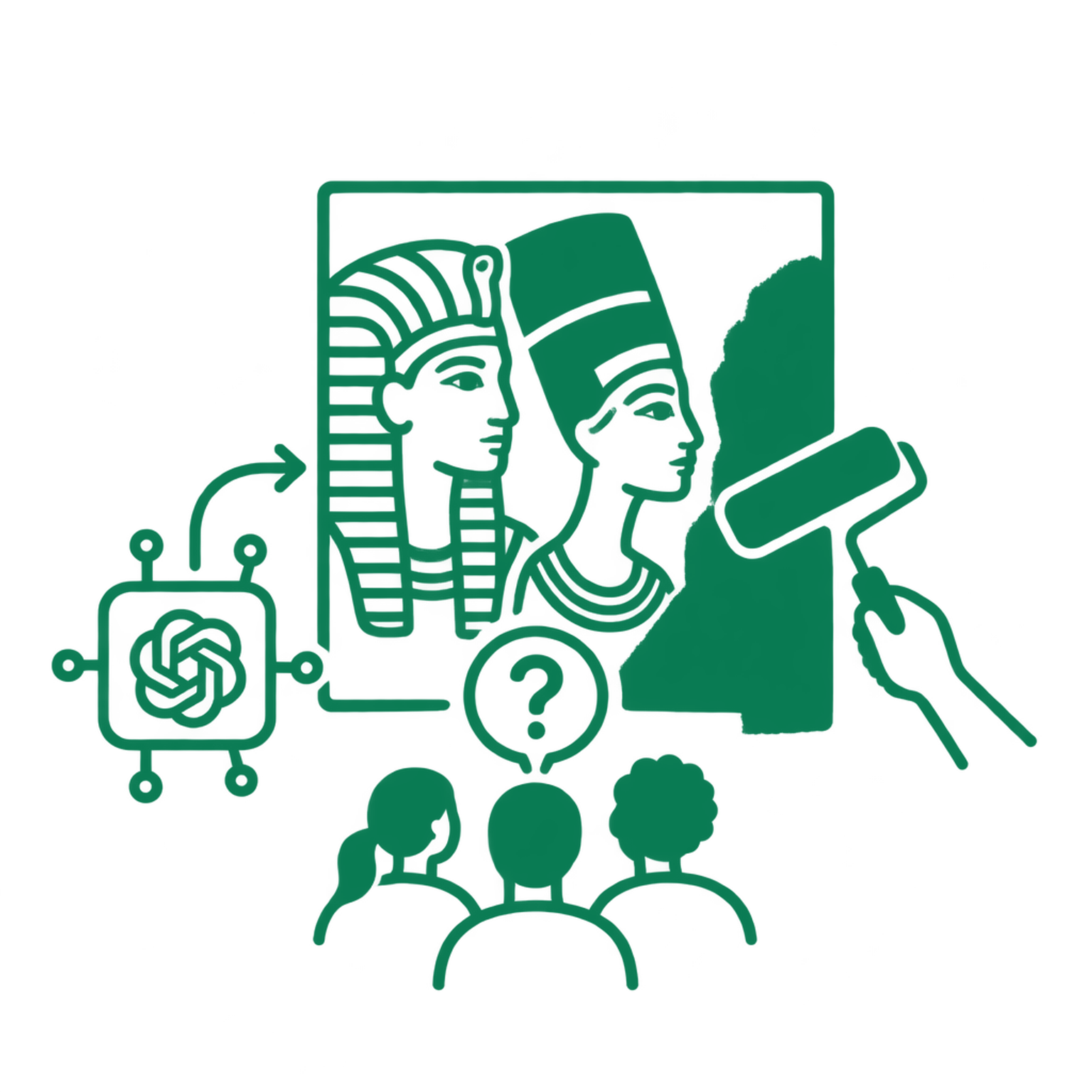
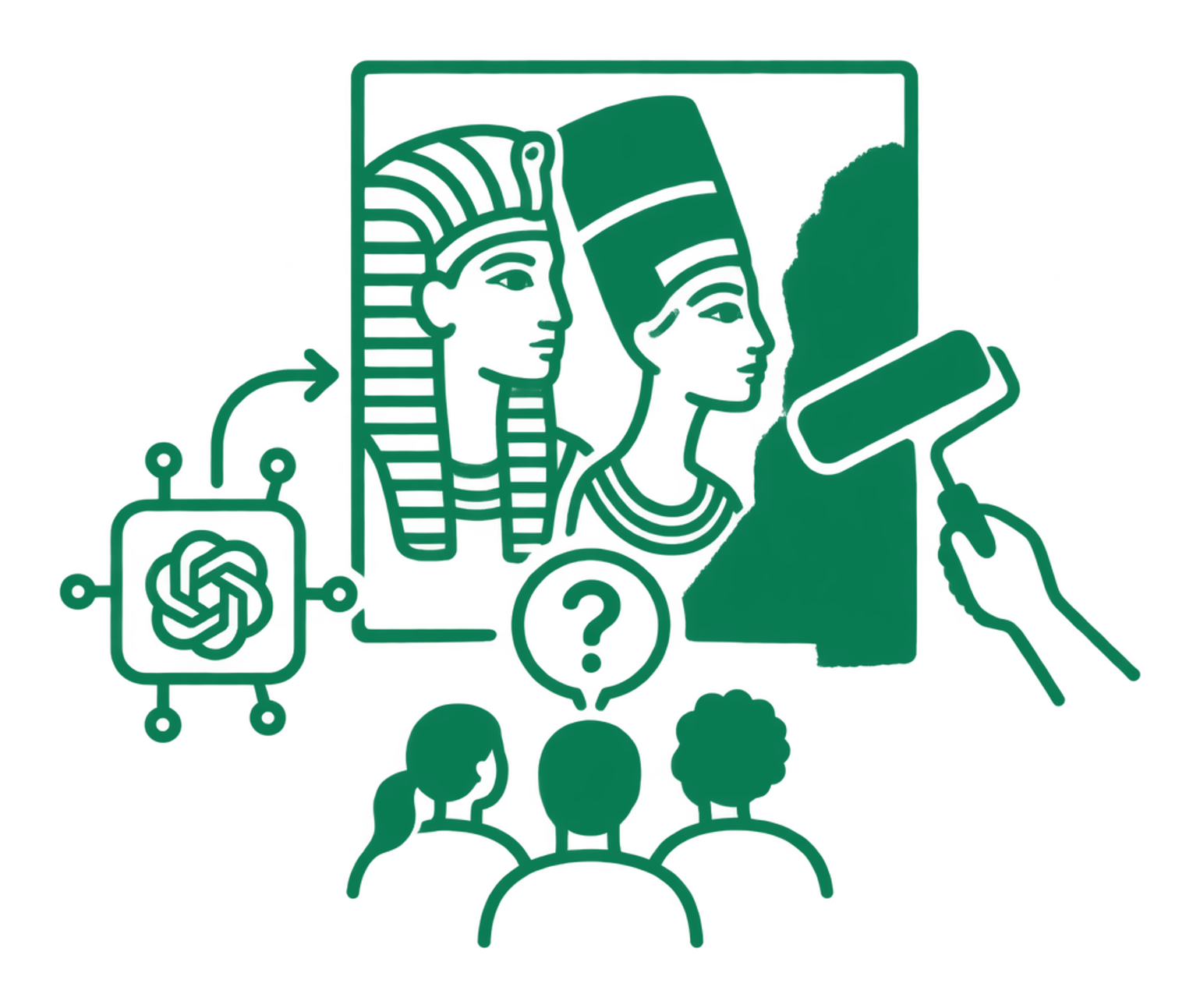
In late August twenty twenty-six, the volunteer youth group Rasmet Basma painted a sixty-six-metre mural in Tahrir Square. It depicted Tutankhamun and Nefertiti, and was one of about forty murals commissioned for a city beautification effort ahead of Chinese President Xi Jinping’s visit. The figures’ dark appearance drew online criticism. Some critics accused the work of echoing Afrocentric claims about ancient Egypt’s population and origins. Those were interpretations of the mural, not established evidence of the volunteers’ intentions.
The group’s founder, Ahmed Moussa, offered a different explanation. He said the artists had used a golden-bronze palette, but lighting and shadows made the faces appear darker. He also acknowledged that the volunteers had not consulted archaeology or art-history specialists. His account describes a visual result that became contentious, rather than an intended argument about race.
That distinction matters. We can describe what viewers objected to without accepting their claim about what the artists meant. Equally, the artists’ explanation does not settle whether the design was appropriate for the setting. Intention, historical accuracy, and public reception are different questions.
AI adds another question: how was the design developed? The team reportedly used ChatGPT to generate design concepts, which volunteers then painted onto the wall. So this was an AI-assisted design process, with people selecting and executing the artwork. It was not a mural that a machine independently placed in Cairo.
The available account does not identify the model version
The available account does not identify the model version, preserve the prompts, or show the full sequence of designs. Nor does it establish how much the volunteers changed the output. Without those details, we cannot confidently attribute the final skin tones to a particular AI decision. An expert warning raised in the reporting is relevant here: AI-generated imagery can reflect material circulating online, rather than dependable historical evidence. But that is a general risk, not proof of how this particular image emerged.
Calling the mural AI-assisted is justified. Saying AI invented its racial message would go beyond the evidence. The heritage argument also needs care. Former antiquities minister Zahi Hawass argued that work at such a significant site should not have been installed without expert oversight. His objection brings the commissioning process into focus: who checked the design before it became a public representation of ancient Egyptian figures?
Egyptologist Monica Hanna stressed that ancient Egyptian society was diverse, including communities with different regional backgrounds. That complicates attempts to turn one modern portrait into a definitive statement about the population. The evidence presented in this case does not establish a precise, modern-looking complexion for either Tutankhamun or Nefertiti.
None of that makes every depiction equally well supported. It means a painted face cannot resolve a historical question by itself. A responsible review would distinguish creative interpretation from claims backed by evidence, rather than treating a single colour as proof of identity. Then there is the decision to cover the mural. Moussa said the Cairo governorate asked the group to paint over it.
He also said senior local officials had visited while the work was underway and appeared impressed, before criticism gathered online. The mural was subsequently covered shortly before Xi’s arrival. That sequence is reported, but the officials’ precise reasoning is not documented in the material available. There is no public written order here, no identified final decision-maker, and no established formal heritage review.
Why it matters
We should therefore avoid claiming that removal was intended to appease critics, prevent diplomatic embarrassment, or enforce a specific rule. The practical issue is accountability before installation, not just reaction afterwards. Expert input could help identify unsupported historical claims. Clear approval responsibilities could establish who accepted the design.
And an explanation of any removal decision would let the public assess the reasoning rather than infer it from timing. The mural’s appearance triggered an identity dispute, but its creators’ alleged political intent remains unproven. AI contributed concepts; people remained responsible for selection and execution.
And the reported removal leaves important questions about official review unanswered. To explore those questions further, you can generate two new Five Cents: Reviewing AI-Assisted Public Art and Reconstructing Ancient Egyptian Faces. And with that, you're up to speed in a few minutes.