

Introduction
Five Cents NATO delivery looks at how military support for Ukraine moves from an Allied commitment to equipment that can actually be used. Who sets the priorities? Who pays? Why are air-defence missiles central? And where do the delays happen?

What is happening
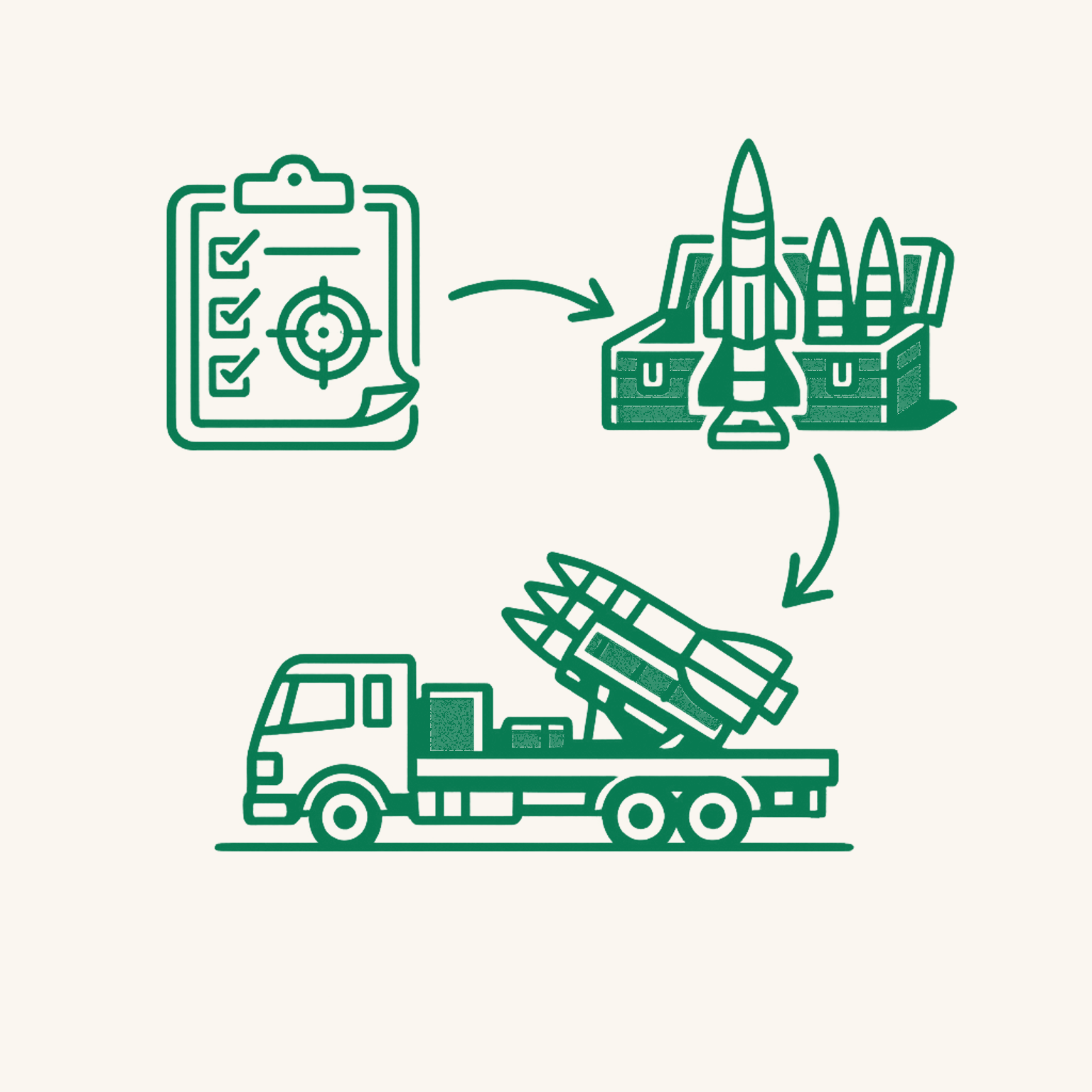
The useful place to start is with a distinction that often gets lost: a promise is not a delivery. Under NATO’s Prioritised Ukraine Requirements List, or PURL, Ukraine identifies urgent needs. Allied military authorities help validate them. Participating countries fund equipment packages that the United States can supply at scale.
NATO then coordinates delivery support through its Security Assistance and Training for Ukraine structure, known as NSATU. That does not mean NATO owns every item or has entered the war directly. The equipment may come from US stocks or procurement channels, while European Allies and Canada cover much of the cost.
Ukraine receives the equipment, integrates it into its forces, and decides how to use it. NATO’s role is coordination, training support, and helping turn a collection of national decisions into a more reliable system. The model was launched in 2025 because there was a practical mismatch. Ukraine needs some capabilities quickly and in large quantities.
European countries have increased their own production, but they do not always hold the necessary systems or ammunition in the same volume. For certain high-demand equipment, particularly air-defence interceptors, US inventories can still offer faster access. But every package has several stages. First comes the operational requirement: what Ukraine says it needs most urgently.
The context
Then come validation, funding, sourcing, release from stockpiles or contracts, transport, handover, training where needed, and finally operational use. A public announcement may sit near the start of that chain. It is important, but it does not tell you that the equipment has reached Ukraine. Let alone that it is already defending a city or supporting forces near the front.
Air defence is the clearest example. Russia’s missile and drone attacks create continuing demand for interceptors that protect cities, energy facilities, and military positions. NATO has said PURL has supplied a substantial share of missiles and ammunition for Ukraine’s air-defence systems, although its estimates have varied by date and category.
The wider point is more stable than any one percentage: these supplies are scarce, used quickly, and difficult to replace. That scarcity explains why money alone cannot solve the problem. Funding can unlock a package, but it cannot instantly create more Patriot interceptors or other specialised munitions.
Production lines need contracts, components, skilled workers, and time. Even when governments agree to expand manufacturing, the new output may arrive well after the most urgent battlefield need. The latest verified picture is therefore one of an ongoing delivery system, not a single new shipment. By mid-2026, NATO said more than six billion US dollars in US-sourced equipment had been committed through PURL, with deliveries under way.
At the Alliance summit in Ankara in July
At the Alliance summit in Ankara in July, members also reaffirmed a commitment of at least 70 billion euros in military equipment, assistance, and training for Ukraine across 2026 and 2027. Those figures matter politically, but they should be read carefully. They are commitments and funding signals, not a guarantee that every capability arrives on the same timetable.
They also do not remove the competition between Ukraine’s immediate requirements and the need for NATO countries to maintain their own readiness. Allies are trying to support Ukraine while avoiding dangerous gaps in their own stockpiles. For Ukraine, regular deliveries can improve its ability to withstand attacks and sustain defensive operations. They can also strengthen its position in any future negotiations, because military capacity affects diplomatic leverage.
Still, deliveries alone do not determine the course of the war. Their effect depends on quantity, timing, training, maintenance, intelligence, and Russia’s ability to adapt its own tactics. For NATO, PURL is a test of collective delivery rather than collective rhetoric. It spreads financial responsibility more widely while preserving access to capabilities concentrated in a smaller number of countries.
It also makes the industrial question impossible to avoid. A system built only on existing stockpiles can respond quickly, but it cannot remain credible indefinitely without more production, repair capacity, and deeper reserves. There is also a deliberate political boundary. NATO presents this support as assistance for Ukraine’s self-defence, not direct participation in the war.
What comes next
Russia is likely to see sustained deliveries as evidence of long-term Western backing. NATO’s challenge is to maintain that support, coordinate it efficiently, and keep the distinction clear. So when a NATO delivery story appears, ask four things. What specific capability is involved? Who has funded it? Is it authorised, in transit, delivered, or already in use? And does it draw from a stockpile, or from new production?
Those answers reveal far more than a headline about weapons or aid. The central lesson is simple: PURL is designed to turn Ukraine’s urgent requirements into coordinated supply, but funding, delivery, and battlefield effect are different stages. Air defence shows why the system matters now, while industrial capacity will decide how sustainable it can be.
To continue, you can generate a new Five Cents on “Ukraine’s Air-Defence Shortage” or “Europe’s Defence Production Challenge.” And with that, you're up to speed in a few minutes.