

Introduction
Five Cents examines Sudan’s War Becomes a Civilian Survival Crisis: why safe roads, working clinics, water systems, and aid staff matter as much as food and medicine, and what renewed drone attacks have changed this week. We’ll look at the access system civilians depend on, the scale of need, and the signs that conditions are genuinely improving. The place to start is with how survival assistance actually reaches people.

Sudan’s war has pitted the Sudanese Armed Forces
Sudan’s war has pitted the Sudanese Armed Forces, or S A F, against the Rapid Support Forces, the R S F, since April twenty twenty-three. But for civilians, control of territory is only part of the story. Survival often depends on whether a road can be used without attack, whether a warehouse can operate, whether health workers can travel, and whether local partners can distribute supplies once they arrive.
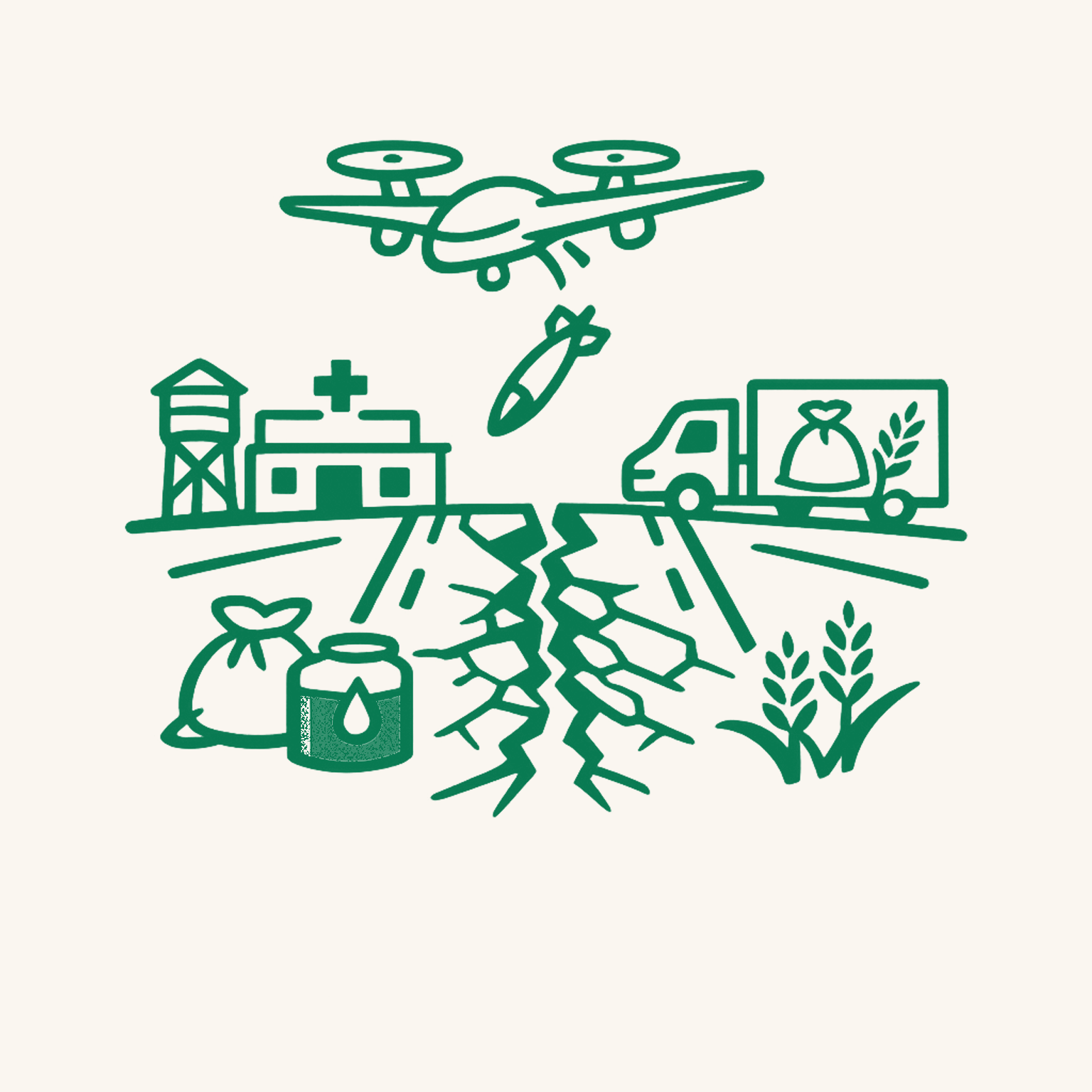
That chain is fragile. A donated shipment is not help until it reaches a family, a clinic, or a water point. Drone attacks can break the chain without a formal siege. They can make drivers stop, force staff to shelter, damage essential infrastructure, and prevent agencies from moving food, medicine, nutrition supplies, or fuel.
Even a short interruption can matter when communities have little supply left. That is why the latest warnings around North Darfur and North Kordofan are so serious. On the second of August, a reported strike in Ghara al Zawiya, in North Darfur, caused dozens of casualties, according to information relayed by United Nations human rights officials. International media put the death toll at at least thirty-five.
The figures remain subject to the limits of reporting from an active conflict zone. But the immediate concern goes beyond one attack. Renewed drone attacks around El Obeid, in North Kordofan, have also raised risks for civilians, critical infrastructure, and humanitarian operations. El Obeid matters because it is not simply another point on the map. It is a transport and service hub for surrounding communities.
The World Food Programme was still trying to provide food assistance there to more than one hundred thousand people. If insecurity disrupts routes or damages facilities, that work becomes slower, smaller, or impossible. The broader emergency is already immense. By the middle of this year, an estimated thirty-three point seven million people in Sudan needed humanitarian assistance, including seventeen point three million children. More than nine point one million people were internally displaced.
These are not numbers created by this week’s attacks
These are not numbers created by this week’s attacks. They describe the depth of a crisis that has built over years of conflict. They also show what is at risk when access narrows. Humanitarian teams screened five point three million children for acute malnutrition and treated one hundred seventy-four thousand seven hundred children with severe acute malnutrition during the first half of the year.
They supported primary healthcare for one point three million people and safe water for six point six million. Those services depend on predictable movement, functioning facilities, supplies, and local staff who can work safely. Funding is another pressure point, but it is not the same as access. By the third of August, Sudan’s wider humanitarian response had received around one point two billion dollars of the two point nine billion required for twenty twenty-six.
Separately, UNICEF had mobilised three hundred fifty-one million dollars by June, while reporting a sixty-four percent gap in its own appeal. These are different funding measures, but they point in the same direction: less money means fewer stocks, fewer transport options, less capacity to maintain water systems, and less ability to act when a route briefly becomes usable.
At the same time, money alone cannot open a road or protect a clinic. That requires restraint by armed actors and practical cooperation around civilian infrastructure. Sudanese communities and civilian authorities remain central to local delivery. Aid agencies can support, but they rely on people who know where needs are greatest and how to reach them.
Diplomatic efforts continue alongside the emergency. The United Nations envoy’s office, the African Union, IGAD, the League of Arab States, and the European Union have been consulting Sudanese civilian political leaders on confidence-building and a political process. That is not a ceasefire, and it should not be treated as one. A political announcement only matters for civilians if it changes conditions on the ground.
The useful measures are concrete
The useful measures are concrete: fewer attacks near transport hubs, sustained protection for aid and civilian infrastructure, predictable road access, deliveries reaching intended communities, restored clinics and water points, and fewer people forced to flee again. Funding must also turn into actual services, not remain a promise on paper.
The core lesson is simple. Sudan’s crisis is not only about how much aid exists. It is about whether civilians can safely reach the systems that keep them alive. The August drone escalation makes that access problem more dangerous, while the scale of existing need leaves very little room for disruption.
To continue, you can generate Five Cents episodes on Safe Routes and Humanitarian Access in Sudan, or on Sudan’s Civilian Political Process. Both follow the practical and political conditions that could change daily survival.
And with that, you're up to speed in a few minutes.