


Introduction
Five Cents explores why some stories go viral: the emotional triggers, social signals, platform recommendations, and outside amplification that turn an ordinary post into something people cannot stop passing on. We’ll also separate genuine momentum from paid promotion and manipulation. The best place to start is with the reason anyone shares in the first place.
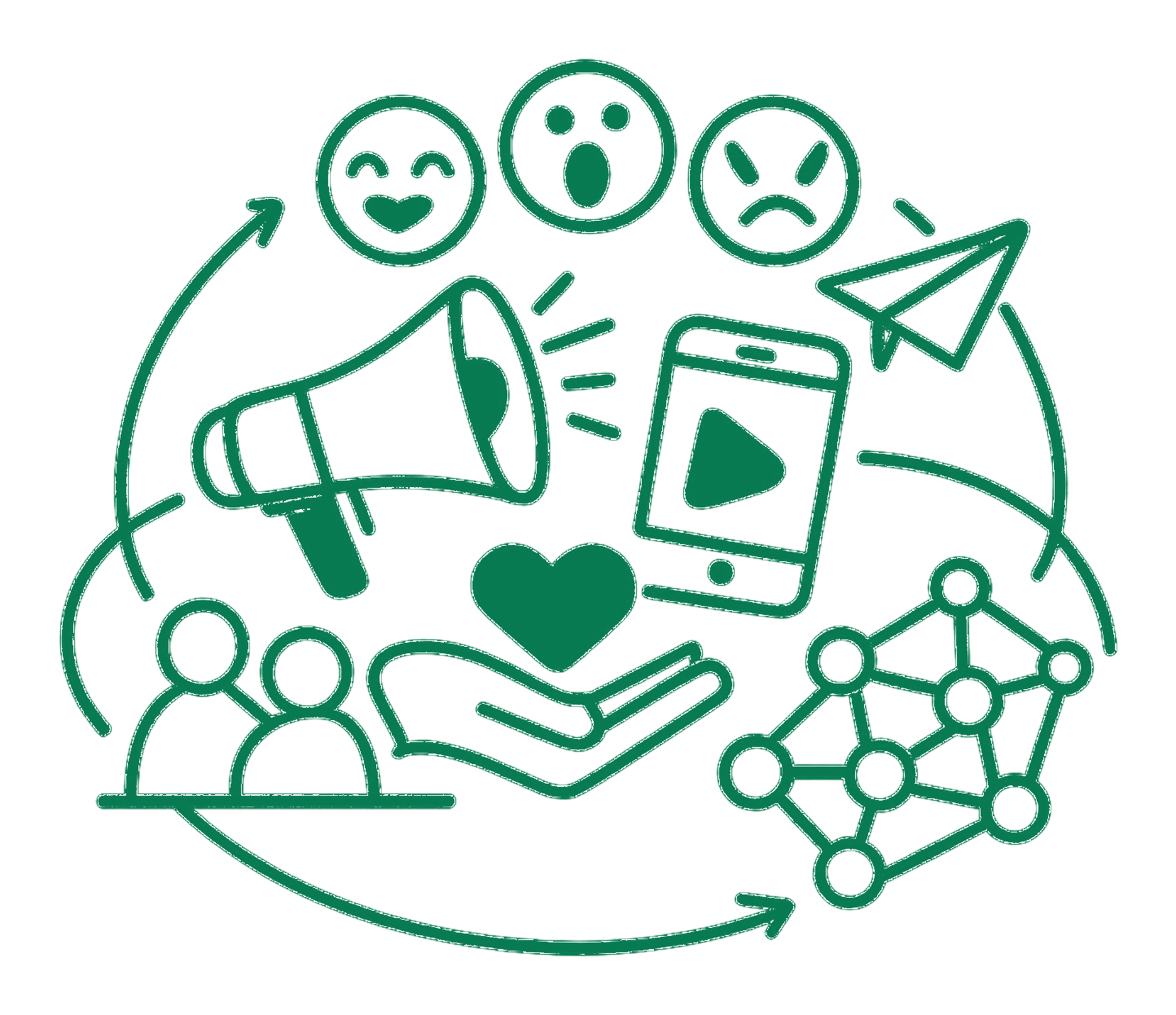
The key points
Virality is not a magic property hidden inside a video or headline. It is rapid spread through networks. It can be huge within a small community without becoming known everywhere. Views, shares, comments, and real-world impact are different things. A post can get millions of recommended views without many people sending it to friends. Another can travel widely through personal messages with little public visibility.
The simplest explanation is that viral content is easy to notice, easy to understand, meaningful to share, and repeatedly shown to people with a reason to pass it on. That brings together four forces: the content itself, the people seeing it, the platform distributing it, and the wider media system that may give it a second life.
Emotion often provides the first push. Awe, amusement, anger, anxiety, and surprise create energy. They make people think: you have to see this. This is outrageous. Is this real? That does not mean negative content always wins. What matters most is usually emotional intensity. Sadness alone may hold attention. But sadness mixed with empathy, injustice, or urgency can motivate sharing too.
And none of this is a test of truth. Emotional claims are often shared before they are checked. Format determines whether that impulse can travel. A strong first image, a clear point without sound, and a payoff that arrives quickly all reduce friction. The most powerful formats also invite participation. The ALS Ice Bucket Challenge worked because anyone could understand the action, record it, nominate friends, and link it to a cause.
It generated millions of videos and substantial fundraising. But not every challenge can do that. Its unusual strength was the mix of a repeatable template, public nomination, peer pressure, and a clear purpose. People also share to say something about themselves. A meme can signal that you understand a community. A political clip can signal allegiance. A charity post can signal support and participation.
So a useful question is not just
So a useful question is not just, “Why do people like this?” It is, “What does sharing this let them communicate?” Content that gives people a role inside a group can outperform something more polished but less socially useful. Then come the platforms. Recommendation systems can show a post beyond its followers, test it with likely viewers, and use watching, skipping, replaying, commenting, or sharing as feedback.
If early viewers respond strongly, distribution may expand. That is why a small creator can suddenly reach a vast audience. But recommendation is amplification, not the whole explanation. An algorithm can increase exposure. It cannot fully explain why people watched, copied, defended, or forwarded the post.
Momentum also depends on communities and repeated exposure. Some ideas spread after one encounter. Others need several meaningful signals: friends joining in, familiar creators discussing it, or a community adopting its own version. A trend can move from a niche group to a larger account, then to another platform, and eventually into wider coverage. At each step, new people may encounter it without knowing where it began.
That wider coverage can create a second wave. Commentators, large creators, and news organisations can turn a platform-native moment into a public story. Then fresh audiences react online, making the item appear even bigger and attracting more coverage. Being widely covered does not prove that something was popular everywhere from the beginning.
It may simply show that it crossed an important bridge between communities. This matters especially for misinformation. Research has found that false stories can travel faster and farther than true ones in some online environments, particularly around politics. Bots can help seed or accelerate content, but they are not the only explanation. Human users often drive the spread.
Falsehoods can be dramatic
Falsehoods can be dramatic, simple, certain, and emotionally satisfying in ways accurate reporting cannot always match. During health emergencies, that mix of uncertainty, urgency, and trusted community voices can make misleading claims especially damaging. So do not treat every viral post as organic proof of public opinion. It may have been recommended by a platform, boosted by a creator, supported by advertising, pushed through coordinated accounts, or inflated with fake engagement.
These categories can overlap. A paid campaign can become genuinely popular. A manipulated post can later attract real sharing. The useful questions are: what emotion is it activating, who benefits from sharing it, how easy is it to copy, which community moved first, and is there evidence of artificial amplification?
Virality is a chain, not a button. Emotion starts movement. Identity and format make participation easy. Platforms or media can accelerate it.
To continue, you can generate Five Cents episodes on How Recommendation Algorithms Shape Attention or How to Spot Coordinated Online Manipulation.
And with that, you're up to speed in a few minutes.