

Introduction
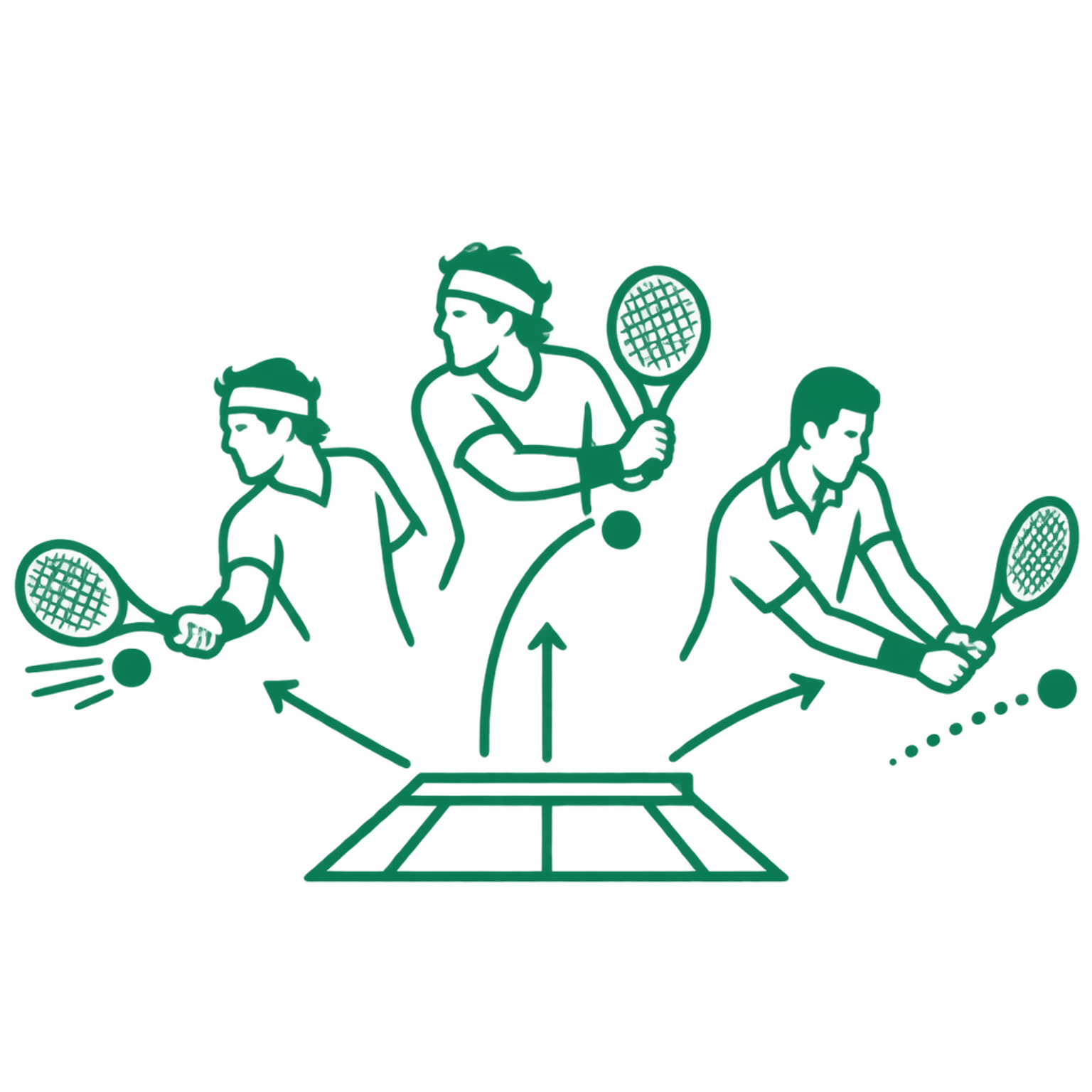
In Five Cents, we’re exploring what set Federer, Nadal and Djokovic apart by looking at how each controlled a tennis point. We’ll compare their strokes, court positioning and preferred patterns. Then we’ll explain how surfaces and career adjustments changed those advantages. The best place to begin is not their trophy totals, but where each wanted to meet the ball. Roger Federer wanted to get there early. His serve, anticipation and compact timing helped him take control before an opponent could settle into a rally. Rafael Nadal often created control through the ball’s trajectory: heavy left-handed topspin, height and angles that pushed opponents away from comfortable contact. Novak Djokovic combined early contact with outstanding returning and a reliable two-handed backhand. He could absorb an opponent’s attack, change direction and immediately make that opponent defend. These were different ways to gain an advantage, not rigid categories of attacker and defender.
Their techniques made those choices possible
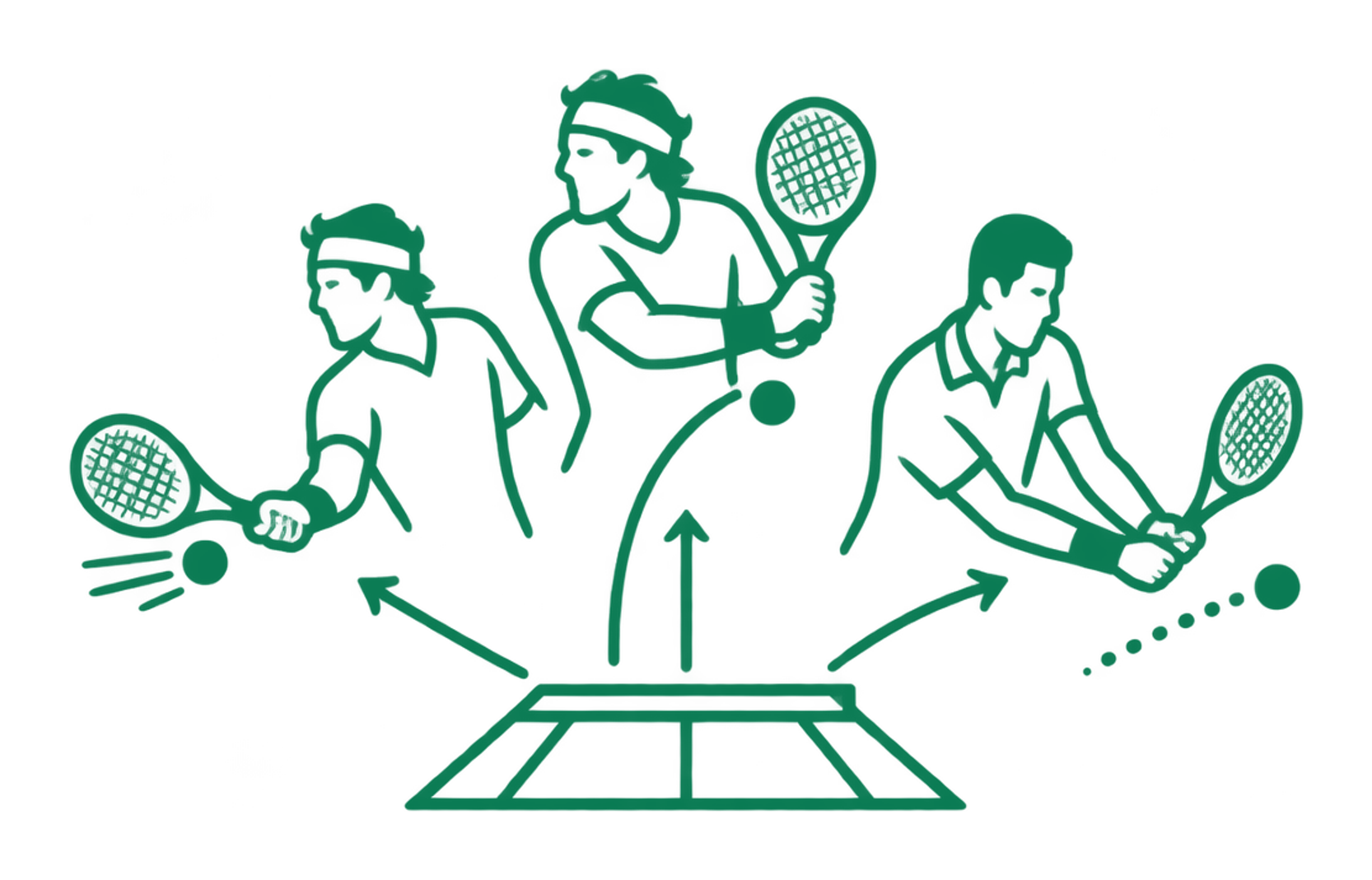
Their techniques made those choices possible. Federer’s one-handed backhand offered variety, including a low slice that changed the rhythm and bounce. But a ball climbing above his comfortable hitting zone could make that stroke harder to attack with. Nadal’s forehand could produce exactly that problem, especially when hit across court toward a right-hander’s backhand. Djokovic’s two-handed backhand gave him a stable response to pace and height, with the option to redirect down the line. The important difference wasn’t simply which stroke looked better. It was which stroke helped a player impose the next shot.
For Federer, the serve and the shot immediately after it often worked together. A well-placed serve could produce a shorter reply. Taking that reply early let him attack an open court or move forward. His footwork mattered because it preserved options: drive the ball, use slice, change direction or approach the net.
The 2019 Wimbledon final against Djokovic showed both the strength and the limits of that approach. Federer created attacking opportunities, but Djokovic’s deep returns and backhand repeatedly challenged his control. That match wasn’t a verdict on their entire rivalry. It demonstrated how first-strike tennis can face resistance from someone who makes even a strong opening shot insufficient to settle the point.
Nadal’s approach often required more construction, but it was no less attacking. His heavy forehand could force an opponent back, pull them wide and leave space for the next shot. Against Federer, the familiar forehand-to-backhand exchange was really a contest over height and position. Could Federer intercept the ball before it climbed, or would Nadal make him strike from farther back?
The context
Clay often strengthened Nadal’s pattern because its bounce and conditions gave his spin room to work. Yet his success on grass and hard courts required other solutions too. Over time, he became more comfortable taking the ball earlier and using his backhand assertively. His court coverage supported the attack; it wasn’t the whole explanation for it.
Djokovic’s return changed what opponents could expect from their own serve. Rather than simply getting the ball back, he could return with enough depth to deny an easy first attacking shot. In rallies, his balance and flexibility helped him reach wide balls without always conceding control. A stretched defensive stroke could become a deep reply, and a deep reply could set up a change of direction.
That is why calling him merely a counterpuncher misses so much. His baseline game could actively take time away. His rise in 2011 and recovery after elbow surgery in 2018 also underline that sustained success involved rebuilding and adjustment, not one permanent formula. Returning, serving and rally control all mattered to that process.
The biggest mistake is treating surfaces or styles as destiny. Grass often rewards lower-bouncing, early-contact tennis; clay can amplify height and spin. But court preparation and conditions matter, and hard courts vary substantially. All three won all four majors.
What it means
Adaptation is especially clear in Federer’s 2017 Australian Open final against Nadal, when a more assertive backhand and earlier contact disrupted their familiar pattern. Equipment was part of his development, not a complete explanation. When watching their matches, notice contact height, distance behind the baseline and what happens after the return. Those details explain more than labels such as elegance, endurance or mental strength, which can obscure the decisions being made on court.
Federer sought early initiative and variety; Nadal created openings through spin, angles and pressure; Djokovic used returning and redirection to contest control from the start. Their longevity depended on adjusting those strengths as opponents and conditions changed. To explore this further, you can generate two new Five Cents: How to Read a Tennis Rally, for spotting those decisions as they happen, and How Tennis Surfaces Change Tactics, for a closer look at bounce, pace and movement. And with that, you're up to speed in a few minutes.