

Introduction
With Five Cents, we're looking at the padel mistakes that cost you points, and how better decisions can help you avoid them. We'll cover moving with your partner, choosing realistic shots, using the lob, reading the back glass, and calling shared balls.
The key points
Start with positioning, because a difficult shot often begins with a decision made before the ball arrives. The useful default is position before power. Before choosing your shot, ask where you are, where your partner is, and what this ball actually allows. If you're stretched, low, or off balance, your first job is usually to keep the rally manageable and give yourselves time to recover. If you're balanced and the ball is easier, you can look for placement that creates a weaker reply.
That doesn't mean playing timidly. It means recognizing that a ball you can reach isn't necessarily a ball you can attack. Think of your pair as sharing an attacking or defensive situation, rather than playing two separate games. You don't need to stand on exactly the same line. But if one player charges toward the net while the other is still defending deep, opponents have more space to exploit between you.
After a useful shot, check whether both of you can move forward. After a weak shot, be ready to defend together. These are coaching defaults, not guarantees. The right response still depends on the incoming ball and the opponents' position. Take the lob. Your partner lifts the ball from the back, and you immediately rush forward. But the lob falls short, leaving an opponent an easy overhead while you're moving into its path.
The mistake wasn't simply a poor lob. It was advancing before checking what the lob achieved. A useful lob makes opponents retreat and gives your pair time to reorganize or approach. Watch whether they're moving back or getting underneath it comfortably. If they can attack, don't keep advancing just because that was your plan. If they're forced deep and you both have time, move forward together.
And don't lob automatically
And don't lob automatically. When opponents are already back, a controlled lower return may be more useful than another high ball. Shot selection follows the same logic. Imagine you're pushed deep, reaching down for a low ball with your weight still moving backward. A sharp passing shot asks for accuracy and pace when your balance is poor. A controlled return gives you a better chance to stay in the rally.
Depending on the contact available, that might be a lob, or a lower ball aimed through the middle rather than toward a tight angle. The central target can reduce the angle you're trying to find, but it isn't automatically safe. Height and pace still matter. On an easier ball, use placement to make the next reply awkward instead of forcing a winner. Judge the decision by the ball you had, not just whether the shot happened to land in.
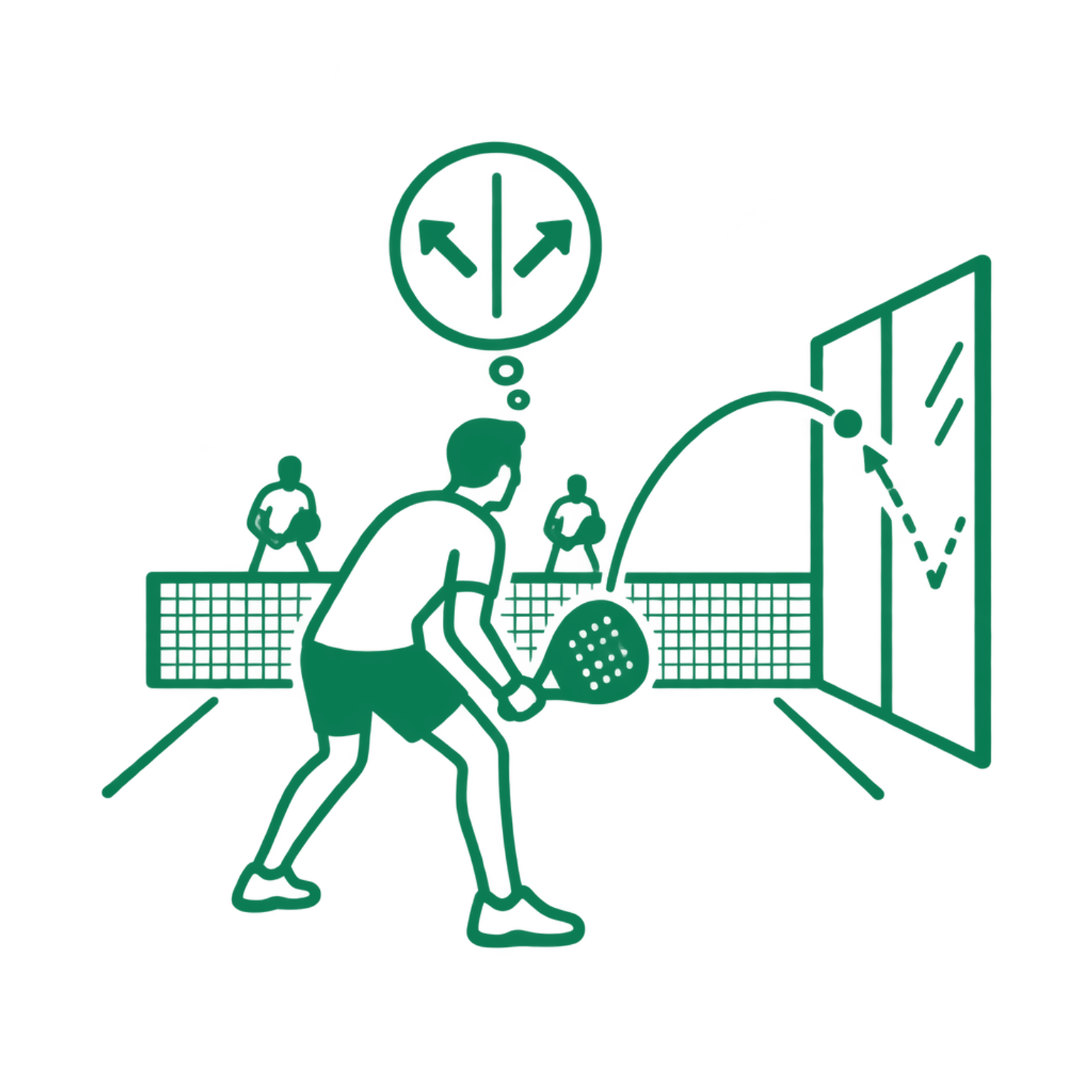
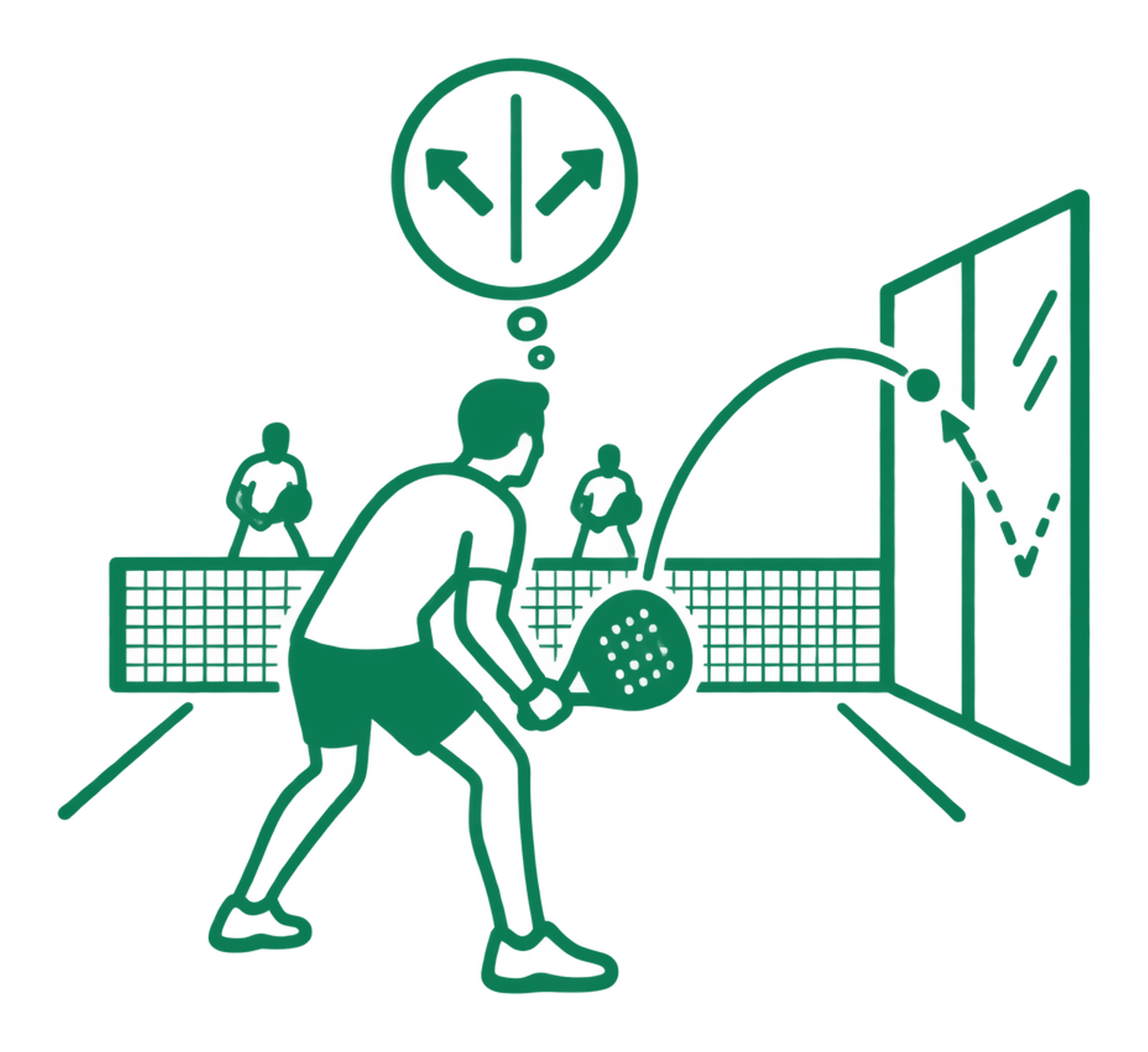
At the back glass, avoid both panic and passivity. Some players rush to hit every deep ball before it reaches the wall. Others wait without adjusting, then find the rebound too close to their body. Read the speed, height, and angle early, and move so you have room to play the ball. If a playable rebound is coming, prepare before it reaches you, rather than beginning your swing in a hurry afterward.
The ball can remain in play after bouncing on the court and then hitting the glass, but you must return it before its second ground bounce. That rule makes the wall an option, not an instruction to use it every time. Practice judging which rebounds give you space and which call for an earlier contact, then recover after your return.
Communication ties these decisions together
Communication ties these decisions together. Before playing, agree on a default for uncertain middle balls, while allowing for who has the better position and contact. During the point, use short, early calls: mine, yours, or a brief warning about where the opponents are. Calling after both rackets are moving is too late to prevent hesitation or a collision.
Only one partner may hit the ball. Save longer tactical discussions for breaks. After an error, ask whether you were both in the right zone, whether the shot suited the ball, and whether ownership was clear. Review a few points afterward and work on the decision that keeps repeating, rather than trying to rebuild every stroke at once.
Move together, match your ambition to your balance, and use the lob and glass to improve your position rather than out of habit. To explore this further, you can generate two new Five Cents podcasts: Building a Reliable Padel Return and Defending Overheads as a Pair. And with that, you're up to speed in a few minutes.