

Introduction
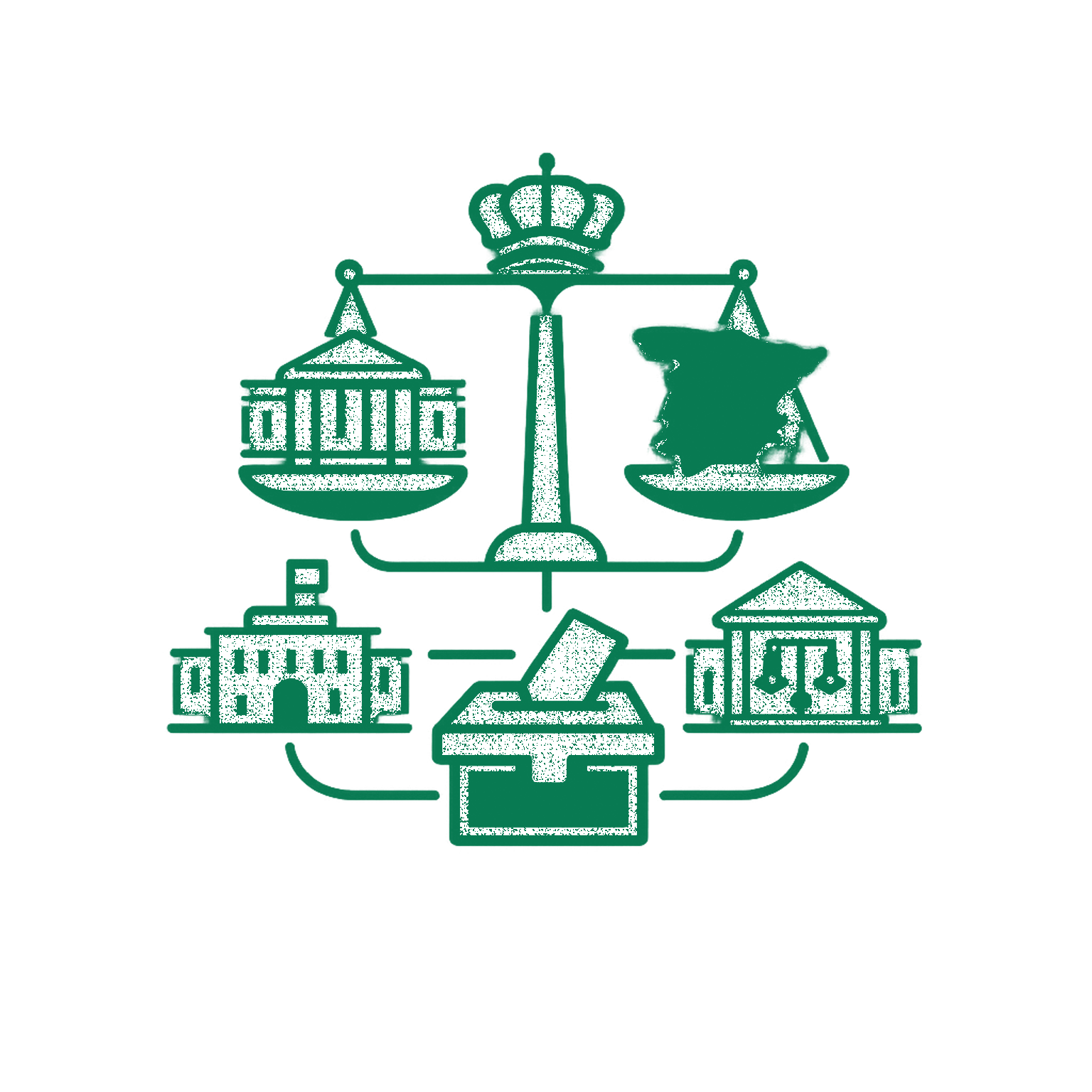
Five Cents looks at How Power Is Shared in Spain: who forms a government, what Parliament can stop, why regions have major authority, and how courts referee the boundaries. The best place to begin is the constitutional bargain that holds those parts together. Spain’s 1978 Constitution defines a parliamentary monarchy. Sovereignty belongs to the people, not the monarch. The King is head of state, with formal and representative duties, but does not set government policy. Most royal acts need the signature of an elected authority, which carries the political responsibility.
The Constitution also combines two powerful ideas
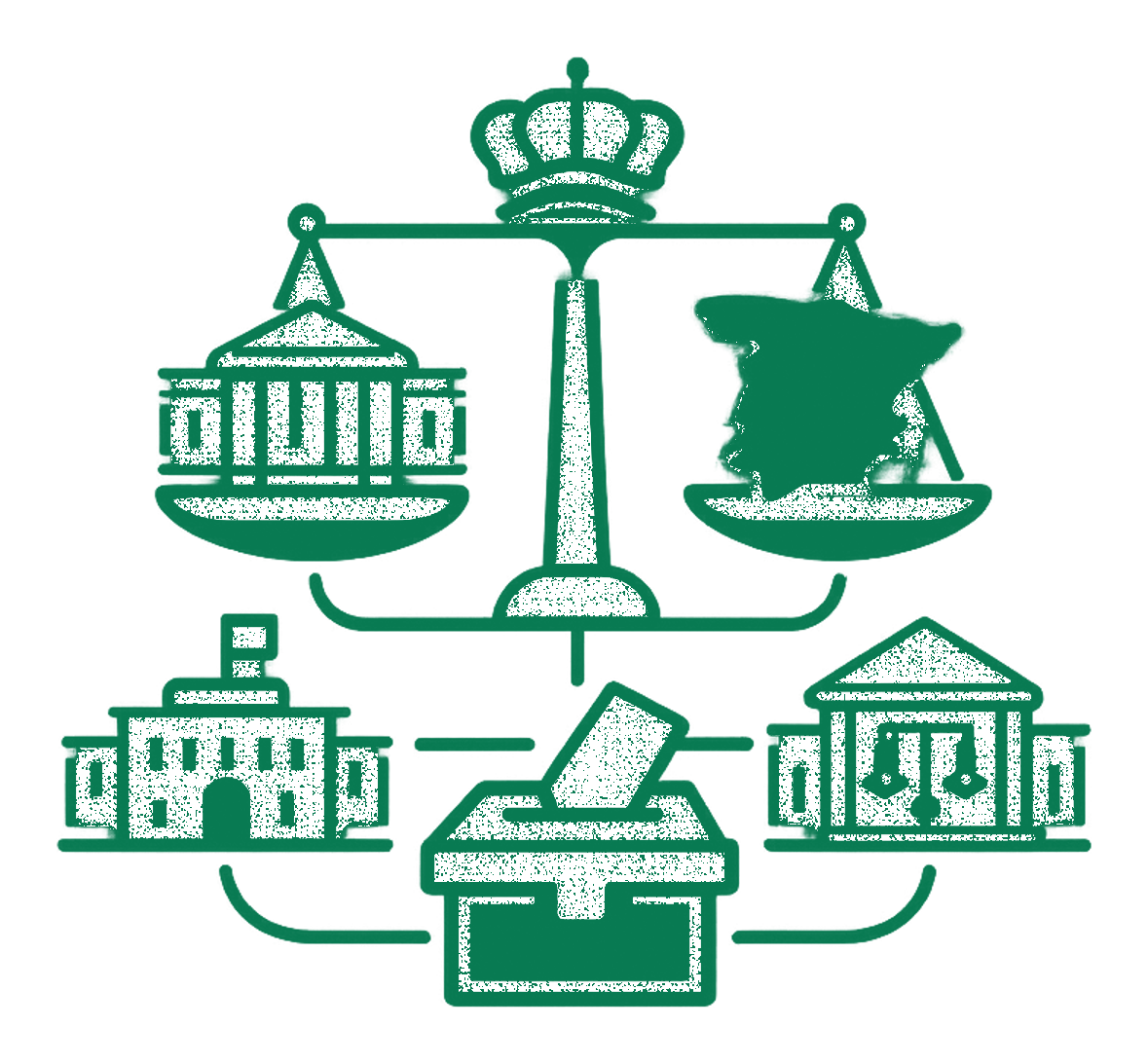
The Constitution also combines two powerful ideas: the unity of the Spanish state, and the right of its nationalities and regions to self-government. Spain is not formally a federation, but it is one of Europe’s more decentralised states. Power is shared horizontally, between institutions, and vertically, between Madrid, autonomous communities, and local government.
At national level, the decisive institution is the Congress of Deputies. Spain has a bicameral Parliament, the Cortes Generales, made up of Congress and the Senate. Both make laws and oversee the executive, but Congress has the stronger hand. It chooses the President of the Government, approves budgets, and can ultimately remove a government.
That President is similar to a prime minister. Citizens do not vote directly for the person who leads the government. They elect members of Congress through provincial constituencies, using party lists and proportional representation. After an election, a candidate must win Congress’s confidence: an absolute majority on the first vote, or a simple majority 48 hours later. So the party with the most seats may not govern if it cannot assemble support.
That is why bargaining matters so much. Spain’s electoral system gives regional parties influence when no large national party has a majority. Their power does not come from governing all of Spain, but from being able to help form a majority, pass a budget, or defeat legislation. Coalition agreements, outside support, and abstentions can all shape who governs and what that government can do.
The Senate is meant to represent territories, but it is not a co-equal chamber in the way some federal upper houses are. It can amend or veto legislation, yet Congress can usually override it. Its distinctive role appears most clearly in territorial questions, including an exceptional procedure under Article 155 of the Constitution.
That brings us to the regional level
That brings us to the regional level. Spain has 17 autonomous communities, each with its own statute, parliament, president, and government. They manage major parts of everyday public policy, including health, education, social services, housing, culture, and much regional transport and environmental administration. Municipalities also matter. Councils and mayors are responsible for services people experience directly, from urban planning to waste collection.
The state keeps powers such as defence, foreign affairs, nationality and immigration law, and major legal and economic frameworks. But many responsibilities are shared. That means a policy can involve national legislation, regional delivery, and local implementation. Funding adds another layer, because public services depend on shared taxes, transfers, and negotiations over how resources are distributed.
Courts provide another check. Ordinary courts form a unified judicial system across Spain, even though each autonomous community has a High Court of Justice. The Constitutional Court is different. It is not simply the highest ordinary court. It interprets the Constitution, reviews laws, protects certain fundamental rights, and settles disputes over whether the state or a region has exceeded its powers.
History shows how these mechanisms work under pressure. The 1978 Constitution emerged from a negotiated democratic transition after dictatorship. Its aim was not to erase disagreement, but to move it into elections, parliaments, regional institutions, and courts. The failed coup attempt of February 1981 then tested whether those civilian institutions could withstand military pressure. They did.
A later example came in 2018, when Congress replaced a government through a constructive motion of censure. This is a key safeguard. Parliament cannot simply dismiss a government and leave a vacuum. It must vote at the same time for an alternative candidate. The successful candidate takes office without a separate election.
The conflict over Catalonia also demonstrates the limits of decentralisation
The conflict over Catalonia also demonstrates the limits of decentralisation. In 2017, after a severe constitutional confrontation, the Senate authorised measures under Article 155. It is an exceptional tool, not a routine power, allowing the state to act when an autonomous community seriously fails its constitutional or legal obligations. Earlier, the Constitutional Court’s 2010 ruling on Catalonia’s reformed Statute of Autonomy showed how a territorial dispute can travel from regional negotiations to Parliament, a referendum, and constitutional litigation.
A few shortcuts are worth avoiding. Spain is not governed by the monarch, and a national vote share does not automatically decide who governs. Nor are autonomous communities sovereign states. The practical reality is more layered: winning seats, securing Congress’s confidence, and passing laws are different forms of power. To continue, you can generate Five Cents episodes on Spain’s Electoral System Explained and Catalonia, Autonomy and the Constitution.
And with that, you're up to speed in a few minutes.