

Introduction
Five Cents looks at How Creators Turn an Audience into a Business: from platform reach and advertising to memberships, sponsorships, products, teams, and the risks behind the numbers. The key question is not how many followers someone has, but what people return for and what they are willing to support. Start with the distinction that changes everything: an audience is attention, not yet a business.
A creator business usually moves through a chain
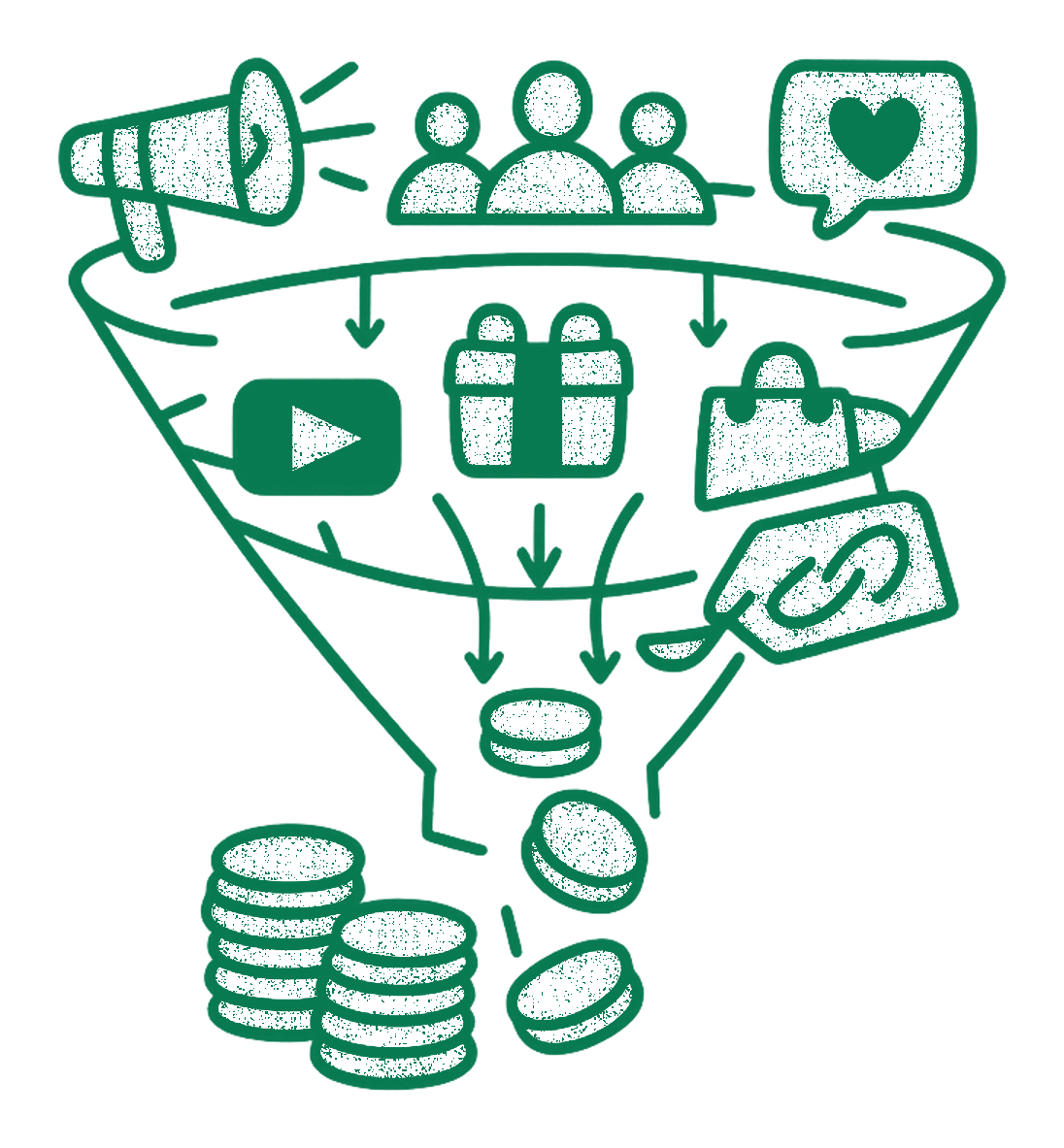
A creator business usually moves through a chain: discovery, repeat attention, trust, action, and retention. Discovery might come from a short video, a search result, a livestream clip, or a podcast episode. But views alone do not pay the bills reliably. The important actions are subscribing, buying, joining a membership, booking a service, or responding to a sponsor.
Then comes retention: whether people stay, buy again, or keep watching. Platforms make that possible, but they also create dependence. YouTube, TikTok, Twitch, and other services offer distribution, payments, advertising tools, analytics, and live infrastructure. In return, they set the rules. They decide how content is recommended, what qualifies for monetisation, which formats are rewarded, and how much audience data creators can access.
Algorithms are not automatically the enemy. They can create extraordinary discovery. The risk is relying on one company for reach, income, and access to an audience. Advertising is often the first revenue layer. Platform ads can scale when views are high, but rates move with advertiser demand, audience location, topic, seasonality, and policy changes.
Direct sponsorships can pay more because a brand is buying more than impressions. It is buying a creator’s audience fit, storytelling, and credibility. That makes trust an economic asset. A sponsorship that feels forced may bring in cash once, but make future recommendations less believable. Memberships work differently. They ask the most committed viewers to pay regularly for access, extra material, community, convenience, or simply support for the work.
That can make income more predictable than advertising, but it also creates a service obligation. Members expect communication, reliable benefits, and a well-managed space. A small, focused audience can sometimes support this model better than a huge but passive one. The trade-off is churn: people can cancel if the value becomes unclear or delivery slips.
Products can deepen the business further
Products can deepen the business further. A creator may sell a course, a template, a book, software, merchandise, tickets, or professional services. Here, content becomes a distribution advantage. It helps people discover the offer and trust the person behind it. The large-scale example is MrBeast and Feastables, where a media brand supports a consumer product business. But it is not a simple extension of posting videos.
Physical products bring manufacturing, retail, shipping, returns, compliance, customer service, and cash tied up before sales arrive. Strong sales are not the same as strong profit. Livestreaming exposes another side of the economics. The product is not only the content. It is real-time presence, chat, shared events, and a regular relationship with viewers.
Subscriptions, virtual goods, donations, ads, affiliates, and sponsors can all contribute. Yet a stream that looks cheap to make may involve long hours, moderators, technical support, clip editing, scheduling, and emotional energy. Revenue per stream matters, but so does income per hour of total work.
As a creator grows, the operation often becomes a team. Editors, producers, designers, moderators, sales support, accountants, and fulfilment staff can increase quality and output. They also create fixed costs. That is why margin matters: what remains after the costs directly needed to deliver the work.
A big brand deal may be less profitable than it appears if it demands extensive production, revisions, exclusivity, and broad rights to reuse the content. The common mistakes are easy to spot. Viral reach is not a business plan. Multiple income streams do not guarantee stability if they all depend on the same platform or the same exhausted creator.
And building a direct mailing list
And building a direct mailing list, store, or membership does not remove risk. It adds customer support, privacy responsibilities, and operational work. The practical goal is manageable resilience: a clear offer, honest sponsorships, healthy margins, reliable systems, and enough direct connection to survive a sudden drop in reach.
In the end, creators build durable businesses by turning attention into repeated value, and repeated value into revenue that covers its real costs. Ads reward scale, memberships reward loyalty, products reward useful outcomes, and teams can extend capacity when cash flow supports them.
To continue, you can generate Five Cents Building a Membership That Retains Fans or Five Cents The Economics of Creator Sponsorships.
And with that, you're up to speed in a few minutes.