

Introduction
With Five Cents, we're exploring how to understand and manage everyday stress: what your body is responding to, and what might make daily pressures more manageable. We'll look at workload, rest, everyday habits, and when outside help matters. The best place to begin is with the response itself, because feeling stressed doesn't automatically mean something is wrong with you.
Stress is a response to challenge or pressure
Stress is a response to challenge or pressure, not a diagnosis. In the short term, it can help you become more alert and ready to act. Your heart may beat faster. Your breathing may change, and your muscles may tighten. That's part of what people mean by fight or flight, although that phrase doesn't describe every response.
You might also notice restless sleep, irritability, or trouble concentrating. People experience stress differently, and those signs don't establish what's causing them. The practical question is whether the response settles as the challenge passes, or whether pressure keeps building without enough opportunity to recover.
It helps to separate the demands you're facing from the resources available to meet them. A difficult task can feel different when you have enough time, clear expectations, and support. The same task can become overwhelming when you're exhausted, uncertain, or handling several other responsibilities.
So managing stress isn't simply about becoming better at tolerating discomfort. Sometimes it means changing a demand. Sometimes it means finding support or making room for recovery. Often, it involves both. You don't need to solve everything before taking a useful step, and you don't have to assume that every source of pressure is within your control.
Start with the demands you may be able to influence. Rather than treating everything as equally urgent, identify what genuinely needs attention now and what can wait. Turn a large task into a clear next action, such as drafting the opening paragraph rather than finishing the whole report.
The context
If expectations conflict, clarification can be more useful than working faster. For example, when two deadlines collide, asking which takes priority makes the trade-off visible. Where it's possible and safe, ask for help, share a responsibility, or renegotiate the timing.
But personal organization has limits. Excessive workloads, understaffing, inflexible hours, unclear roles, and poor support are working conditions, not failures of motivation. Those problems may require changes from managers or organizations. A better task list cannot compensate for persistently unreasonable demands.
Next, consider recovery without turning it into another performance target. Sleep, movement, regular meals, breaks, and contact with people you trust can support wellbeing, but none guarantees relief. Choose something feasible within your circumstances. That might mean protecting a short break, taking a manageable walk, or allowing a quieter transition between work and home. For sleep, a reasonably consistent routine may help, though caring duties, shifts, illness, or housing conditions can make that difficult.
Movement doesn't have to start with an ambitious exercise plan. Some activity is better than none. Social contact can also provide practical support, not just conversation. Telling someone what you're dealing with may help you identify a task they can share. The aim is to create a little more room for recovery, not to complete a perfect checklist.
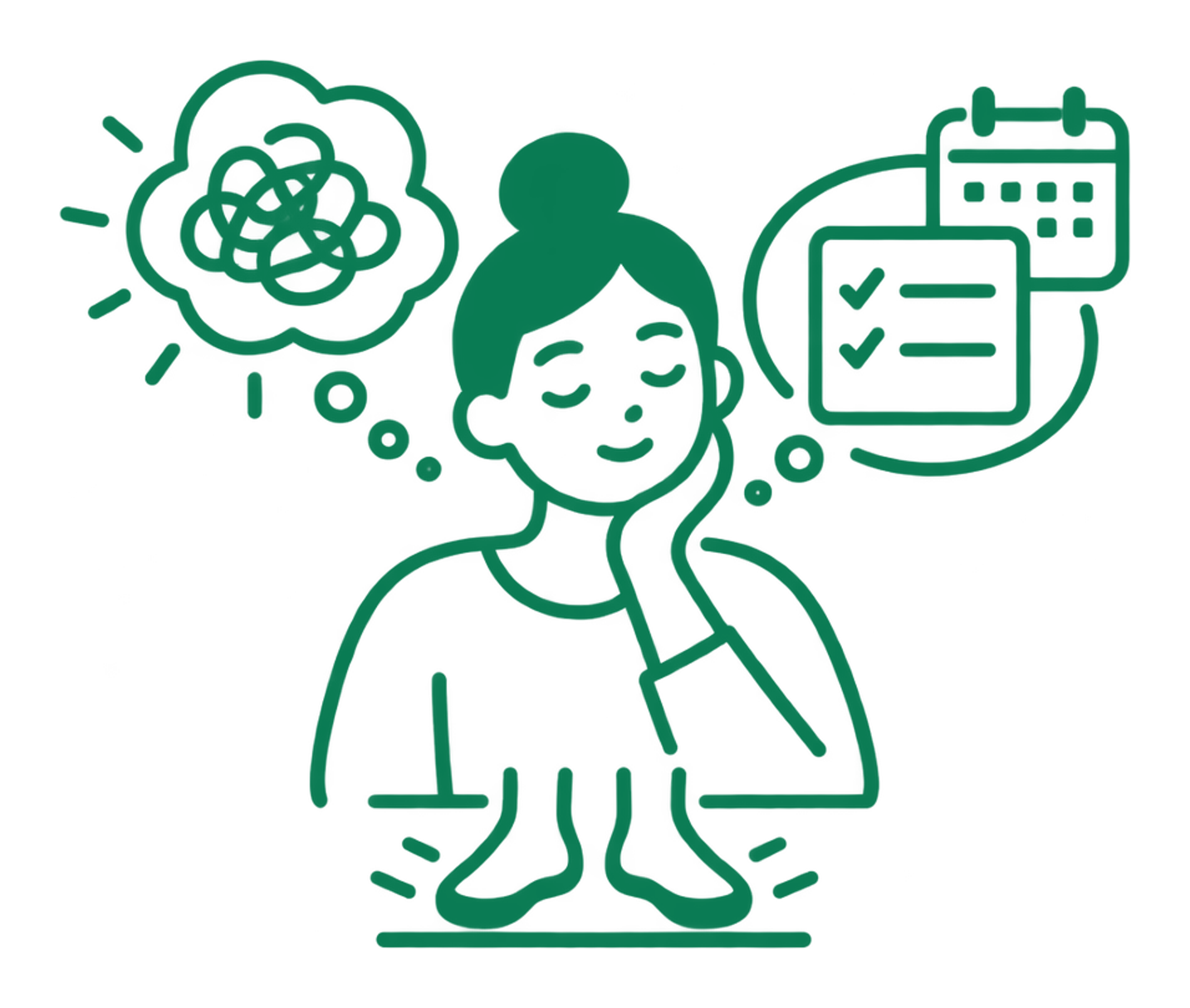
For moments when pressure feels intense, a brief grounding practice is another option. Notice the contact between your feet and the floor, then pay attention to a few things you can see or hear. If a worrying thought keeps returning, you might acknowledge that you're having it rather than trying to force it away. Then bring your attention back to one manageable action in front of you.
These are skills to practise
These are skills to practise, not tests you can fail. They may help you reconnect with the present without making the difficult feeling disappear. If distress persists, becomes hard to cope with, or disrupts work, relationships, sleep, or basic routines, consider a qualified health professional or local support service. You don't need to wait for a crisis.
For immediate danger or thoughts of self-harm, contact local emergency services or an available crisis service, or go to a nearby emergency-care facility. A common mistake is treating stress as proof that you're weak, or assuming that struggling means you're doing self-care badly. Another is calling every stressful period burnout. Burnout refers specifically to chronic workplace stress and isn't a general label for all distress.
Notice what is happening, consider what can be changed or shared, and choose one realistic support. If a strategy isn't helping, that is a reason to reassess it, not blame yourself. Stress can be a normal response, but persistent pressure deserves attention. Changing demands matters alongside recovery, and seeking help is a useful option when coping becomes difficult.
To explore this further, you can generate two new Five Cents: Setting Boundaries at Work and Building a Practical Sleep Routine. And with that, you're up to speed in a few minutes.