

Introduction
With Five Cents, let's help you cook better with what you have by turning available ingredients into a meal that makes sense. We'll cover choosing what to use, getting better flavor and texture, replacing missing ingredients, and handling leftovers safely. The best starting point isn't finding a recipe. It's deciding which ingredients need your attention.
Take a quick look through your fridge
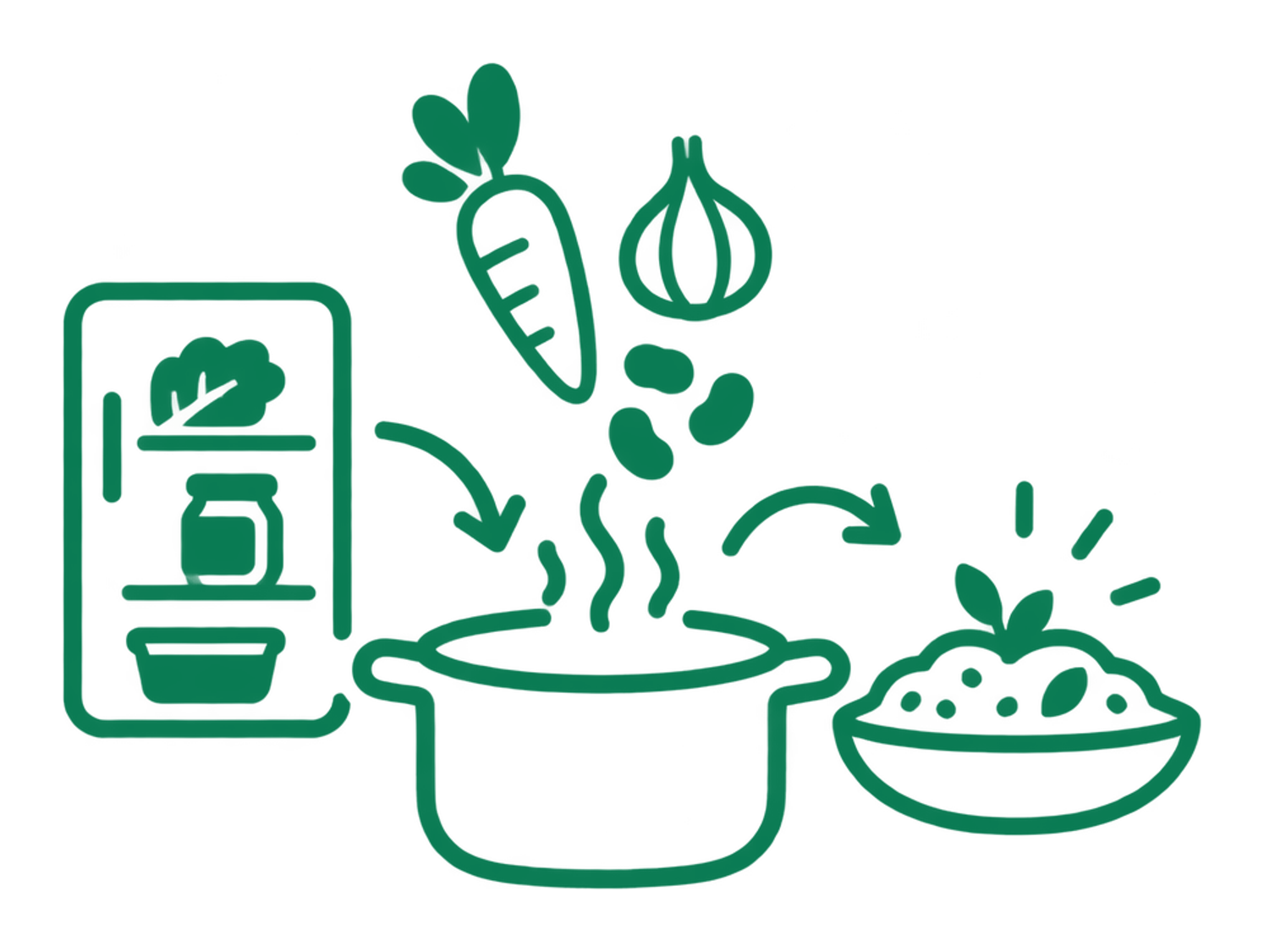
Take a quick look through your fridge, freezer, and cupboards. Identify anything that needs using soon, provided it's still safe to eat. Then look for something substantial: potatoes, bread, noodles, a grain, beans, eggs, or tofu. Finally, check what can add flavor, such as cooking fat, spices, herbs, a sauce, vinegar, or citrus.
You don't need every category, and you don't need a particular pantry. You're looking for enough compatible ingredients to build one satisfying dish, not trying to use everything at once. Now choose the kind of meal those ingredients suit. Firm vegetables and potatoes might work well browned in a pan. Beans, tomatoes, and softer vegetables could become a stew. Cooked vegetables and eggs could make an omelet.
Pick one flavor direction using seasonings you already enjoy together, rather than adding every available sauce. A useful combination is something substantial, a filling ingredient, vegetables, and a finishing contrast. That contrast might be a little acidity or something crisp. It's an option, not another item you must buy.
Suppose you have rice, canned beans, and some vegetables. Start with the vegetables that need the longest cooking. Chop them into reasonably even pieces, then cook them in a little fat before adding softer or wetter ingredients. If you want browning, give them space. A crowded pan traps moisture and encourages steaming. Add cooked beans and your chosen seasonings once the vegetables are nearly ready.
Serve over freshly cooked rice
Serve over freshly cooked rice, or use safely stored cooked rice and heat it thoroughly. Finish with a little citrus or vinegar if the dish tastes heavy. This same combination could become a soup instead: add liquid and simmer. Choose between them based on the texture you want, not because one is the correct recipe.
Taste as you go, whenever the ingredients are safe to taste. If the dish seems flat, check whether it needs a little salt or more of your chosen seasoning. If it's rich but dull, try a small splash of acid, stir, and taste again. If it's watery, simmer uncovered to reduce the liquid, or mash some beans into it for body. If it's too salty or spicy, add a compatible unsalted ingredient, such as beans, vegetables, or more of the base. That reduces the intensity; it doesn't remove the salt or spice.
For a soft dish that needs texture, toasted seeds, crisp vegetables, or breadcrumbs can help. Make one adjustment at a time so you know what worked. When something is missing, ask what it was supposed to do. Was it adding liquid, richness, acidity, thickness, or flavor?
In a vegetable soup, water can replace stock, but you'll need to build and adjust the seasoning. In a stew, mashed beans can add thickness, though they'll also change the taste and texture. For pasta, reserve some cooking water and add it gradually to help loosen and bring the sauce together.
None of these is a universal swap
None of these is a universal swap. Baking needs more care because ingredients affect structure, rise, and moisture. Use a tested substitution for that recipe type rather than assuming two similar-looking ingredients behave alike. Check labels when allergies or dietary restrictions are involved. Leftovers offer another starting point, but only if they've been handled safely. Cooked vegetables can go into an omelet or soup; cooked beans can become a spread.
Refrigerate perishable cooked food promptly, generally within two hours, and sooner in very hot conditions. Divide large batches into shallow containers so they cool faster. Don't leave a big pot out until it's completely cold. Keep raw foods separate from cooked foods, and follow local public-health guidance for refrigeration, storage times, and reheating temperatures. Rice and other cooked grains need careful cooling too.
Reheating does not reliably make badly stored food safe, and smell or taste cannot prove safety. If you don't know how something was stored, don't improvise with it. Using what you have should never mean taking that risk. Start with ingredients that belong together, choose a cooking method that gives you the texture you want, and adjust flavor in small steps. Keep safe storage separate from questions of taste.
To build on this, you can generate two new Five Cents: One-Pan Meals Without a Recipe, for timing ingredients in a single pan, and Building Flavor with Herbs and Spices, for choosing combinations with confidence. And with that, you're up to speed in a few minutes.