


Introduction
With Five Cents, let’s explore why Italian food is so popular. We’ll look at the regional traditions behind familiar dishes, and the migration and cooking techniques that helped them travel. Pizza and pasta are part of the answer. So are changing ingredients, restaurant businesses, and the idea of a shared Italian cuisine. To understand that worldwide appeal, we need to start with how much variety the familiar label contains.
Italian food isn’t one menu
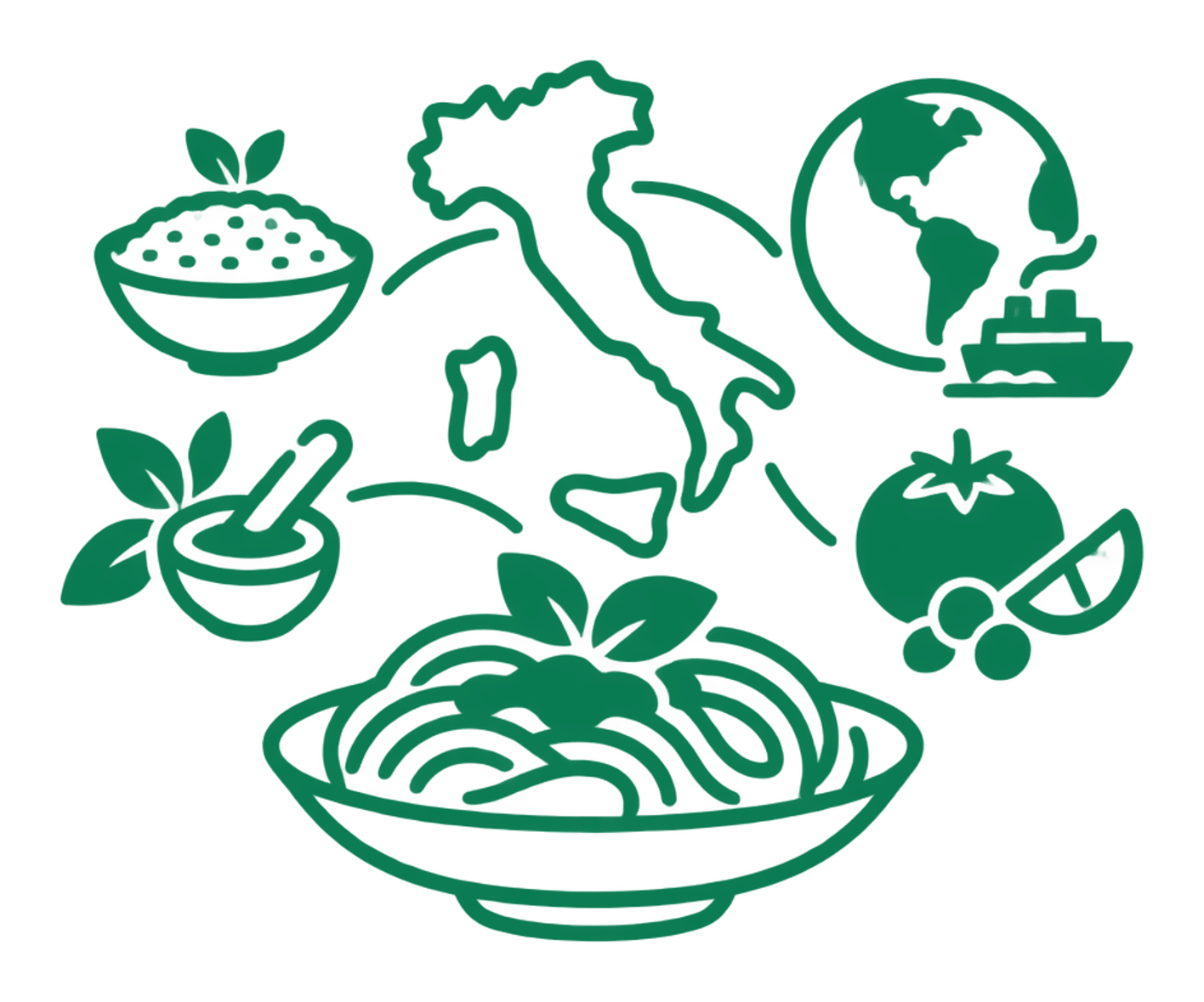
Italian food isn’t one menu. In and around Milan, risotto offers a different experience from a Neapolitan pizza: rice slowly cooked with liquid, rather than dough baked at intense heat. Emilia-Romagna is known for fresh egg pasta, including tagliatelle and filled pastas such as tortellini. Liguria gives us pesto alla genovese, combining basil, oil, nuts, and cheese. These aren’t boundaries around what people eat. They’re examples of local traditions that make the cuisine much broader than tomato sauce and spaghetti.
That variety helps explain its reach. The same broad category can offer a quick meal, an elaborate celebration, a vegetable-focused dish, or something rich with cheese and meat. Meanwhile, pasta and pizza provide recognizable formats that can accommodate different ingredients and budgets. You don’t need to know every regional tradition to order them. Familiarity makes the first encounter easier. Variety gives people reasons to keep exploring. That’s a useful explanation of the appeal, rather than a proven formula that ranks every cause of its success.
The cooking itself matters, too. Italian food is often described as simple, but a short ingredient list doesn’t mean a dish takes little skill. In cacio e pepe, cheese, pepper, pasta, and starchy cooking water must come together without the cheese clumping. With tagliatelle and ragù, the pasta’s shape and surface help carry the sauce. In risotto, managing heat and liquid develops the rice’s characteristic creamy texture.
Neapolitan pizza depends on preparing, fermenting, shaping, and baking the dough, not merely choosing toppings. These dishes offer techniques people can learn and repeat, while leaving room for considerable craftsmanship. Their appeal isn’t just that they’re accessible. It’s that familiar ingredients can produce distinctive textures and satisfying meals when handled well.
Those familiar ingredients also tell a story of change
Those familiar ingredients also tell a story of change. Tomatoes came to Europe from the Americas and entered Italian cooking gradually over centuries. Today’s association between Italy and tomato sauce wasn’t inevitable, and tomatoes never became the foundation of every regional cuisine. Pasta has a long documented history, including a trade from Sicily by the late twelfth century. It doesn’t need a legend about one famous traveler introducing it.
Migration later carried food traditions and businesses across borders. Communities in places such as New York and Buenos Aires supported shops, restaurants, and trade in familiar ingredients. But recipes also changed with local supplies, customers, and circumstances. That adaptation helped dishes become established in new places, rather than remaining foods eaten only within migrant communities.
How did all these local and overseas traditions become recognizable as Italian food? Cookbooks helped. Pellegrino Artusi’s influential cookbook, published in eighteen ninety-one, brought recipes from different places into a shared collection. It helped readers imagine a national culinary culture without eliminating regional differences.
Restaurants and tourism gave more people direct encounters with the food. Food manufacturing made products easier to distribute and reproduce. Some historical interpretations argue that commercial expansion also narrowed the international image to pizza and red sauce, even as later interest in regional cooking widened it again.
What it means
The result was a recognizable category with both everyday and specialist appeal. A diner could begin with a familiar pizza, then discover pesto, filled pasta, or a rice dish, without feeling they were entering an entirely unfamiliar cuisine. There are a few traps in this explanation. Popularity doesn’t prove that every dish is ancient, that all Italians eat alike, or that overseas adaptations are automatically inferior.
Carbonara is a useful reminder. It’s associated with Rome, but its exact origins remain uncertain. Stories about charcoal burners or military rations are hypotheses, not a settled account. Nor does Italian food’s popularity make every version inexpensive, easy, or nutritionally identical. If you want to explore beyond the familiar, choose one regional dish and notice its ingredients and technique. That tells you more than looking for a single supposedly authentic national menu.
Italian food’s global appeal comes from regional diversity, adaptable dishes, and the people and businesses that carried them abroad. Its traditions have endured partly because they’ve also changed. To explore this further, you can generate two new Five Cents episodes: The Science of Pasta and Sauce, for the techniques behind texture, and How Migration Changes Food, for the ways recipes develop new identities across borders.
And with that, you're up to speed in a few minutes.