

Introduction
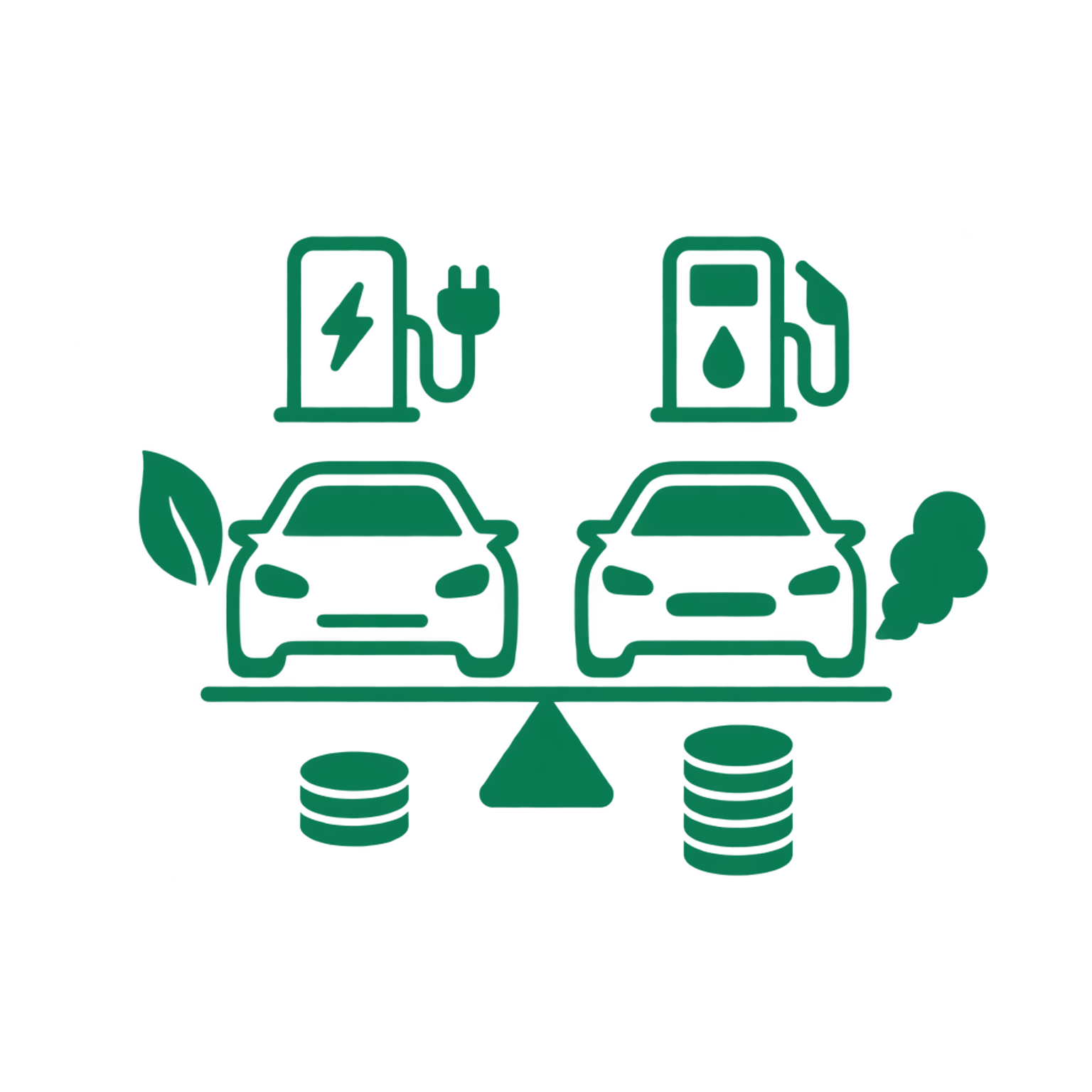
In Five Cents Electric or Petrol Car: What Really Changes, we’re comparing emissions, ownership costs and everyday convenience to help you judge which car fits your life. We’ll look at what battery production adds, what electricity changes, and why charging access can matter more than headline range. The fairest starting point is to compare similar cars doing the same job.
That means similar size
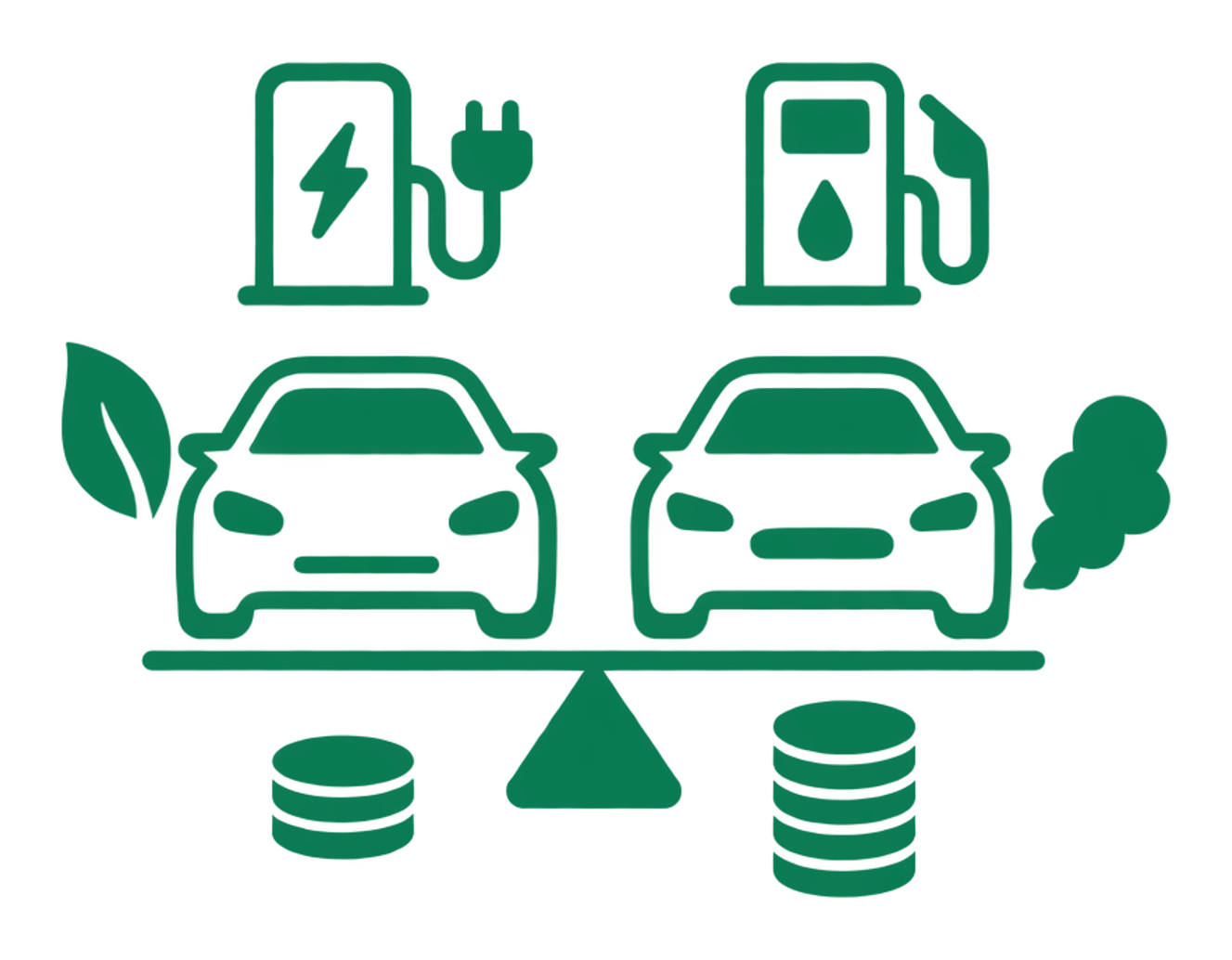
That means similar size, similar driving needs and the same ownership period. Comparing a small petrol hatchback with a large electric SUV tells you as much about size as it does about propulsion. It also helps to separate two questions. Which car produces fewer lifetime greenhouse-gas emissions? And which costs less to own? Those answers can differ. A lower-emissions car isn’t automatically the cheaper purchase, and cheap electricity doesn’t automatically make every electric model a bargain.
For emissions, count the whole life: manufacturing, producing fuel or electricity, driving, and end-of-life treatment. An electric car usually starts with higher manufacturing emissions, largely because of its battery. A petrol car keeps adding emissions through fuel production and combustion.
A global modelling exercise estimated roughly half the lifetime emissions for a medium-sized electric car sold in twenty twenty-three, compared with an equivalent petrol car over fifteen years and about two hundred thousand kilometres. That’s useful context, not a promise for every buyer. The electricity supply, battery size and distance driven all change the result. Electric motors use energy much more efficiently than petrol engines, but the electricity still has to come from somewhere.
Now consider the battery itself. Mining and processing its materials have environmental impacts, and manufacturing the pack adds emissions. Those impacts are real. So is the reduction in fuel use once the car is on the road. Cleaner electricity generally strengthens the electric car’s climate advantage, including if the grid improves during its lifetime.
Recycling can recover valuable materials
Recycling can recover valuable materials, but don’t assume every retired battery is already being recycled effectively. Nor should you assume the battery will need replacing during your ownership. Ageing depends on chemistry, temperature, charging and use. For a used electric car, check a credible battery-health assessment, remaining warranty and usable range. For a used petrol car, scrutinise engine, transmission and maintenance history just as seriously.
Costs need a separate calculation. Start with energy per distance. For petrol, multiply litres consumed per hundred kilometres by the local price per litre. For electric, multiply electricity drawn from the charger per hundred kilometres by the tariff per kilowatt-hour. Using electricity drawn from the charger accounts for charging losses.
If you split charging between home and public stations, use the prices you’ll actually pay, not just the cheapest advertised rate. Then add purchase price, financing, maintenance, insurance, taxes and expected resale value over the same period. Apply incentives only if you qualify. Lower energy costs can accumulate into substantial savings with frequent driving. But low mileage or short ownership may leave too little time to recover a purchase premium. Cheaper to run and cheaper to own are different claims.
Charging is where the daily experience changes most. With dependable home or workplace charging, you can charge while the car is parked instead of making a dedicated fuel stop. Without that access, public charging prices, availability and reliability become central to the decision. Check the stations near your actual routine, not just the number on a regional map. Long journeys need another test: can the car comfortably cover your usual route, including colder conditions, and where would you stop?
Petrol refuelling is usually quicker
Petrol refuelling is usually quicker. Electric charging time depends on the car, battery temperature and charge level, not simply the charger’s advertised maximum power. A high peak charging speed doesn’t tell you how long a useful stop will take. The common mistake is to let one number settle everything. Official range isn’t a guarantee for every journey. Zero tailpipe emissions doesn’t mean zero environmental impact. And a battery warranty isn’t a promise that range will never decline.
Before deciding, compare two specific models, obtain realistic insurance and charging prices, and check the journeys you regularly make. An electric car is often most compelling when dependable charging, suitable range and favourable ownership costs align. Petrol may remain more practical when charging is difficult or the purchase economics don’t work.
This comparison is between battery-electric and petrol cars. Plug-in hybrids need their own assessment because how often they’re charged changes the outcome. So keep the comparison consistent, count lifetime impacts, and price the charging routine you’ll actually use. Your mileage and ownership period determine how much operating savings matter.
To explore the decision further, you can generate two new Five Cents: Buying a Used Electric Car, for battery checks and warranty questions, and Planning Long Electric Road Trips, for routes and realistic charging stops. And with that, you're up to speed in a few minutes.