

Introduction
In Five Cents Basketball: How the Three-Pointer Changed the NBA, we’re exploring how one extra point reshaped where players stand, which shots teams want, and how defenses respond. We’ll connect the scoring arithmetic to court spacing, then compare the Golden State Warriors and Houston Rockets as two different models. The best starting point is what the threat of a three does before anyone shoots.
The key points
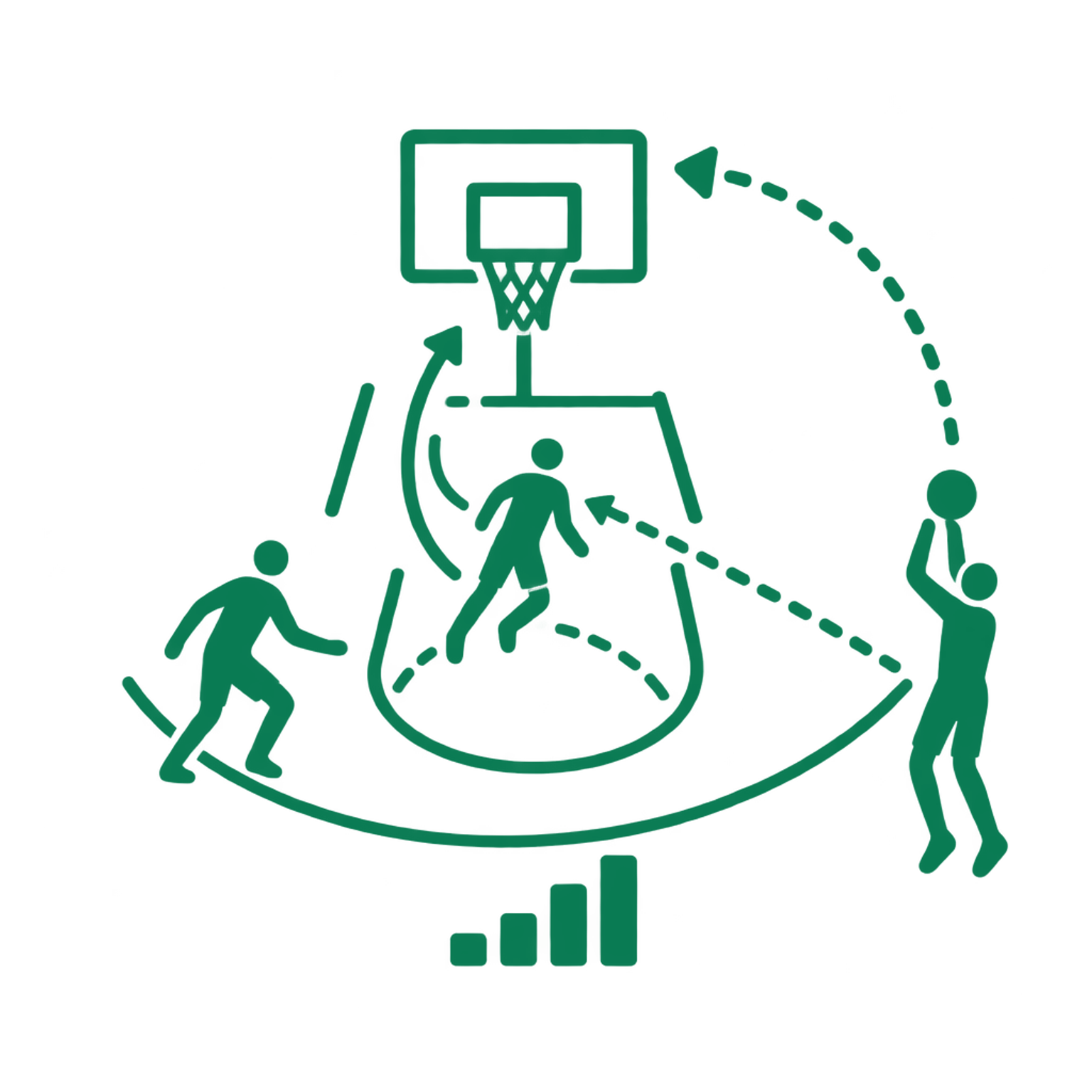
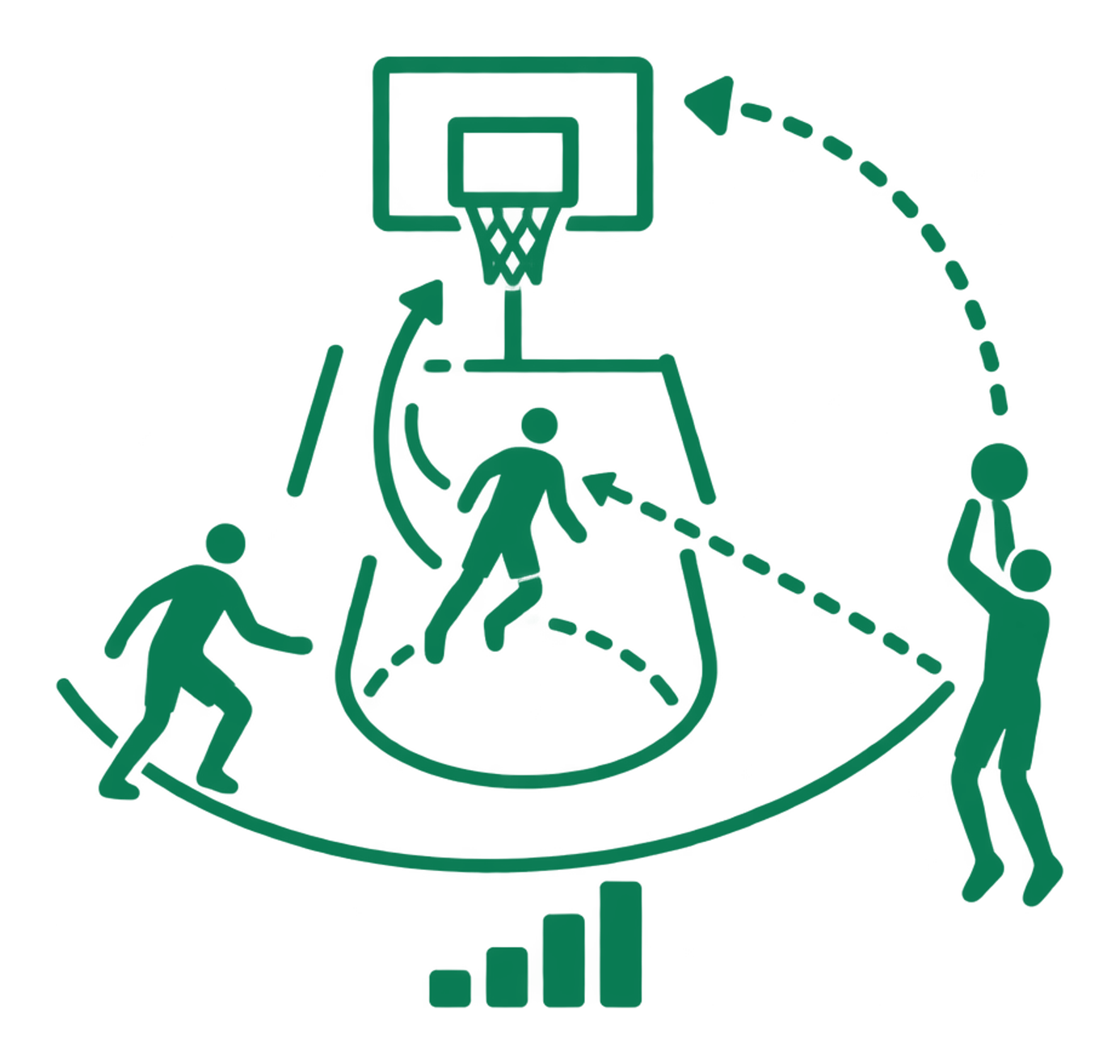
A credible shooter outside the three-point line pulls a defender away from the basket. That leaves more room for a teammate to drive, receive a pass near the rim, or attack a defender one-on-one. Imagine a guard beating the first defender. If another defender moves across to stop the drive, the guard can pass to the shooter that defender has left open. If nobody helps, the guard can continue toward the basket.
The three-pointer changes that decision even when the possession ends with a layup. But credibility matters. Standing outside the arc doesn’t create space if defenders aren’t worried about your shot. The arithmetic explains why teams worked so hard to make that threat convincing. A player making thirty-five percent of their threes produces an average of one point zero five points per attempt. To match that, a two-point shooter needs to make fifty-two point five percent.
That’s a powerful reason to reconsider a difficult long two. It isn’t a complete formula for good offense, though. Fouls, rebounds, turnovers, and the player taking the shot all affect its value. The strategic goal became finding productive shots near the basket and beyond the arc, rather than simply shooting from farther away.
That shift took decades. The NBA introduced its three-point line in the nineteen seventy-nine to eighty season, when teams averaged just two point eight three-point attempts per game. By the twenty twenty-four to twenty-five season, that figure was thirty-seven point six, with teams making thirty-six percent. These are NBA regular-season averages, not figures for basketball everywhere.
Early adoption was slow
Early adoption was slow, and the league temporarily shortened the line for three seasons in the nineteen nineties. Attempts increased, but an easier shot alone didn’t establish the modern system. Coaches needed players, passing patterns, and lineups that could make outside shooting part of a whole offense. The eventual change wasn’t just more threes. It was fewer contested long twos and more pressure on the rim.
Golden State made one version of that approach especially visible with its twenty fifteen championship. Stephen Curry’s range forced defenders to guard farther from the basket, while his movement meant they couldn’t relax after he passed. Klay Thompson added another shooting threat who could keep moving without the ball. Draymond Green supplied screens and passing, often attacking the space created when defenders concentrated on Curry.
Coach Steve Kerr connected those skills through lineups and a movement-heavy offense. The important lesson wasn’t that a team could win by launching threes. It was that shooting, movement, and quick decisions could repeatedly force defenders to choose between protecting the basket and staying with shooters.
Houston offered a different model in the twenty seventeen to eighteen season. Under Mike D’Antoni, James Harden and Chris Paul used one-on-one attacks and screens to create advantages, with shooters spread around them. A screen could free the ball handler to drive, find a teammate moving toward the rim, or pass outside when help arrived. Houston became the first NBA team to take at least half its field-goal attempts from three.
Compared with Golden State’s constant movement and multiple passing options
Compared with Golden State’s constant movement and multiple passing options, the Rockets leaned more heavily on their lead creators and deliberate shot selection. Neither team invented the transformation. They showed different ways to exploit the same defensive problem: covering the arc while still stopping attacks at the basket.
The common mistake is to confuse volume with quality. An open three for a capable shooter isn’t equivalent to a rushed attempt under pressure. Nor has the mid-range shot disappeared. It remains useful when the defense gives it up, or an exceptional scorer can make it reliably. Defenses also adapted. Switching assignments on screens can keep defenders close to shooters, but create mismatches. Rushing out to contest a three can prevent the shot, but let the attacker drive past.
And even well-created threes miss. Heavy reliance on them makes short runs of hot or cold shooting consequential. A sensible approach doesn’t guarantee a win that night. The three-pointer changed shot selection, expanded the space offenses could use, and made defensive help more costly. Its success still depends on players creating good chances, not simply increasing attempts.
To explore this further, you can generate two new Five Cents: How NBA Defenses Use Switching, and Why the Pick-and-Roll Works. And with that, you're up to speed in a few minutes.