

Introduction
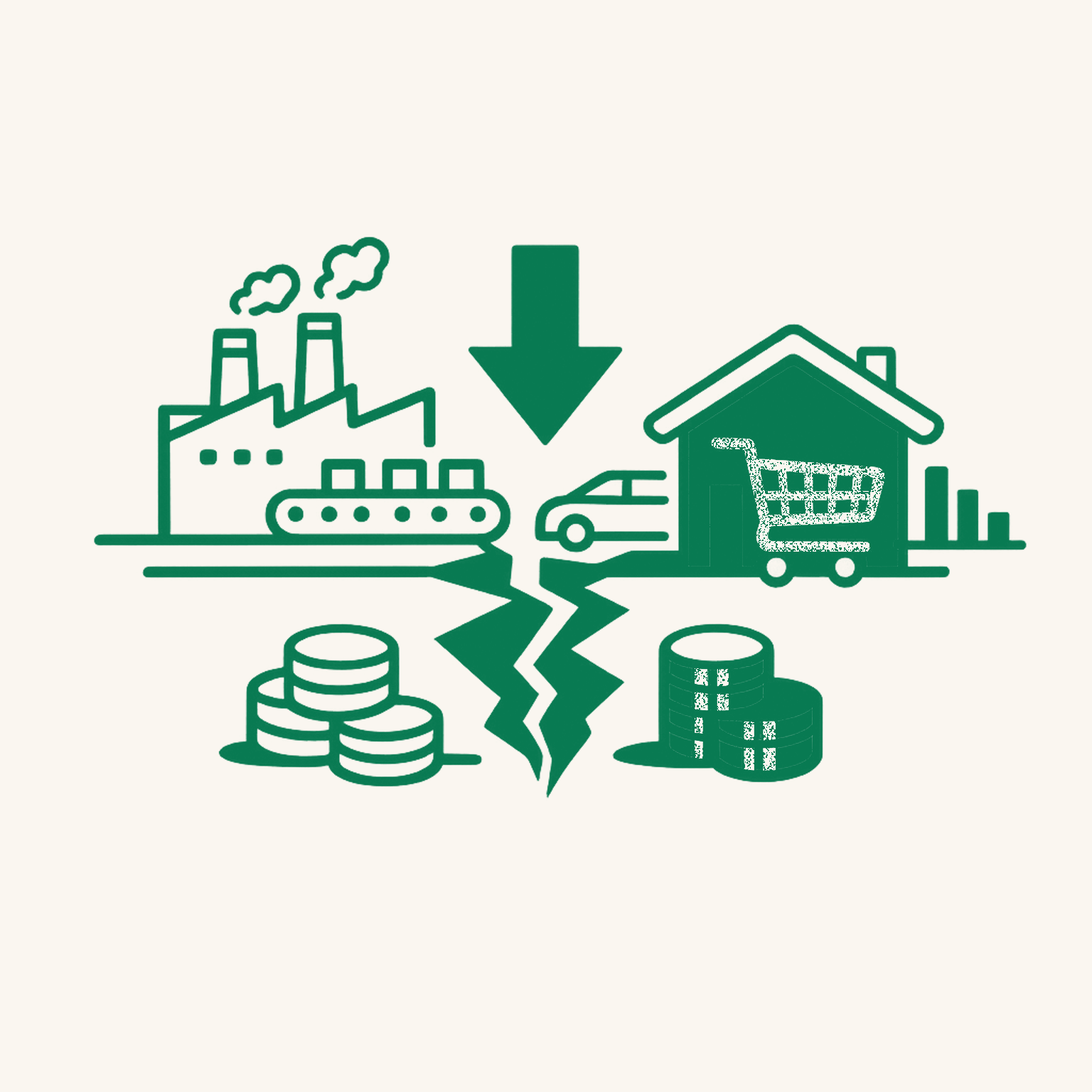
Five Cents looks at China’s consumer slowdown: why households are holding back, why July’s weak retail figures matter, and what Beijing can still do. The story runs from property and jobs to subsidies, exports, and trade friction. The best place to start is with the gap at the centre of China’s economy: factories are producing more confidently than families are spending.

This is not a simple story of consumers suddenly stopping
This is not a simple story of consumers suddenly stopping. China still has spending growth in everyday goods, online services, food, clothing, and selected technology categories. But households are selective, especially on expensive purchases. Retail sales rose only one point three percent year on year in the first half of twenty twenty-six. July’s figures suggested that June’s modest improvement was not turning into a sustained rebound.
That matters because household consumption is supposed to become a bigger engine of Chinese growth. Instead, industrial output and exports remain relatively stronger. They can support headline growth, but they do not solve the underlying problem. Families who feel uncertain about their wealth, income, and future expenses tend to save more and delay major purchases.
Property is a major part of that calculation. For many Chinese households, housing is their largest store of wealth. When home prices fall or stagnate, people feel less secure, even if their salary has not changed. They may focus on repaying mortgages, protecting savings, or postponing a new car, renovation, or appliance.
That hits not only developers and banks, but also furniture sellers, home-improvement firms, carmakers, and local services. Jobs and wage expectations may be even more important than access to cheap credit. The People’s Bank of China can lower borrowing costs, but a cheaper loan does not persuade a household to spend if it is worried about employment or income.
The context
That is why the debate in Beijing is increasingly about confidence and security, not just interest rates. The government has tried to bridge that gap with trade-in subsidies for vehicles, appliances, electronics, and other durable goods. These programmes can work quickly. They give households a reason to replace an old product now, and they support manufacturers and retailers.
But they have a limit. Some sales may simply be pulled forward from later in the year. If confidence remains weak, the effect fades once the subsidy is reduced or removed. The data show that uneven pattern. Some subsidised and promotional categories have performed better, while vehicles, furniture, building materials, and parts of the home-goods market have struggled.
So the issue is not whether policy has had any effect. It has. The harder question is whether it can create spending that continues without policy support. Weak prices add another complication. When consumers expect cars, homes, or household goods to become cheaper, waiting can feel sensible. For companies, discounting cuts revenue and margins. That can then slow hiring and wage growth, feeding back into household caution.
It is a difficult cycle to break because each side is reacting rationally to the other. China’s leaders face a policy choice. One path is to extend and broaden purchase subsidies. That may stabilise demand in the short term, particularly for big-ticket goods. Another is more direct support for households: stronger pensions, healthcare, childcare, employment support, or measures that raise disposable income and reduce the need for precautionary saving.
A third is further action to stabilise the property market
A third is further action to stabilise the property market, because a recovery in housing confidence would reach far beyond construction. Fiscal policy may be more important than monetary easing here. Local governments administer many support programmes, but they are also under pressure from weaker land-sale revenues after the property downturn.
That makes a broad household-focused response harder to deliver, even as the case for it becomes stronger. For the rest of the world, this is not only a domestic Chinese issue. If domestic demand remains weak while factories keep expanding output, more goods may be pushed into overseas markets. That can benefit buyers seeking lower prices, but it also intensifies disputes over subsidies, overcapacity, pricing, and market access.
Global companies face a mixed picture. Sellers of essentials, affordable products, and some services may still find growth, while premium brands, carmakers, and home-related businesses face a more cautious customer. Commodity markets are exposed too. A softer property and consumer cycle can reduce demand for materials tied to construction and durable goods.
And if China contributes less through household demand, global growth becomes more reliant on other sources. The next few months will show whether July was a weak month or part of a deeper pattern. Watch retail sales excluding cars, household income and employment data, home sales and prices, the renewal of trade-in schemes, and any new measures aimed directly at families.
What comes next
Imports, inventories, exports, and price data will also reveal whether weak domestic demand is adding to pressure abroad. The central takeaway is that China does not appear to be facing a consumer collapse. It is facing a stubborn failure to turn selective, policy-supported spending into a broad, confidence-led recovery.
Property, jobs, and household security matter more than another small rate cut. And the longer that gap persists, the more it shapes trade and growth far beyond China.
To continue, you can generate Five Cents episodes on China’s property market and global commodity demand, or on China’s exports and the new trade tensions.
And with that, you're up to speed in a few minutes.