

Introduction
Five Cents looks at Revolut, N26, or your usual bank by focusing on the question that matters most: where your money sits, what protects it, and whether the account can handle real life. We’ll compare licences, day-to-day payments, cash, travel, support, borrowing, and why using two providers can be the sensible option.

Start with the legal structure
Start with the legal structure, because the app is not the product. A digital bank is a customer experience, not a legal category. Some are fully licensed banks. Others are payment or electronic-money institutions. Some apps also combine bank accounts, investments, insurance, and credit from separate companies.
That means two balances on the same screen can follow different rules. If a provider is a bank, eligible deposits may be covered by a national deposit-guarantee scheme. In the European Union, the standard limit is up to one hundred thousand euros per person, per credit institution. But it is not per card, per app, or necessarily per brand. Deposits held with the same bank are usually added together. Outside the European Union, the rules can differ substantially.
Safeguarding is another important word. Payment and electronic-money firms generally have to keep customer funds separate from their own money. That is meaningful protection, but it is not the same as deposit insurance. Investments are different again. Shares, funds, and cash held for investing may have separate investor-protection arrangements.
Before moving a large balance, check the exact legal entity behind that balance and the protection attached to it. Revolut is a useful example of why this matters. It offers banking, cards, foreign exchange, investments, and other products through different group entities, depending on the service and location.
N26 is closer to the straightforward app-based bank model, with eligible deposits protected through its banking framework. Neither label alone tells you everything. The terms for your country and the specific product do. Next, consider what your account must do every month. A traditional bank is often stronger if you need salary payments, direct debits, cash deposits, an overdraft, a mortgage, business finance, or a human route when something goes wrong.
Branches are not essential for everyone
Branches are not essential for everyone, but they can be valuable when a phone is lost, an account is restricted, or a transaction is unusual. Digital providers tend to shine in everyday control. Instant alerts, virtual cards, spending categories, card freezing, rapid transfers, and currency exchange can make them easier to use.
They are often especially useful for travel. But check the details: ATM limits, foreign-exchange thresholds, weekend pricing, card replacement abroad, offline card use, and whether the account supports the local direct debits and incoming payments you rely on. That last point is easy to underestimate. An account can be excellent for online shopping and travel, yet be a poor household main account if rent, insurance, tax payments, utilities, or loan repayments cannot be collected reliably.
Test essential payment functions before switching everything over. And if you receive cash income or need to deposit cash, a branch-based bank may remain the practical choice. Support and resilience deserve the same attention as fees. Both traditional and digital providers can freeze or review an account because of suspected fraud, identity checks, or questions about the source of funds.
The difference is how you recover. Can you reach a person? Is there a route outside the app? Can you access money if your phone, card, or mobile number is unavailable? A low-cost account is less useful if a temporary restriction leaves you unable to pay for basics. For many people, the best answer is not choosing one side.
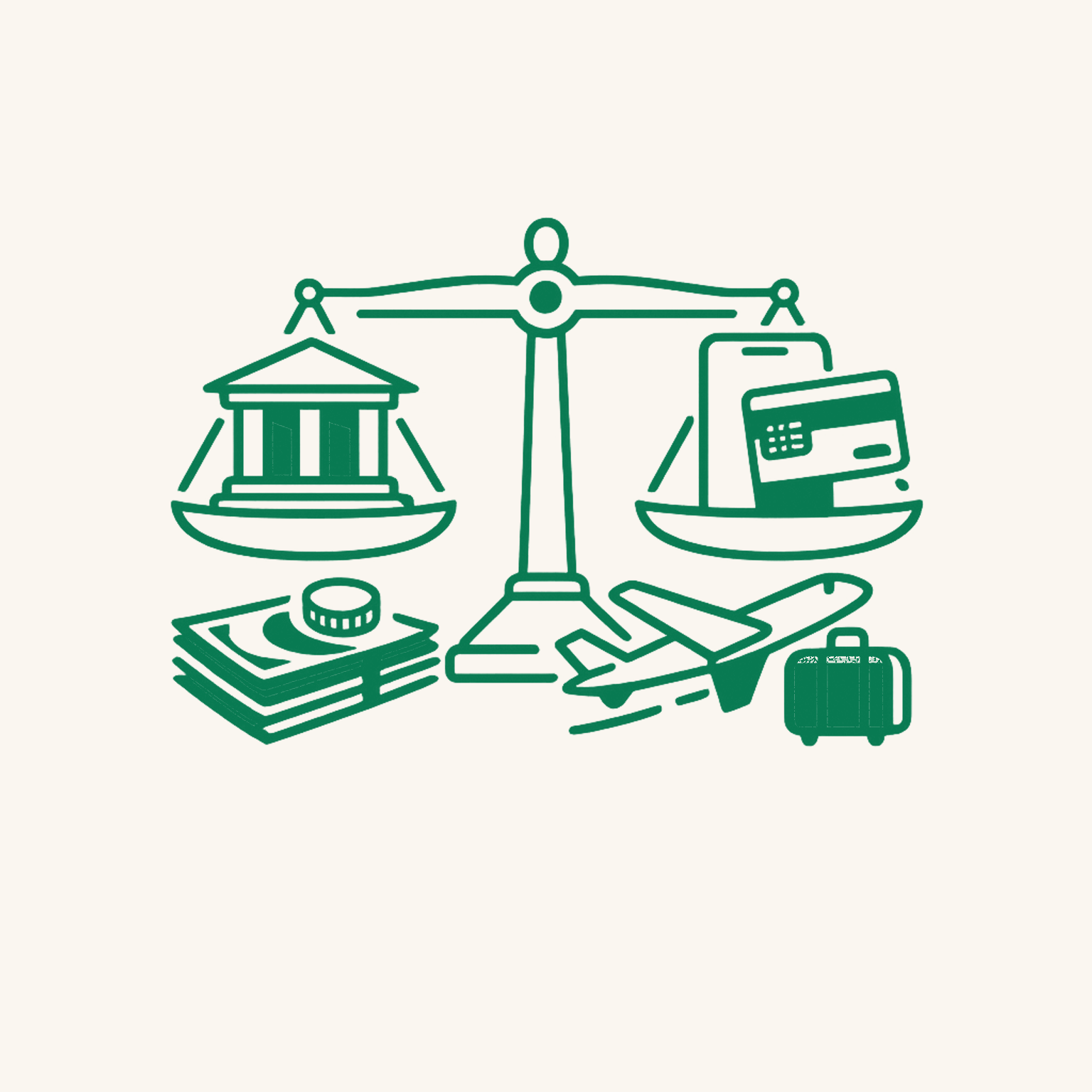
A traditional bank can hold income, savings, direct debits, and borrowing. A digital provider can handle travel, foreign currency, online spending, and a second card. That creates useful redundancy, as long as you keep the setup simple and understand where deposit-protection limits apply. Avoid two common mistakes.
What it means
First, do not choose purely on headline fees or a polished app. Read the legal information, check withdrawal and exchange costs, and confirm the country-specific services you need. Second, do not assume a banking licence protects you from every scam, mistaken transfer, or account dispute. Keep alerts on, use strong account recovery methods, save emergency contacts outside the app, and maintain access to a second payment method.
So choose based on your highest-consequence needs: legal protection, reliable bills, access to support, and resilience when something fails. Digital banks can be excellent, traditional banks can be essential, and a clear two-provider setup often combines the strengths of both. The natural next episode could compare how to split savings, bills, and travel money across accounts. You can create a new Five Cents on that exact setup.
And with that, you're up to speed in a few minutes.